>
Cichliformes (Cichlids, convict blennies) >
Cichlidae (Cichlids) > Cichlinae
Etymology: Cichla: Greek, kichle = wrasse (Ref. 45335).
Taxonomic Remarks
Redescription based on Venezuelan material in Machado-Allison (1971), as C. ocellaris.
Lingkungan: lingkungan / zona iklim / kisaran kedalaman / jangkauan distribusi
Ekologi
; air tawar bentopelagis; pH range: 5.5 - 6.5; nir-ruaya (Ref. 126106). Tropical; 27°C - 29°C (Ref. 13614)
South America: Amazon River basin in the Negro and Uatumã River drainages; Orinoco River basin in tributaries of the Orinoco River in Venezuela and Colombia.
Panjang pada saat jatuh tempo pertama / Ukuran / Berat / umur
Kematangan: Lm 33.5, range 31 - 36 cm
Max length : 99.0 cm TL jantan/; (Ref. 40637); Berat maksimum terpublikasi: 12.2 kg (Ref. 40637)
deskripsi pendek
Kunci identifiaksi (pengenalan) | Morfologi | Morfometrik
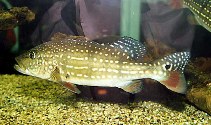
Diagnosis: A large, elongate species with small scales (E1 row scales 98-128, usually more than 110, vs. usually less than 110 in other species of Cichla). Postorbital band is present, entire, may be irregular but does not consist of scattered spots, vs. absent or present as scattered spots in other species of Cichla species. Lateral line is usually continuous. It is most similar to C. pinima and C. vazzoleri, sharing subadult to young adult color pattern including dark midlateral band and four rows of regularly arranged light spots along side, but light spots slightly elongate instead of round. It is different from C. pinima and C. vazzoleri in lacking dark lateral blotches with intensified light margins; vertical bars when expressed entire, never forming round blotches; ocellated blotches on dorsal side absent at all sizes; postorbital band entire (vs. expressed as scattered dark blotches); dark blotch associated with preopercle absent (present in C. vazzoleri); lateral line nearly always continuous (vs. usually discontinuous in C. vazzoleri) (Ref. 57716).
Body shape (shape guide): fusiform / normal.
Adults occupy deeper littoral areas in lagoons and sandy and rocky banks of the main river channel. They feed mainly on small fish (especially characids measuring <10 cm SL) (Ref. 26329, 27531). Oviparous (Ref. 205). Has been introduced to Florida and Texas, but is considered not established yet.
Kullander, S.O., 2003. Cichlidae (Cichlids). p. 605-654. In R.E. Reis, S.O. Kullander and C.J. Ferraris, Jr. (eds.) Checklist of the Freshwater Fishes of South and Central America. Porto Alegre: EDIPUCRS, Brasil. (Ref. 36377)
Status IUCN Red List (Ref. 130435: Version 2025-2 (Global))
ancaman kepada manusia
Harmless
penggunaan manusia
Perikanan: komersial; Budidaya air: komersial; Ikan buruan: ya; Akuarium: Komersial
Alat, peralatan
laporan khas
muat turun XML
Sumber internet
Estimasi berdasarkan model
Indeks keanekaragaman filogenetik (Acuan
82804): PD
50 = 0.5000 [Uniqueness, from 0.5 = low to 2.0 = high].
Bayesian length-weight: a=0.01122 (0.00512 - 0.02461), b=3.08 (2.91 - 3.25), in cm total length, based on LWR estimates for this Genus-body shape (Ref.
93245).
Tingkat Trofik (Acuan
69278): 4.5 ±0.5 se; based on diet studies.
Daya lenting (Acuan
120179): sedang, Waktu penggandaan populasi minimum 1.4 - 4.4 tahun (K=0.16).
Kerentanan Penangkapan Ikan (Ref.
59153): Moderate to high vulnerability (54 of 100).
🛈