>
Salmoniformes (Salmons) >
Salmonidae (Salmonids) > Coregoninae
Etymology: Coregonus: Greek, kore = pupils of the eye + Greek, gonia = angle (Ref. 45335).
More on author: Gmelin.
ສະພາບແວດລ້ອມ: ສະພາບແວດລ້ອມ / ເຂດດິນຟ້າອາກາດ / ລະດັບຄວາມເລິກ / ຂອບເຂດການແຈກຢາຍ
ນິເວດວິທະຍາ
ສັດທະເລ; ນ້ຳຈືດ; ນ້ຳກ່ອຍ ອາໄສຢູ່ໃກ້ໜ້າດິນໃຕ້ພື້ນທ້ອງນ້ຳ; ກຸ່ມຫຼືຊະນິດປາທີ່ມີການເຄື່ອນຍ້າຍພາຍໃນນ້ຳຈືດ (Ref. 126106). Polar; 71°N - 44°N, 5°W - 133°W
Arctic Ocean basin, from Finland (lapland) to eastern Siberia, Alaska, and Canada eastward to Mackenzie drainage. Belongs to Coregonus clupeaformis complex (Ref. 27547).
ຄວາມຍາວໃນການເຕີບໂຕເຕັມຄັ້ງທໍາອິດ / ຂະໜາດ / ນ້ຳໜັກ / ອາຍຸ
ການຈະເລີນເຕັມໄວ: Lm ?, range 17 - ? cm
Max length : 50.0 cm SL ຕົວຜູ້/ບໍ່ມີເພດ; (Ref. 59043); common length : 32.8 cm TL ຕົວຜູ້/ບໍ່ມີເພດ; (Ref. 12193); ອາຍຸສູງສຸດທີ່ເຄຍລາຍງານມາ: 14 ປີ (Ref. 12193)
ຄີ (ໜາມ)ແຂງຢູ່ຫຼັງປາ (ທັງໝົດ) : 0; ຄີຫຼັງຂອງປາ (ຄີອ່ອນ) (ທັງໝົດ) : 11 - 13; ຄີ(ໜາມ) ແຂງຢູ່ຄີກົ້ນປາ
ກຸ່ມປາກະດູກແຂງ
ຄວາມຖີ່ຂອງກຸ່ມຖ່າຍທອດພັນ
ປາທີ່ມີການເຄື່ອນຍ້າຍຈາກທະເລໄປຫານ້ຳຈືດ ແລະນ້ຳຈືດຫາທະເລ
ປາທີ່ມີການເຄື່ອນຍ້າຍຈາກທະເລແລະໄປໄຂ່ຢູ່ນ້ຳຈືດ
ຄີກົ້ນຂອງປາ
ສັດທີ່ມີກະດູກສັນຫັຼງ
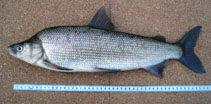
ການຖ່າຍທອດທາງກຳມະພັນຈາກພໍ່ແມ່ຫາລູກ: 0; ຄີກົ້ນຂອງປາ: 10 - 14; ສັດທີ່ມີກະດູກສັນຫຼັງ: 58 - 63. Distinguished by the gill rakers that are longer than 20% of the interorbital width, 19 to 25 gill rakers (with modal counts of 22 or 23), and a pronounced hump behind the head in adults (Ref. 27547). Adipose fin well developed, often larger in males; axillary process present in pelvic fins (Ref. 27547). Dark brown to midnight blue above fading to silver on sides and wide beneath; no parr marks in young (Ref. 27547).
Body shape (shape guide): fusiform / normal.
Adults inhabit coastal waters near shore (Ref. 5723), lower reaches of rivers with slow current, large lakes with tributaries, floodplain lakes, deltas and estuaries, brackish waters (Ref. 59043). They migrate up to more than 1,200 km inland for spawning (Ref. 5723) and overwinter near river mouths (Ref. 5723). There are non-migratory freshwater populations. Adults feed mostly on mollusks, crustaceans and chironomid larvae (Ref. 28219).
Upstream spawning migrations may be extensive but some populations seldom venture far upstream and still others may never go to sea at all (Ref. 593). Mature adults migrate upstream as early as June to spawn in October. It is assumed that the young hatch in late winter and spring, subsequently moving downstream, to return as mature adults 4 to 6 years later (Ref. 27547).
Kottelat, M., 1997. European freshwater fishes. An heuristic checklist of the freshwater fishes of Europe (exclusive of former USSR), with an introduction for non-systematists and comments on nomenclature and conservation. Biologia, Bratislava, 52/Suppl. 5:1-271. (Ref. 13696)
ສະຖານະພາບບັນຊີແດງຂອງ IUCN (Ref. 130435: Version 2025-2 (Global))
ໄພຂົ່ມຂູ່ຕໍ່ມະນຸດ
Harmless
ການນໍາໃຊ້ຂອງມະນຸດ
ການປະມົງ: ເປັນສີນຄ້າ; ການລ້ຽງສັດນ້ຳ: ເປັນສີນຄ້າ
ເຄື່ອງມື
ບົດລາຍງານພິເສດ
ດາວໂຫລດ XML
ແຫຼ່ງອີນເຕີເນັດ
ການຄາດຄະເນໂດຍອີງໃສ່ແບບຈໍາລອງ
ດັດຊະນີຄວາມຫຼາກຫຼາຍທາງຊີວະພາບ (ເອກະສານອ້າງອີງ
82804): PD
50 = 0.5000 [Uniqueness, from 0.5 = low to 2.0 = high].
Bayesian length-weight: a=0.00550 (0.00331 - 0.00911), b=3.24 (3.10 - 3.38), in cm total length, based on LWR estimates for this species & Genus-body shape (Ref.
93245).
ຊັ້ນເຂດຮ້ອນ (ເອກະສານອ້າງອີງ
69278): 3.3 ±0.2 se; based on diet studies.
ຄວາມຢືດຢຸ່ນ (ເອກະສານອ້າງອີງ
120179): ຕຳ່, ປະຊາກອນຕຳ່ສຸດທີ່ໃຊ້ເວລາສອງເທົ່າ 4.5 - 14 ປີ (tm=3-14; tmax=14; Fec=8,000).
ຄວາມສ່ຽງຕໍ່ການຫາປາ (Ref.
59153): Moderate to high vulnerability (52 of 100).
🛈
ທາດອາຫານ (Ref.
124155): Calcium = 18.6 [9.7, 36.6] mg/100g; Iron = 0.418 [0.228, 0.771] mg/100g; Protein = 17.7 [16.6, 18.9] %; Omega3 = 0.619 [0.246, 1.731] g/100g; Selenium = 13.8 [5.7, 34.9] μg/100g; VitaminA = 7.09 [1.42, 38.51] μg/100g; Zinc = 0.481 [0.357, 0.661] mg/100g (wet weight);