>
Ophidiiformes (Cusk eels) >
Bythitidae (Livebearing brotulas)
Eponymy: Cristoforo Bellotti (1823–1919) was an Italian ichthyologist and palaeontologist, who was also very interested in the breeding of silkworms. [...] (Ref. 128868), visit book page.
Taxonomic Remarks
Type species of genus
Περιβάλλον: περιβάλλον / κλιματική ζώνη / εύρος βάθους / εύρος διανομής
Οικολογία
Θαλασσινό(ά) βαθύβιο(ς); εύρος βάθους 30 - 569 m (Ref. 56504). Deep-water
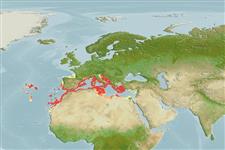
Mediterranean Sea and subtropical Eastern Atlantic: Greece, Adriatic Sea, Tyrrhenian Sea, south Portugal and off Madeira (Ref. 4758, Ref. 13359). Also one specimen from 29°50.2'N, 28°29.8'W (Ref. 4758). Subtropical western Atlantic specimens may be this species (Ref. 34024).
Μέγεθος / Βάρος / Ηλικία
Γεννητική Ωρίμανση: Lm ? range ? - ? cm
Max length : 6.5 cm SL αρσενικό/απροσδιόριστο; (Ref. 6526)
Σύντομη περιγραφή
Κλείδες προσδιορισμού | Μορφολογία | Μορφομετρία
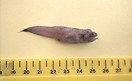
Ραχιαίες άκανθες (συνολικά) : 0; Μαλακές ραχιαίες ακτίνες (συνολικά) : 81 - 96; Εδρικές άκανθες: 0; Μαλακές εδρικές ακτίνες: 64 - 76. Mouth is large, with strong jaws; six caudal rays (Ref. 13359). Swim-bladder present; pelvic fins absent; several sharp spines present at lower angle of opercle; precaudal vertebrae 10 to 12; caudal fin broadly joined to dorsal and anal fins; male intromittent organ lacking ossified parts; females have genital pores (Ref. 34024).
Body shape (shape guide): fusiform / normal.
Depth range from 30-500 m (Ref. 6526) and from 460-569 m in the eastern Ionian Sea (Ref. 56504). The food of Bellottia apoda appears to be a mixture of planktonic and benthic preys (Ref. 13359). Viviparous (Ref. 6526). Uncommon species (Ref. 34024), but it is not so rare as it seemed in the Adriatic Sea (Ref. 13359).
Κύκλος ζωής και συμπεριφορά ζευγαρώματος
Γεννητική Ωρίμανση | Αναπαραγωγή | Γεννοβολία | Αβγά | Γονιμότητα | Προνύμφες
Nielsen, J.G., D.M. Cohen, D.F. Markle and C.R. Robins, 1999. Ophidiiform fishes of the world (Order Ophidiiformes). An annotated and illustrated catalogue of pearlfishes, cusk-eels, brotulas and other ophidiiform fishes known to date. FAO Fish. Synop. 125(18):178p. Rome: FAO. (Ref. 34024)
Κατάσταση Κόκκινου Καταλόγου IUCN (Ref. 130435: Version 2025-2 (Global))
Απειλή για τον άνθρωπο
Harmless
Ανθρώπινες χρήσεις
αλιεία: χωρίς ενδιαφέρον
Εργαλεία
Ειδικές εκθέσεις
Λήψη XML
Διαδικτυακές πηγές
Εκτιμήσεις βάσει μοντέλων
Προτιμώμενη θερμοκρασία (Αναφ.
123201): 13.2 - 16.1, mean 14.6 °C (based on 142 cells).
Δείκτης φυλογενετικής ποικιλότητας (Αναφ.
82804): PD
50 = 0.5312 [Uniqueness, from 0.5 = low to 2.0 = high].
Bayesian length-weight: a=0.01122 (0.00514 - 0.02450), b=3.04 (2.87 - 3.21), in cm total length, based on all LWR estimates for this body shape (Ref.
93245).
Τροφικό Επίπεδο (Αναφ.
69278): 3.4 ±0.50 se; based on food items.
Ελαστικότητα (Αναφ.
120179): Χαμηλό, ελάχιστος χρόνος για διπλασιασμό πληθυσμού 4,5 - 14 έτη (Fec=30-180).
Ευπάθεια στην αλιεία (Ref.
59153): Low vulnerability (10 of 100).
🛈
Θρεπτικά συστατικά (Ref.
124155): Calcium = 68.1 [12.7, 259.9] mg/100g; Iron = 0.851 [0.294, 2.099] mg/100g; Protein = 16.3 [13.7, 18.7] %; Omega3 = 0.631 [0.223, 1.817] g/100g; Selenium = 8.69 [2.34, 30.20] μg/100g; VitaminA = 19.9 [4.1, 89.6] μg/100g; Zinc = 0.739 [0.370, 1.422] mg/100g (wet weight);