分類 / 名前
共通名の | 類義語 | Catalog of Fishes(部類, 種) | ITIS | CoL | WoRMS | Cloffa
>
Blenniiformes (Blennies) >
Blenniidae (Combtooth blennies) > Salariinae
Etymology: Blenniella: Diminutive of blennius, Greek,blenios = mucus (Ref. 45335).
More on author: Bleeker.
Taxonomic Remarks
Genus Williams, pers. comm.
環境:環境 / 気候帯 / 深さの範囲 / 分布範囲
生態学
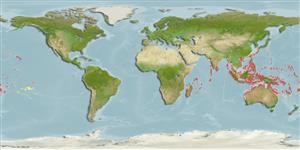
海 関連する礁; 深さの範囲 0 - 6 m (Ref. 1602). Tropical; 32°N - 30°S, 37°E - 129°W
Indo-Pacific: east coast of Africa to the Society Islands, north to the Ryukyu Islands, south to about 24°S.
サイズ / 重さ / 年齢
成熟: Lm ? range ? - ? cm
Max length : 13.0 cm SL オス/雌雄の選別がない; (Ref. 9710)
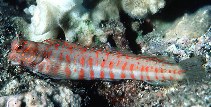
背面の脊椎 (合計) : 12; 背鰭 (合計) : 20 - 21; 肛門の骨: 2; 臀鰭: 21 - 22. Distinctive coloration of the head (Ref. 48636).
Body shape (shape guide): elongated.
Adults inhabit clear coastal reef flats, often in exposed habitats, common in outer intertidal reef flats and surge-swept seaward reef; usually where algal growth is prolific (Ref. 48636). They enter small holes, with just its head protruding. They feed on algae and associated detritus and small invertebrates. Oviparous. Eggs are demersal and adhesive (Ref. 205), and are attached to the substrate via a filamentous, adhesive pad or pedestal (Ref. 94114). Larvae are planktonic, often found in shallow, coastal waters (Ref. 94114). Minimum depth of 0 m reported from Ref. 90102.
ライフサイクルと交尾行動
成熟 | 繁殖 | 放精 | 卵 | 生産力 | 幼生
Distinct pairing (Ref. 205).
Springer, V.G. and J.T. Williams, 1994. The Indo-West Pacific blenniid fish genus Istiblennius reappraised: a revision of Istiblennius, Blenniella, and Paralticus, new genus. Smithson. Contrib. Zool. 565:1-193. (Ref. 9962)
IUCNのレッドリストの状況は (Ref. 130435: Version 2025-2 (Global))
人間の用途
水産業: 興味がない; 水族館・水槽: 商業
用具
特記事項
XMLをダウンロードして下さい
インターネットの情報源
モデルに基づく推定値
好ましい温度 (参照
123201): 25.4 - 29.3, mean 28.5 °C (based on 2491 cells).
系統多様性指数 (参照
82804): PD
50 = 0.5020 [Uniqueness, from 0.5 = low to 2.0 = high].
Bayesian length-weight: a=0.00776 (0.00354 - 0.01702), b=3.00 (2.81 - 3.19), in cm total length, based on LWR estimates for this (Sub)family-body shape (Ref.
93245).
栄養段階 (参照
69278): 2.5 ±0.19 se; based on food items.
回復力 (参照
120179): 高い, 15か月以下の倍増期間の最小個体群 (Preliminary K or Fecundity.).
漁業の脆弱性 (Ref.
59153): Low vulnerability (10 of 100).
🛈
栄養素 (Ref.
124155): Calcium = 129 [63, 209] mg/100g; Iron = 0.731 [0.420, 1.245] mg/100g; Protein = 18.1 [16.9, 19.2] %; Omega3 = 0.0767 [, ] g/100g; Selenium = 19.1 [9.3, 41.6] μg/100g; VitaminA = 127 [35, 464] μg/100g; Zinc = 2.21 [1.47, 3.17] mg/100g (wet weight);