>
Eupercaria/misc (Various families in series Eupercaria) >
Labridae (Wrasses) > Xyrichtyinae
Etymology: Iniistius: Latin, in = in + Greek, istion = sail.
More on author: Valenciennes.
محیط زیست: محیط زیست / منطقه آب و هوایی / تغييرات عمق / محدوده توزیع
بوم شناسي
دريايي وابسته به آب سنگ; تغييرات عمق 1 - 100 m (Ref. 1602), usually 20 - ? m (Ref. 9710). Tropical; 24°C - 28°C (Ref. 27115); 30°N - 30°S
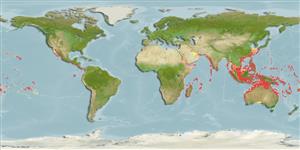
Indo-Pacific: Red Sea and East Africa to the Society Islands, north to southern Japan and Hawaii, south to the Lord Howe Island. Eastern Pacific: Gulf of California to Panama and the Galapagos Islands (Ref. 5227).
اندازه / وزن / سن
بلوغ: Lm ? range ? - ? cm
Max length : 42.0 cm TL جنس نر / بدون خواص جنسي; (Ref. 97145)
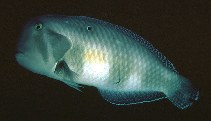
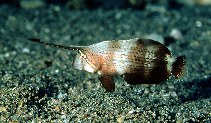
خارهاي باله پشتي (کل) : 9; شعاع نرم باله پشتي (کل) : 12 - 13; خارهاي باله مخرجي: 3; شعاع نرم باله مخرجي: 12 - 13. Identified by the dark vertical bar below the eye. Usually with 5 dark bars when adult and belly of female turns red. Juveniles with black anal fin and two large ocelli, thinly edged with white, in dorsal fin (Ref. 48636). First two dorsal spines form a separate fin. Juveniles this fin forms a long, bannerlike filament but shortens with age (Ref. 37816).
Body shape (shape guide): fusiform / normal; Cross section: compressed.
Usually solitary in lagoon and seaward reef areas with fine to loose, coarse sand bottoms (Ref. 1602). Juveniles sometimes in shallow estuaries (Ref. 48636). Adults rare in less than 20 m (Ref. 9710). Benthic and benthopelagic (Ref. 58302). Dives into sand to sleep safely at night or to hide when alarmed (Ref. 9311, 90102). Feed on hard-shelled invertebrates, including mollusks and crustaceans (Ref. 9311). Juveniles mimic drifting dead leaves by holding the elongate detached front part of dorsal fin forward over head. Good to eat, flesh very white (Ref. 7364). Minimum depth reported from Ref. 27115.
چرخه زندگی و رفتار جفتگیری
بلوغ | تولید مثل | تخم ریزی | تخم ها | باروری | توزاد ( لارو)
Distinct pairing during breeding (Ref. 205).
Randall, J.E., G.R. Allen and R.C. Steene, 1990. Fishes of the Great Barrier Reef and Coral Sea. University of Hawaii Press, Honolulu, Hawaii. 506 p. (Ref. 2334)
وضعيت در فهرست قرمز IUCN (Ref. 130435: Version 2025-2 (Global))
استفاده انسانی
ماهي گيري – شيلات: تجاري; ماهي ها ي سرگرم كننده: بله; آكواريوم: تجاري
ابزارها
گزارش های ويژه
بارگيری XML
منابع اينترنتي
تخمینها بر اساس مدلها
دمای ترجیحی (مرجع
123201): 24.2 - 29, mean 27.8 °C (based on 1216 cells).
شاخص تنوع فیلوژنتیکی (مرجع
82804): PD
50 = 0.5000 [Uniqueness, from 0.5 = low to 2.0 = high].
Bayesian length-weight: a=0.01072 (0.00537 - 0.02137), b=3.09 (2.91 - 3.27), in cm total length, based on LWR estimates for this species & (Sub)family-body (Ref.
93245).
سطح تروفیک (مرجع
69278): 3.5 ±0.46 se; based on food items.
جهندگی (مرجع
120179): متوسط, كمينه زمان لازم براي دو برابر شدن جمعيت 4/1 – 4/4 سال (Preliminary K or Fecundity.).
آسیبپذیری ماهیگیری (Ref.
59153): Low to moderate vulnerability (32 of 100).
🛈
مواد مغذی (Ref.
124155): Calcium = 40.6 [24.7, 63.2] mg/100g; Iron = 0.54 [0.32, 0.96] mg/100g; Protein = 18.5 [15.7, 20.7] %; Omega3 = 0.146 [0.101, 0.214] g/100g; Selenium = 37 [24, 60] μg/100g; VitaminA = 95.6 [31.2, 328.0] μg/100g; Zinc = 1.26 [0.92, 1.92] mg/100g (wet weight);