البيئة: الوسط / المنطقة المناخية / نطاق العمق / نطاق التوزيع
البيئة
بحري مرتبطة بالشعاب; نطاق العمق 2 - 200 m (Ref. 5951), usually 2 - 35 m (Ref. 40849). Subtropical; 37°N - 39°S, 8°E - 55°W (Ref. 55210)
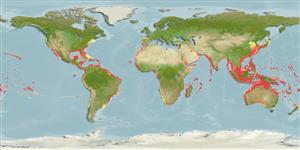
Circumtropical in distribution. Western Atlantic: Canada (Ref. 5951), Florida, USA and the Bahamas to Brazil (Ref. 7251). Eastern Atlantic: 30°N to 23°S (Ref. 6951); also South Africa (Ref. 4423). Western Indian Ocean: southern Red Sea to Madagascar, Reunion and Mauritius (Ref. 53568). Pacific Ocean: southern Japan south to Lord Howe Island and east to the Hawaiian and Easter islands (Ref. 37816). Also from southern California, USA to Colombia (Ref. 11482) and the Galapagos Islands (Ref. 5227).
الحجم / وزن / العمر
النضج: Lm ? range ? - ? cm
Max length : 50.0 cm TL ذكر/ مختلط الجنس; (Ref. 7251); common length : 15.0 cm TL ذكر/ مختلط الجنس; (Ref. 55763)
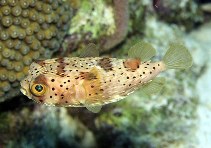
الأشواك الظهرية (المجموع) : 0; الأشعة الظهرية الناعمة (المجموع) : 13 - 15; شوكة شرجية: 0; أشعه شرجية لينه: 13 - 15. Pelagic juveniles with spots, particularly prominent on belly; adults with dark blotches across back and spots between the blotches; fins without spots (Ref. 4423). 14 to 16 spines in an approximate row between snout and origin of dorsal fin; with a large brown bar above and below each eye; a broad transverse brown bar on occipital region of head (Ref. 13442).
Body shape (shape guide): short and / or deep.
Inhabit shallow reefs to open, soft bottoms. Also in areas with rocky substrata. Sometimes form groups (Ref. 9710, 48637). Occur on open muddy substrates as well as on rich soft-bottom and coral reefs. Juveniles often with floating Sargassum rafts. Young and sub-adults may form small groups (Ref. 48637). Benthopelagic (Ref. 58302). Juveniles pelagic to about 6-9 cm. Solitary. Feed on mollusks, sea urchins, hermit crabs, and crabs at night (Ref. 9680). Relatively poor swimmers (Ref. 9710). Used in Chinese medicine (Ref. 12166). Captured at the surface using a hand net (Ref. 26165).
دورة الحياة وسلوك التزاوج
النضج | التكاثر | وضع البيض | بيض | الخصوبة | اليرقات
Leis, J.M., 1984. Diodontidae. In W. Fischer and G. Bianchi (eds.) FAO species identification sheets for fishery purposes. Western Indian Ocean fishing area 51. Vol. 2. (Ref. 3393)
حالة القائمة الحمراء للاتحاد الدولي لحفظ الطبيعة والموارد الطبيعية (Ref. 130435: Version 2025-2 (Global))
خطر للأنسان
Reports of ciguatera poisoning (Ref. 30303)
استخدامات بشرية
مصائد: غير مهمة تجارياً; لعبة سمكه: نعم; حوض مائي: تجاري
أدوات
تقارير خاصة
تنزيل XML
مصادر علي الأنترنت
تقديرات تستند إلى النماذج
درجة الحرارة المفضلة (مرجع
123201): 21.5 - 29, mean 27.3 °C (based on 2666 cells).
مؤشر التنوع الشُعبي الوراثي (مرجع
82804): PD
50 = 0.5313 [Uniqueness, from 0.5 = low to 2.0 = high].
Bayesian length-weight: a=0.05888 (0.02860 - 0.12123), b=2.80 (2.61 - 2.99), in cm total length, based on LWR estimates for this species & (Sub)family-body (Ref.
93245).
مستوى غذائي (مرجع
69278): 3.9 ±0.2 se; based on diet studies.
Generation time: 2.1 ( na - na) years. Estimated as median ln(3)/K based on 1
growth studies.
المرونه (مرجع
120179): عالي, الحد الزمني الأدني لتضاعف عدد أفراد المجتمع أقل من 15 شهر (Preliminary K or Fecundity.).
ضعف الصيد (Ref.
59153): Low to moderate vulnerability (27 of 100).
🛈
المغذيات (Ref.
124155): Calcium = 20.4 [7.6, 77.9] mg/100g; Iron = 0.566 [0.268, 1.420] mg/100g; Protein = 19.3 [17.1, 21.5] %; Omega3 = 0.201 [0.104, 0.390] g/100g; Selenium = 24.7 [10.4, 57.1] μg/100g; VitaminA = 22.8 [5.5, 106.7] μg/100g; Zinc = 0.535 [0.334, 0.862] mg/100g (wet weight);