分類 / 名前
共通名の | 類義語 | Catalog of Fishes(部類, 種) | ITIS | CoL | WoRMS | Cloffa
環境:環境 / 気候帯 / 深さの範囲 / 分布範囲
生態学
; 新鮮な水; 汽水性の 底生の漂泳性; potamodromous (Ref. 126106); 深さの範囲 0 - 27 m (Ref. 11002). Subtropical; 1°C - 29°C (Ref. 12741); 70°N - 30°N, 137°W - 69°W (Ref. 86798)
North America: St. Lawrence-Great Lakes, Arctic, and Mississippi River basins from Quebec to Northwest Territories in Canada, and south to Alabama and Arkansas in the USA; possibly native to Mobile Bay basin. Widely introduced elsewhere in the USA, including Atlantic and Pacific drainages.
初回成熟時の長さ / サイズ / 重さ / 年齢
成熟: Lm 42.5, range 36 - 44.8 cm
Max length : 107 cm FL オス/雌雄の選別がない; (Ref. 1998); common length : 54.0 cm TL オス/雌雄の選別がない; (Ref. 12193); 最大公表体重: 11.3 kg (Ref. 4699); 最大記録サイズ: 29 年 (Ref. 12193)
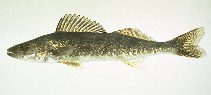
背面の脊椎 (合計) : 13 - 17; 背鰭 (合計) : 18 - 22; 肛門の骨: 2; 臀鰭: 11 - 14; 脊つい: 44 - 48. Nuptial tubercles absent. Differentiation of sexes difficult. Branchiostegal rays 7,7 or 7,8 (Ref. 1998).
Body shape (shape guide): elongated; Cross section: compressed.
Adults occur in lakes, pools, backwaters, and runs of medium to large rivers. Frequently found in clear water, usually near brush (Ref. 86798). They prefer large, shallow lakes with high turbidity (Ref. 9988, 10294). Rarely found in brackish waters (Ref. 1998). They feed at night, mainly on insects and fishes (with preference for yellow perch and freshwater drum but will take any fish available) also feed on crayfish, snails, frogs, mudpuppies, and small mammals when fish and insects are scarce (Ref. 1998). Although not widely farmed commercially for consumption, large numbers are hatched and raised for stocking lakes for game fishing (Ref. 9988). Utilized fresh or frozen; eaten pan-fried, broiled, microwaved and baked (Ref. 9988).
ライフサイクルと交尾行動
成熟 | 繁殖 | 放精 | 卵 | 生産力 | 幼生
Spawning occurs in small groups (a larger female and two smaller males or two females and up to six males) that engage in chasing, circular swimming, and fin erection. The group then ascends to shallow water, females roll on their side, and eggs and sperm are released. Deposition of eggs usually occurs in a single night (Ref. 1998). Larvae pelagic (Ref. 7471).
Page, L.M. and B.M. Burr, 2011. A field guide to freshwater fishes of North America north of Mexico. Boston : Houghton Mifflin Harcourt, 663p. (Ref. 86798)
IUCNのレッドリストの状況は (Ref. 130435: Version 2025-2 (Global))
人間の用途
水産業: 商業; 水産養殖: 実験の; ゲームフィッシュ: はい; 水族館・水槽: 公共の水族館
用具
特記事項
XMLをダウンロードして下さい
インターネットの情報源
モデルに基づく推定値
系統多様性指数 (参照
82804): PD
50 = 0.5312 [Uniqueness, from 0.5 = low to 2.0 = high].
Bayesian length-weight: a=0.00631 (0.00481 - 0.00827), b=3.15 (3.07 - 3.23), in cm total length, based on LWR estimates for this species (Ref.
93245).
栄養段階 (参照
69278): 4.5 ±0.0 se; based on diet studies.
Generation time: 3.7 (3.0 - 3.8) years. Estimated as median ln(3)/K based on 42
growth studies.
回復力 (参照
120179): 低い, 4.5年~14年の倍増期間の最小個体群 (K=0.05-0.45; tm=2-4; tmax=29; Fec=41,061).
漁業の脆弱性 (Ref.
59153): Moderate to high vulnerability (45 of 100).
🛈
栄養素 (Ref.
124155): Calcium = 83.9 [34.8, 196.2] mg/100g; Iron = 0.483 [0.192, 1.201] mg/100g; Protein = 18.1 [16.9, 19.3] %; Omega3 = 0.17 [0.07, 0.35] g/100g; Selenium = 7.44 [1.82, 31.88] μg/100g; VitaminA = 18.6 [6.9, 51.0] μg/100g; Zinc = 0.913 [0.526, 1.539] mg/100g (wet weight); based on
nutrient studies.