Ελασμοβράγχιοι (καρχαρίες και σαλάχια) (sharks and rays) >
Carcharhiniformes (Ground sharks) >
Carcharhinidae (Requiem sharks)
Etymology: Rhizoprionodon: rhiza (Gr.), root; prion (Gr.) saw; odon (Gr.), tooth, referring to teeth with serrated (saw-like) bases, or roots [replacement name for Rhizoprion Ogilby 1915, preoccupied by Rhizoprion Jourdan 1861 in mammals] (See ETYFish); taylori: In honor of entomologist Frank Henry Taylor (1886-1945), Institute of Tropical Medicine, Townsville, North Queensland, Australia, who collected holotype (See ETYFish).
Eponymy: Frank Henry Taylor (1886–1945) was an entomologist at the Institute of Tropical Medicine, Townsville, Queensland, Australia. [...] (Ref. 128868), visit book page.
More on author: Ogilby.
Περιβάλλον: περιβάλλον / κλιματική ζώνη / εύρος βάθους / εύρος διανομής
Οικολογία
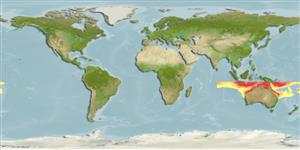
Θαλασσινό(ά) pelagic-oceanic; εύρος βάθους ? - 300 m (Ref. 75154). Tropical; 8°S - 28°S
Western Pacific: off Papua New Guinea and northern Australia.
Μήκος κατά την πρώτη ωρίμανση / Μέγεθος / Βάρος / Ηλικία
Γεννητική Ωρίμανση: Lm 47.0, range 42 - ? cm
Max length : 69.1 cm TL αρσενικό/απροσδιόριστο; (Ref. 9161); μεγ. αναφερόμενη ηλικία: 7 έτη (Ref. 9161)
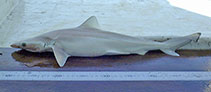
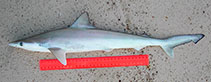
Ραχιαίες άκανθες (συνολικά) : 0; Εδρικές άκανθες: 0. Brownish grey above, white below, fins light-edged but not conspicuously marked (Ref. 9997).
Body shape (shape guide): fusiform / normal.
A little-known shark (Ref. 9997) found on the continental shelf from close inshore to a depth of at least 110 m (Ref. 6871). Feeds mainly on fishes, but also takes cephalopods and crustaceans (Ref. 6871). Viviparous (Ref. 50449). Caught frequently by inshore demersal gillnet fisheries off Papua, but rarely elsewhere. Utilized for its fins and meat (Ref.58048). Too small to be of any commercial importance (Ref. 6871).
Viviparous, with a yolk-sac placenta (Ref. 9997) and 1-10 pups after a gestation period of 11-12 months; born at ~ 25 cm TL; very rapid growth (Ref.58048). Distinct pairing with embrace (Ref. 205).
Compagno, L.J.V., 1984. FAO Species Catalogue. Vol. 4. Sharks of the world. An annotated and illustrated catalogue of shark species known to date. Part 2 - Carcharhiniformes. FAO Fish. Synop. 125(4/2):251-655. Rome: FAO. (Ref. 244)
Κατάσταση Κόκκινου Καταλόγου IUCN (Ref. 130435: Version 2025-2 (Global))
Απειλή για τον άνθρωπο
Harmless
Ανθρώπινες χρήσεις
αλιεία: bycatch
Εργαλεία
Ειδικές εκθέσεις
Λήψη XML
Διαδικτυακές πηγές
Εκτιμήσεις βάσει μοντέλων
Προτιμώμενη θερμοκρασία (Αναφ.
123201): 22.5 - 28, mean 26.6 °C (based on 321 cells).
Δείκτης φυλογενετικής ποικιλότητας (Αναφ.
82804): PD
50 = 0.5078 [Uniqueness, from 0.5 = low to 2.0 = high].
Bayesian length-weight: a=0.00427 (0.00200 - 0.00910), b=3.10 (2.93 - 3.27), in cm total length, based on LWR estimates for this Genus-body shape (Ref.
93245).
Τροφικό Επίπεδο (Αναφ.
69278): 4.5 ±0.0 se; based on diet studies.
Generation time: 2.6 ( na - na) years. Estimated as median ln(3)/K based on 2
growth studies.
Ελαστικότητα (Αναφ.
120179): Πολύ χαμηλό, ελάχιστος χρόνος για διπλασιασμό πληθυσμού > 14 έτη (K=1.01-1.34; tm=1; tmax=7; Fec=1-8).
Ευπάθεια στην αλιεία (Ref.
59153): Low to moderate vulnerability (33 of 100).
🛈