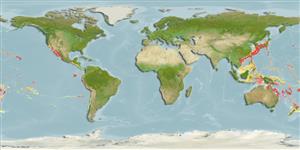
البيئة: الوسط / المنطقة المناخية / نطاق العمق / نطاق التوزيع
البيئة
بحري القاع; نطاق العمق 85 - 510 m (Ref. 58302). Tropical
Western Pacific: confirmed to occur from Japan, Korea and the East China Sea south
to Taiwan.
الحجم / وزن / العمر
النضج: Lm ? range ? - ? cm
Max length : 22.3 cm SL ذكر/ مختلط الجنس; (Ref. 7434); common length : 15.0 cm TL ذكر/ مختلط الجنس; (Ref. 9137)
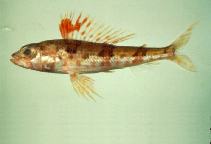
الأشعة الظهرية الناعمة (المجموع) : 15 - 16; أشعه شرجية لينه: 9 - 10; فقرات: 41 - 43. This species is distinguished by the following characters: D 16, rarely 15; A 10, rarely 9; pectoral fin rays 11, rarely 12; vertebrae41-43; total gill rakers 20 or 21, rarely 19 or 22; lateral line scales 42-43, rarely 41; pyloric caeca 11; in males, dorsal fin is large anteriorly, the membranes deeply incised but none of the rays are filamentous, third or fourth rays longest, reaching 25.7% SL, decreasing in length to middle of fin with posterior rays progressively longer, reaching 19.5% SL, its posterior lobe reaching to or past adipose �n origin; in females, anterior end o fin lower, with membranes deeply incised and rays decreasing in length to middle of fin, lengths of subsequent rays subequal, posterior lobe reaching little more than half way to adipose fin; anal fin in males is relatively deep with posterior lobe approaching hypural crease in large individuals, smaller in females with posterior lobe reaching little more than half way to hypural crease; Males have prominent, large orange to red blotch or markings anteriorly and yellow spots posteriorly in dorsal fin, 3 broad bands on side with wide dark brown margins dorsally, wide yellow stripes on each lobe of caudal fin and white pelvic and anal fins the pelvic somewhat orange basally and anal with broad yellow stripe on basal half; females have orange to red spots scattered on dorsal fin, similar but less defined pattern on side, caudal fine with mottled yellow to orange pattern, similar pelvic fin but no yellow on anal fin (Ref. 94775j).
Body shape (shape guide): elongated; Cross section: compressed.
Found in sandy or muddle areas (Ref. 9137). Benthic (Ref. 58302). Can also be found at 30 m depths (Ref. 11230). A carnivore which feeds on fish and crabs (Ref. 9137).
دورة الحياة وسلوك التزاوج
النضج | التكاثر | وضع البيض | بيض | الخصوبة | اليرقات
Randall, J.E. and K.K.P. Lim (eds.), 2000. A checklist of the fishes of the South China Sea. Raffles Bull. Zool. Suppl. (8):569-667. (Ref. 36648)
حالة القائمة الحمراء للاتحاد الدولي لحفظ الطبيعة والموارد الطبيعية (Ref. 130435: Version 2025-2 (Global))
استخدامات بشرية
مصائد: تجاري
أدوات
تقارير خاصة
تنزيل XML
مصادر علي الأنترنت
تقديرات تستند إلى النماذج
درجة الحرارة المفضلة (مرجع
123201): 5.7 - 21.3, mean 15.2 °C (based on 146 cells).
مؤشر التنوع الشُعبي الوراثي (مرجع
82804): PD
50 = 0.5020 [Uniqueness, from 0.5 = low to 2.0 = high].
Bayesian length-weight: a=0.00447 (0.00185 - 0.01077), b=3.13 (2.92 - 3.34), in cm total length, based on LWR estimates for this (Sub)family-body shape (Ref.
93245).
مستوى غذائي (مرجع
69278): 4.0 ±0.66 se; based on food items.
المرونه (مرجع
120179): وسيط, الحد الزمني الأدني لتضاعف عدد أفراد المجتمع 1.4-4.4 سنة (Assuming tm=1-3).
ضعف الصيد (Ref.
59153): Low vulnerability (17 of 100).
🛈