>
Gobiiformes (Gobies) >
Gobiidae (Gobies) > Gobiinae
Etymology: Varicus: Latin, varix = dilated vein (Ref. 45335); decorum: Species name from the Latin word for 'decorated', 'adorned', 'beautiful' or ''elegant', in reference to the beuatiful round yellow markings on the dorsal surface of the body (Ref. 113825).
Ambiente: milieu / zona climatica / distribuzione batimetrica / gamma di distribuzione
Ecologia
marino demersale; distribuzione batimetrica 99 - 251 m (Ref. 113825). Tropical
Western Central Atlantic: Curacao.
Dimensione / Peso / Età
Maturità: Lm ? range ? - ? cm
Max length : 4.1 cm SL maschio/sesso non determinato; (Ref. 113825); 4.6 cm SL (female)
Breve descrizione
Chiavi di identificazione | Morfologia | Morfometria
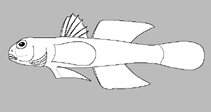
Raggi anali molli: 7 - 8; Vertebre: 27. This species can be distinguished by the following set of characters: D1 VII, without notably elongate spines; D2 I,9; A I,7-8; pectoral fin with 17 rays, 5th and 6th rays from ventral very elongate, extending well beyond other rays of fin, giving pectoral fin an asymmetrical appearance; pelvic fins I, 5, well separated with 5th pelvic-fin ray ca. 1/3-1/5 length of 4th, all pelvic-fin rays unbranched and some may have flattened fleshy tips; body and head entirely naked except for 2 modified ctenoid scales with enlarged ctenii present on each side of caudal-fin base; interorbital papillae row pb’ and pc’ present; no cephalic lateralis pores on head or preopercle present; single anal-fin pterygiophore inserted anterior to haemal arch; D1 fin with scattered yellow spots in life, some with small dark centers; dorsal surface of body with prominent round yellow circles of varying sizes; side of head with two distinct narrow yellow vertical stripes, one through eye and one through posterior margin of preopercle (Ref. 113825).
Cross section: oval.
Known from deep reefs. Collected from sandy habitats with scattered rocks and calcareous rubble. This species perch on open sand and retreat into crevices when disturbed (Ref. 113825).
Ciclo vitale e comportamento di accoppiamento
Maturità | Riproduzione | Deposizione | Uova | Fecondità | Larve
Tornabene, L., J.L. Van Tassel, D.R. Robertson and C.C. Baldwin, 2016. Molecular phylogeny, analysis of discrete character evolution, and submersible collections facilitate a new classification for a diverse group of gobies (Teleostei: Gobiidae: Gobiosomatini: Nes subgroup), with descriptions of nine new species. Zoological Journal of the Linnean Society 177(4):764-812. (Ref. 113825)
Stato della Lista Rossa IUCN (Ref. 130435: Version 2025-2 (Global))
Minaccia per l'uomo
Harmless
Usi umani
Strumenti
Rapporti speciali
Scarica XML
Fonti Internet
Stime basate su modelli
Indice di diversità filogenetica (Fonte Biblio.
82804): PD
50 = 0.5010 [Uniqueness, from 0.5 = low to 2.0 = high].
Bayesian length-weight: a=0.00741 (0.00347 - 0.01582), b=3.09 (2.91 - 3.27), in cm total length, based on LWR estimates for this (Sub)family-body shape (Ref.
93245).
Livello trofico (Fonte Biblio.
69278): 3.2 ±0.3 se; based on size and trophs of closest relatives
Resilienza (Fonte Biblio.
120179): Alto, tempo minimo di raddoppiamento della popolazione meno di 15 mesi (Preliminary K or Fecundity.).
Vulnerabilità della pesca (Ref.
59153): Low vulnerability (10 of 100).
🛈