>
Mulliformes (Goatfishes) >
Mullidae (Goatfishes)
Etymology: Upeneus: Greek, ypene, -es = upper lip (Ref. 45335); itoui: Named for Mr. Masahide Itou who collected almost all Kagoshima specimens of the new species and kindly made them available to the authors. Sakuya-himeji and Oriental Goatfish are herein proposed as the standard Japanese and English names, respectively, for the species (Ref. 88711).
Eponymy: Mr. Masahide Itou is a Japanese ichthyologist based in Kagoshima, Kyushu, Japan. He collected specimens of this goatfish and made them available to the authors. (Ref. 128868), visit book page.
Taxonomic Remarks
FishBase common name changed from Oriental goatfish to Itou's goatfish (Uiblein et al., 2024: Ref. 130857).
ສະພາບແວດລ້ອມ: ສະພາບແວດລ້ອມ / ເຂດດິນຟ້າອາກາດ / ລະດັບຄວາມເລິກ / ຂອບເຂດການແຈກຢາຍ
ນິເວດວິທະຍາ
ສັດທະເລ ອາໄສຢູ່ໃກ້ໜ້າດິນໃຕ້ພື້ນທ້ອງນ້ຳ; ລະດັບຄວາມເລິກ 23 - 27 m (Ref. 88711). Tropical
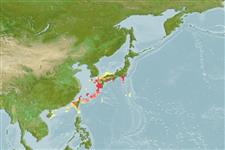
Northwest Pacific: southern Japan.
ຂະໜາດ / ນ້ຳໜັກ / ອາຍຸ
ການຈະເລີນເຕັມໄວ: Lm ? range ? - ? cm
Max length : 12.3 cm SL ຕົວຜູ້/ບໍ່ມີເພດ; (Ref. 88711)
ຄຳອະທິບາຍສັ້ນໆ
ຕົວທີ່ໃຊ້ໃນການຈຳແນກຊະນິດ | ສະລີລະວິທະຍາ | ການວັດແທກຮູບຮ່າງລັກສະນະພາຍນອກຂອງດິນ,ສັດ,ປາ…
ຄີ (ໜາມ)ແຂງຢູ່ຫຼັງປາ (ທັງໝົດ) : 7; ຄີຫຼັງຂອງປາ (ຄີອ່ອນ) (ທັງໝົດ) : 9. A species of Upeneus with the following combination of characters: dorsal-fin rays VII + 9, first dorsal-fin spine longest; pectoral-fin rays 13–15 (usually 14); gill rakers 6 or 7 (mode 6) + 16–18 (17) = 22–25 (23); pored lateral-line scales 28–30 (29); no teeth on ectopterygoids; maximum body depth 20.9–24.7% SL (mean 22.7%); maximum head depth 18.0–20.6% SL (19.2%); barbel width 6.0–7.8% HL (7.0%); barbels white; a distinct reddish brown stripe from tip of snout to caudal-fin base through eye in life and fresh specimens; first dorsal fin with 4 irregular white bands in life, 4–6 irregular reddish brown bands (retained as dark bands in preserved specimens) and 4–6 white bands in fresh specimens; upper caudal-fin lobe pale white with 5–7 reddish brown bands (retained as dark bands in preserved specimens) and 5–9 irregular pure white bands in life and fresh specimens; lower caudal-fin lobe reddish with 5–9 short red bands (retained as dark bands in preserved specimens) and 5–9 short white bands or spots along ventral margin in life and fresh specimens (Ref. 88711).
Body shape (shape guide): fusiform / normal.
ວົງຈອນຊີວິດ ແລະພຶດຕິກໍາການຫາຄູ່
ການຈະເລີນເຕັມໄວ | ການສືບພັນ | ການວາງໄຂ່ | ໄຂ່ | ຄວາມດົກຂອງໄຂ່ປາ | ຕົວອ່ອນ
Yamashita, M., D. Golani and H. Motomura, 2011. A new species of Upeneus (Perciformes: Mullidae) from southern Japan. Zootaxa 3107:47-58. (Ref. 88711)
ສະຖານະພາບບັນຊີແດງຂອງ IUCN (Ref. 130435: Version 2025-2 (Global))
ໄພຂົ່ມຂູ່ຕໍ່ມະນຸດ
Harmless
ການນໍາໃຊ້ຂອງມະນຸດ
ເຄື່ອງມື
ບົດລາຍງານພິເສດ
ດາວໂຫລດ XML
ແຫຼ່ງອີນເຕີເນັດ
ການຄາດຄະເນໂດຍອີງໃສ່ແບບຈໍາລອງ
ດັດຊະນີຄວາມຫຼາກຫຼາຍທາງຊີວະພາບ (ເອກະສານອ້າງອີງ
82804): PD
50 = 0.5000 [Uniqueness, from 0.5 = low to 2.0 = high].
Bayesian length-weight: a=0.00933 (0.00439 - 0.01983), b=3.09 (2.92 - 3.26), in cm total length, based on LWR estimates for this Genus-body shape (Ref.
93245).
ຊັ້ນເຂດຮ້ອນ (ເອກະສານອ້າງອີງ
69278): 3.4 ±0.4 se; based on size and trophs of closest relatives
ຄວາມຢືດຢຸ່ນ (ເອກະສານອ້າງອີງ
120179): ສູງ, ປະຊາກອນຕຳ່ສຸດທີ່ໃຊ້ເວລາສອງໜ້ອຍກວ່າ 15 ເດືອນ (Preliminary K or Fecundity.).
ຄວາມສ່ຽງຕໍ່ການຫາປາ (Ref.
59153): Low vulnerability (10 of 100).
🛈