Классификация / Имена
народные названия | синонимы | Catalog of Fishes(род, виды) | ITIS | CoL | WoRMS | Cloffa
>
Siluriformes (Catfishes) >
Loricariidae (Armored catfishes) > Loricariinae
Etymology: avacanoeiro: The species name, avacanoeiro, is in reference to the Avá-canoeiros, inhabitants from the upper rio Tocantins basin. Avá-canoeiros, an American group that historically inhabited the area of the upper rio Tocantins, drainage from
which the examined.
Eponymy: Francesca Raimonde La Monte (1895–1982) was an ichthyologist who worked at the AMNH (1920–1968). [...] The Avá-canoeiros are an indigenous Brazilian people. Historically they lived in the upper Rio Tocantins basin, Goiás, where this catfish is found. (Ref. 128868), visit book page.
Окружающая среда: среда / климатическая зона / пределы глубины / диапазон распространения
экология
; пресноводный демерсальный. Tropical; 48°S - 49°S, 13°W - 14°W
South America: Brazil. Upper rio Tocantins basin (Ref. 83332).
Размер / Вес / Возраст
половая зрелость: Lm ? range ? - ? cm
Max length : 16.0 cm SL самец/пол неопределен; (Ref. 83332)
Краткое описание
определительные ключи | морфология | морфометрия
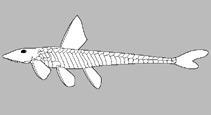
Lamontichthys avacanoeiro differs from all congeners in the shorter first branched dorsal-fin ray (22.6-26.0%, vs. 26.4-40.5% SL) in specimens larger than 70 mm SL.
Lamontichthys avacanoeiro can be further distinguished from L. filamentosus, L. llanero, and L. maracaibero by the anterior tip of the snout with an oval shaped area without plates (vs. tip of snout totally covered with plates or, with only a very small area lacking plates), and by the teeth with long cusps (vs. short). Lamontichthys avacanoeiro can be further distinguished from L. filamentosus and L. llanero by the lower lip semi-oval shaped (vs. semicircular). Lamontichthys avacanoeiro also differs from L. maracaibero in having more than one plate between the base of the last pelvic-fin ray and the anterior margin of the anus (vs. one plate) and in the greater abdominal length in specimens larger than 150 mm SL (17.6-17.7% [n = 2], vs. 14.1-16.3% SL [n = 5]). Lamontichthys avacanoeiro can be distinguished from L. parakana by the more posterior location of the anal-fin origin (at the vertical through the distal tip of the last dorsal-fin ray, vs. anterior to that point), by the shorter unbranched anal-fin ray (16.9-20.3%, vs. 21.4-24.8% SL), and by the smaller orbital diameter (13.6-16.2%, vs. 16.6-17.3% HL) in specimens larger than 70 mm SL. Lamontichthys avacanoeiro also differs from specimens of L. parakana larger than 100 mm SL in the narrower head (91.3-100.9%, vs. 101.3-106.1% HL) (Ref. 83332).
Body shape (shape guide): elongated.
Жизненный цикл и брачное поведение
половая зрелость | размножение | нерест | икра | Плодовитость | личинки
de Carvalho Paixão, A. and M. Toledo-Piza, 2009. Systematics of Lamontichthys Miranda-Ribeiro (Siluriformes: Loricariidae), with the description of two new species. Neotrop. Ichthyol. 7(4):519-568. (Ref. 83332)
Статус Красного Списка МСОП (Ref. 130435: Version 2025-2 (Global))
Угроза для людей
Harmless
Использование человеком
дополнительная информация
инструменты
Специальные отчеты
Скачать в формате XML
ресурсы в Интернет
Оценки, основанные на моделях
Индекс филогенетического разнообразия (ссылка
82804): PD
50 = 0.5156 [Uniqueness, from 0.5 = low to 2.0 = high].
Bayesian length-weight: a=0.00398 (0.00185 - 0.00857), b=3.11 (2.93 - 3.29), in cm total length, based on LWR estimates for this (Sub)family-body shape (Ref.
93245).
Трофический уровень (ссылка
69278): 2.5 ±0.2 se; based on size and trophs of closest relatives
устойчивость к внешним воздействиям (ссылка
120179): средний (среднего размера), минимальное время удвоения популяции 1.4-4.4 года (Preliminary K or Fecundity.).
Уязвимость рыбной ловли (Ref.
59153): Low vulnerability (10 of 100).
🛈