رده بندی / نامها
اسامي عام | مترادف | Catalog of Fishes(جنس, گونه ها) | ITIS | CoL | WoRMS | Cloffa
>
Cypriniformes (Carps) >
Cyprinidae (Minnows or carps) > Smiliogastrinae
Etymology: Puntius: Lantin, punctum = point, the point of the sword (Ref. 45335); kamalika: Named for Kamalika Abeyaratne (22 June 1934-11 December 2004), formed as a noun in apposition. Puntius kamalika has previously been known in Sri Lanka by the vernacular names Ipilli kadeya and Mada ipilla (Deraniyagala 1930).
Eponymy: Dr Kamalika ‘Kami’ Abeyaratne (1934–2004) was a Sri Lankan pediatrician who became an AIDS activist (1997) after she contracted HIV through a contaminated blood transfusion, administered following a near-fatal traffic accident (1995). (Ref. 128868), visit book page.
محیط زیست: محیط زیست / منطقه آب و هوایی / تغييرات عمق / محدوده توزیع
بوم شناسي
; آب شيرين موجوداتی که در محدوده وسیعی از آبهای آزاد از نزدیک بستر و یا روی کف بستر، در قسمت های میان آبی تا سطح آب و در برخی گونه ها با قابلیت پرواز، زندگی و تغذیه می کنند.. Tropical; 7°N - 6°N
Asia: Sri Lanka: widely distributed in the wet-zone lowlands of Sri Lanka (rainfall >2,500 mm yr-1), where it occurs in streams, rivers and marshes between the Kelani-River basin draining to the island’s west, and the Gin River basin to the south.
اندازه / وزن / سن
بلوغ: Lm ? range ? - ? cm
Max length : 7.3 cm SL جنس نر / بدون خواص جنسي; (Ref. 77057)
توصيف مختصر
كليدهاي شناسايي | ريخت شناسي | ريخت ستجي بوسيله انداره گيري
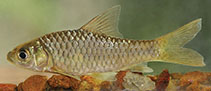
Can be distinguished from all Sri Lankan and peninsular-Indian congeners by having ½4/1/2½ scales in transverse line between mid-dorsal scale row and pelvic-fin origin and lacking any prominent markings on fins and body in both living and preserved examples. Additionally, it is distinguished from the Sri Lankan and peninsular Indian species of Puntius that most closely resemble it as follows: from P. amphibius sensu stricto by having the head length 28.8-31.2% (vs. 26.4-28.3%) SL; eye diameter 7.7-10.2% (vs. 6.6-7.3%) SL; maxillary barbel 3.7-5.3% (vs. 3.1%) SL; and 16+14 vertebrae (vs. 17+14); from P. dorsalis by its smaller size (maximum standard length 72 mm, vs. 133 mm); and lacking any prominent markings on fins and body (vs. black blotches on base of dorsal and caudal fins); and from P. mahecola by its smaller maximum size (up to 73 mm SL, vs. 89 mm SL in P. mahecola), and by lacking a black blotch, larger than eye, across about 3½ scales of the caudal peduncle (Ref. 77057).
Body shape (shape guide): fusiform / normal.
چرخه زندگی و رفتار جفتگیری
بلوغ | تولید مثل | تخم ریزی | تخم ها | باروری | توزاد ( لارو)
Silva, A., K. Maduwage and R. Pethiyagoda, 2008. Puntius kamalika, a new species of barb from Sri Lanka (Teleostei: Cyprinidae). Zootaxa 1824:55-64. (Ref. 77057)
وضعيت در فهرست قرمز IUCN (Ref. 130435: Version 2025-2 (Global))
خطر برای انسان ها
Harmless
استفاده انسانی
ماهي گيري – شيلات: از بی علاقه گی
ابزارها
گزارش های ويژه
بارگيری XML
منابع اينترنتي
تخمینها بر اساس مدلها
شاخص تنوع فیلوژنتیکی (مرجع
82804): PD
50 = 0.5000 [Uniqueness, from 0.5 = low to 2.0 = high].
Bayesian length-weight: a=0.01259 (0.00566 - 0.02798), b=3.02 (2.85 - 3.19), in cm total length, based on LWR estimates for this Genus-body shape (Ref.
93245).
سطح تروفیک (مرجع
69278): 2.7 ±0.1 se; based on size and trophs of closest relatives
جهندگی (مرجع
120179): زياد, كمينه زمان لازم براي دو برابر شدن جمعيت ، كمتر از 15 ماه (Preliminary K or Fecundity.).
آسیبپذیری ماهیگیری (Ref.
59153): Low vulnerability (10 of 100).
🛈