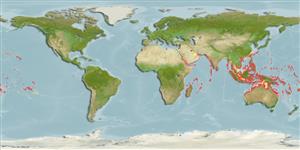
محیط زیست: محیط زیست / منطقه آب و هوایی / تغييرات عمق / محدوده توزیع
بوم شناسي
دريايي وابسته به آب سنگ; غير مهاجر; تغييرات عمق 0 - 40 m (Ref. 37816), usually 1 - 15 m (Ref. 90102). Tropical; 24°C - 28°C; 29°N - 34°S, 33°E - 122°W (Ref. 5222)
Indo-Pacific: Red Sea to Durban, South Africa and eastward to French Polynesia and the Pitcairn group, north to the Ryukyu and Ogasawara islands, south to northern Australia and Lord Howe Island. May be confused with Cephalopholis cyanostigma.
طول در اولین بلوغ / اندازه / وزن / سن
بلوغ: Lm ?, range 22 - ? cm
Max length : 60.0 cm TL جنس نر / بدون خواص جنسي; (Ref. 11441); common length : 40.0 cm TL جنس نر / بدون خواص جنسي; (Ref. 5450)
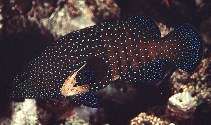
خارهاي باله پشتي (کل) : 9; شعاع نرم باله پشتي (کل) : 15 - 17; خارهاي باله مخرجي: 3; شعاع نرم باله مخرجي: 9. This species is distinguished by the following characters: greatest body depth 2.7-3.3 in SL; dorsal soft rays usually 16-17; pectoral fin rays usually 16-17; longitudinal scale series 95-110; caudal fin rounded; pelvic fins short , 1.9-2.4 in head length. Colour of body dark brown, with small black-edged blue spots; often with 5-6 pale bars on rear part of body and a large pale area over the chest (abdominal/pectoral region) (Ref. 39231, 90102).
Body shape (shape guide): fusiform / normal; Cross section: oval.
A generally common species (Ref. 9710). Adults are benthic and benthopelagic in a variety of coral habitats (Ref. 58534, 58302) from tide pools to depths of at least 40 m; preferring the 1 to 10 m reef zone. Juveniles prefer shallow, protected coral thickets (Ref. 37816). Mature adults are found in social units comprising up to 12 adults, including 1 dominant male and each group occupies a specific area (up to 2,000 sq. m.) that is defended by the territorial male and subdivided into secondary territories, each inhabited by a single female (Ref. 39231). At times, they may also be solitary (Ref. 90102). Adults feed mainly on fishes (75-95%) and to a lesser extent on crustaceans. In the Red Sea, they feed early in the morning and late afternoon (Ref. 6775) but in Madagascar, they appear to feed more at night (Ref. 6774). They are implicated in ciguatera at some of the islands in the Pacific region. They can be seen in Hong Kong live fish markets (Ref. 27253). They are important to artisanal fisheries throughout the Indo-West Pacific region and often caught with hook-and-line, spear, and in traps (Ref. 39231). Minimum depth reported taken from Ref. 128797.
چرخه زندگی و رفتار جفتگیری
بلوغ | تولید مثل | تخم ریزی | تخم ها | باروری | توزاد ( لارو)
Heemstra, P.C. and J.E. Randall, 1993. FAO Species Catalogue. Vol. 16. Groupers of the world (family Serranidae, subfamily Epinephelinae). An annotated and illustrated catalogue of the grouper, rockcod, hind, coral grouper and lyretail species known to date. Rome: FAO. FAO Fish. Synop. 125(16):382 p. (Ref. 5222)
وضعيت در فهرست قرمز IUCN (Ref. 130435: Version 2025-2 (Global))
خطر برای انسان ها
Reports of ciguatera poisoning (Ref. 4690)
استفاده انسانی
ماهي گيري – شيلات: تجاري; ماهي ها ي سرگرم كننده: بله; آكواريوم: تجاري
ابزارها
گزارش های ويژه
بارگيری XML
منابع اينترنتي
تخمینها بر اساس مدلها
دمای ترجیحی (مرجع
123201): 24.9 - 29.3, mean 28.4 °C (based on 3533 cells).
شاخص تنوع فیلوژنتیکی (مرجع
82804): PD
50 = 0.5000 [Uniqueness, from 0.5 = low to 2.0 = high].
Bayesian length-weight: a=0.01230 (0.01070 - 0.01414), b=3.05 (3.02 - 3.08), in cm total length, based on LWR estimates for this species (Ref.
93245).
سطح تروفیک (مرجع
69278): 4.5 ±0.0 se; based on diet studies.
جهندگی (مرجع
120179): متوسط, كمينه زمان لازم براي دو برابر شدن جمعيت 4/1 – 4/4 سال (Preliminary K or Fecundity.).
آسیبپذیری ماهیگیری (Ref.
59153): Moderate vulnerability (44 of 100).
🛈
آسیبپذیری اقلیمی (Ref.
125649): High to very high vulnerability (72 of 100).
🛈
مواد مغذی (Ref.
124155): Calcium = 35.8 [20.4, 60.7] mg/100g; Iron = 0.489 [0.277, 0.892] mg/100g; Protein = 18.7 [16.9, 20.4] %; Omega3 = 0.152 [0.098, 0.235] g/100g; Selenium = 35.2 [19.9, 59.3] μg/100g; VitaminA = 148 [53, 474] μg/100g; Zinc = 0.673 [0.495, 1.087] mg/100g (wet weight); based on
nutrient studies.