>
Beloniformes (Needle fishes) >
Adrianichthyidae (Ricefishes) > Oryziinae
Etymology: Oryzias: Greek, oryza = rice; because of the habitat used by this fish (Ref. 45335).
Environnement : milieu / zone climatique / profondeur / gamme de distribution
Écologie
; eau douce benthopélagique; pH range: 7.5 - 8.5; non migrateur. Tropical; 22°C - 25°C (Ref. 31267)
Asia: Indonesia.
Taille / Poids / Âge
Maturité: Lm ? range ? - ? cm
Max length : 5.5 cm TL mâle / non sexé; (Ref. 31267); common length : 4.5 cm TL mâle / non sexé; (Ref. 27139)
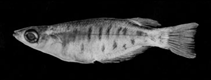
Rayons mous dorsaux (Total) : 8 - 9; Rayons mous anaux: 20 - 25. Distinguished from all other members of the genus by the combination of the following characters: 41-47 vertical rows of scales; 8-9 dorsal rays; 20-25 anal rays; and the distinctive color pattern of males (Ref. 26687).
Body shape (shape guide): elongated.
Non-annual breeder. Is very difficult to maintain in aquarium (Ref. 27139).
Cycle de vie et comportement reproducteur
Maturité | Reproduction | Frai | Œufs | Fécondité | Larves
From observation in an aquarium, females carry a cluster of about 15-20 eggs which were deposited among plants and floating objects. (Ref. 26687).
Kottelat, M., A.J. Whitten, S.N. Kartikasari and S. Wirjoatmodjo, 1993. Freshwater fishes of Western Indonesia and Sulawesi. Periplus Editions, Hong Kong. 221 p. (Ref. 7050)
Statut dans la liste rouge de l'IUCN (Ref. 130435: Version 2025-2 (Global))
Menace pour l'homme
Harmless
Utilisations par l'homme
Pêcheries: commercial; Aquarium: Commercial
Outils
Articles particuliers
Télécharger en XML
Sources Internet
Estimations basées sur des modèles
Indice de diversité phylogénétique (Réf.
82804): PD
50 = 0.5000 [Uniqueness, from 0.5 = low to 2.0 = high].
Bayesian length-weight: a=0.00479 (0.00190 - 0.01207), b=3.13 (2.91 - 3.35), in cm total length, based on LWR estimates for this (Sub)family-body shape (Ref.
93245).
Niveau trophique (Réf.
69278): 3.5 ±0.5 se; based on size and trophs of closest relatives
Résilience (Réf.
120179): Faible, temps minimum de doublement de population : 4,5 à 14 années (Assuming fec < 100).
Vulnérabilité de la pêche (Ref.
59153): Low vulnerability (10 of 100).
🛈