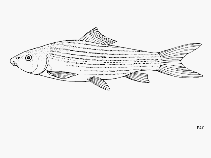
>
Cypriniformes (Carps) >
Cyprinidae (Minnows or carps) > Labeoninae
Etymology: Labeo: Latin, labeo = one who has large lips (Ref. 45335); mesops: From the Greek word mesos meaning middle or half and opsis meaning sight; name refers to the state of the type material which was only half of the skin (Ref. 26190).
More on author: Günther.
Περιβάλλον: περιβάλλον / κλιματική ζώνη / εύρος βάθους / εύρος διανομής
Οικολογία
; Γλυκού νερού βενθοπελαγικό; ποταμόδρομος (Ref. 51243). Tropical
Africa: present in Lake Malawi basin (Ref. 1878, 52161, 55909, 96560), Juba system (1440) and Ruvuma River (Ref. 1440, 97286). Status Tana River population is uncertain (Ref. 52331). Reports from the Lufira River, Upper Congo River basin (Ref. 1440, 26190), are misidentifications of Labeo rosae (Ref. 96560).
Μήκος κατά την πρώτη ωρίμανση / Μέγεθος / Βάρος / Ηλικία
Γεννητική Ωρίμανση: Lm 33.9 range ? - ? cm
Max length : 39.0 cm TL αρσενικό/απροσδιόριστο; (Ref. 2801)
Σύντομη περιγραφή
Κλείδες προσδιορισμού | Μορφολογία | Μορφομετρία
Ραχιαίες άκανθες (συνολικά) : 3; Μαλακές ραχιαίες ακτίνες (συνολικά) : 10 - 12; Εδρικές άκανθες: 3; Μαλακές εδρικές ακτίνες: 5; Σπόνδυλοι: 34.
Body shape (shape guide): fusiform / normal; Cross section: oval.
Found in shallow water over sandy bottoms (Ref. 5595, 52161). Is a mud-feeder (Ref. 52161), feeds from the biocover and sediment on the sand (Ref. 5595). Also caught using weirs and baskets; formerly very abundant in Malawi, but now rare except where rivers drain undisturbed soil; possible that silt prevents development of eggs (Ref. 4967). Indications that it may leave the lake and run up rivers to spawn (Ref. 52161).
Spawns in small, muddy wet season rivers leading to swampy dambos (Ref. 2781). Holds its spawn until the rivers flood.
Tshibwabwa, S.M., 1997. Systématique des espèces africaines du genre Labeo (Teleostei, Cyprinidae) dans les régions ichtyogéographiques de Basse-Guinée et du Congo. I. Presses Universitaires de Namur, Namur, Belgique. 302 p. (Ref. 26190)
Κατάσταση Κόκκινου Καταλόγου IUCN (Ref. 130435: Version 2025-2 (Global))
Απειλή για τον άνθρωπο
Harmless
Ανθρώπινες χρήσεις
αλιεία: χωρίς ενδιαφέρον; Υδατοκαλλιέργειες: πειραματικό; Ενυδρείο: Εμπορικό(ά)
Εργαλεία
Ειδικές εκθέσεις
Λήψη XML
Διαδικτυακές πηγές
Εκτιμήσεις βάσει μοντέλων
Δείκτης φυλογενετικής ποικιλότητας (Αναφ.
82804): PD
50 = 0.5000 [Uniqueness, from 0.5 = low to 2.0 = high].
Bayesian length-weight: a=0.00912 (0.00420 - 0.01982), b=3.05 (2.88 - 3.22), in cm total length, based on LWR estimates for this Genus-body shape (Ref.
93245).
Τροφικό Επίπεδο (Αναφ.
69278): 2.0 ±0.00 se; based on food items.
Ελαστικότητα (Αναφ.
120179): Μεσαίο(α), ελάχιστος χρόνος για διπλασιασμό πληθυσμού 1,4 - 4,4 έτη (Preliminary K or Fecundity.).
Ευπάθεια στην αλιεία (Ref.
59153): Low to moderate vulnerability (29 of 100).
🛈
Θρεπτικά συστατικά (Ref.
124155): Calcium = 187 [52, 326] mg/100g; Iron = 0.926 [0.548, 1.671] mg/100g; Protein = 16.3 [15.4, 17.2] %; Omega3 = 0.418 [0.163, 1.162] g/100g; Selenium = 305 [114, 870] μg/100g; VitaminA = 20.6 [7.7, 57.4] μg/100g; Zinc = 1.64 [0.88, 3.32] mg/100g (wet weight);