التصنيف / الأسماء
الأسماء الشائعة | مرادفات | Catalog of Fishes(جنس, الانواع) | ITIS | CoL | WoRMS | Cloffa
>
Siluriformes (Catfishes) >
Sisoridae (Sisorid catfishes) > Glyptosterninae
Etymology: Euchiloglanis: Greek, eu = good + Greek, cheilos = lip + Greek, glanis = a fish that can eat the bait without touching the hook; a cat fish (Ref. 45335).
Eponymy: Kamakichi Kishinouye (1867–1929) was a fisheries biologist at Tokyo Imperial University, where he was a professor in the Faculty of Agriculture. [...] (Ref. 128868), visit book page.
البيئة: الوسط / المنطقة المناخية / نطاق العمق / نطاق التوزيع
البيئة
; المياه العذبة القاع. Subtropical; 32°N - 31°N, 103°E - 104°E
Asia: China. Known only from the upper Min-Jiang (Yangtze River basin, China) (Ref. 86867).
الطول عند النضج الأول / الحجم / وزن / العمر
النضج: Lm 15.4 range ? - ? cm
Max length : 19.3 cm NG ذكر/ مختلط الجنس; (Ref. 45661); common length : 15.5 cm NG ذكر/ مختلط الجنس; (Ref. 35840)
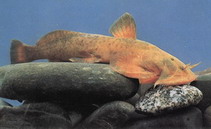
الأشواك الظهرية (المجموع) : 1; الأشعة الظهرية الناعمة (المجموع) : 5; شوكة شرجية: 1; أشعه شرجية لينه: 4 - 5. Euchiloglanis kishinouyei differs from E. longibarbatus by having a pointed maxillary barbel, not elongated as a thread, with the tip reaching only to the gill opening (vs. maxillary barbel elongated as a thread, with tip reaching posteriorly beyond gill opening. Euchiloglanis kishinouyei differs from E. davidi, E. longibarbatus and E. longus by lacking indentations in premaxillary tooth band (vs. with indentations). It differs from E. davidi by having the length of the pectoral fin being equal to 75.5–89.6% (vs. 90.5–117.1%) of distance between insertions of pectoral and pelvic fins and further differs from E. davidi and E. longus by having the distance between insertion of pelvic-fin and origin of anus being equal to 81.5–97.5% (vs. 100.0–125.0 and 108.9–140.6% respectively) of distance between insertions of pectoral and pelvic fins. Euchiloglanis kishinouyei differs from E. dorsoarcus and E. phongthoensis by having the anus located midway between the pelvic-fin insertion and the anal-fin origin (vs. the distance from the anus to pelvic-fin insertion equal to about 50% of the distance from the anus to the anal-fin origin) (Ref. 86867).
Body shape (shape guide): elongated.
Inhabits rocky and gravel bed pools in streams (Ref. 12045). Found in mountain rapids (Ref. 41236).
دورة الحياة وسلوك التزاوج
النضج | التكاثر | وضع البيض | بيض | الخصوبة | اليرقات
Zhou, W., X. Li and A.W. Thomson, 2011. Two new species of the Glyptosternine catfish genus Euchiloglanis (Teleostei: Sisoridae) from southwest China with redescriptions of E. davidi and E. kishinouyei. Zootaxa 2871:1-18. (Ref. 86867)
حالة القائمة الحمراء للاتحاد الدولي لحفظ الطبيعة والموارد الطبيعية (Ref. 130435: Version 2025-2 (Global))
استخدامات بشرية
أدوات
تقارير خاصة
تنزيل XML
مصادر علي الأنترنت
تقديرات تستند إلى النماذج
مؤشر التنوع الشُعبي الوراثي (مرجع
82804): PD
50 = 0.5625 [Uniqueness, from 0.5 = low to 2.0 = high].
Bayesian length-weight: a=0.00912 (0.00576 - 0.01445), b=3.04 (2.90 - 3.18), in cm total length, based on LWR estimates for this species & (Sub)family-body (Ref.
93245).
مستوى غذائي (مرجع
69278): 3.2 ±0.4 se; based on size and trophs of closest relatives
المرونه (مرجع
120179): منخفض, الحد الزمني الأدني لتضاعف عدد أفراد المجتمع 4.5-14 سنة (Preliminary K or Fecundity.).
ضعف الصيد (Ref.
59153): Low vulnerability (14 of 100).
🛈