Lingkungan: lingkungan / zona iklim / kisaran kedalaman / jangkauan distribusi
Ekologi
; air tawar; payau bentopelagis; potamodromous (Ref. 51243). Temperate
Europe and Asia: Southern and western Caspian Sea; Aral basin; River Chun (Kasakhstan). For spawning, migrates up to larger tributaries of western and southern coasts: Terek, Samur, Kura, lower Aras. Rarely in lower Volga (up to Volgograd) and Ural.
Panjang pada saat jatuh tempo pertama / Ukuran / Berat / umur
Kematangan: Lm 60.0, range 50 - 70 cm
Max length : 90.0 cm TL jantan/; (Ref. 1441); 105.0 cm TL (female); common length : 66.0 cm NG jantan/; (Ref. 1441); common length :62 cm (female); Berat maksimum terpublikasi: 22.0 kg (Ref. 4537)
deskripsi pendek
Kunci identifiaksi (pengenalan) | Morfologi | Morfometrik
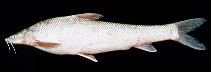
Diagnosed from other species of Barbus and Luciobarbus in Caspian Se basin by having the following characters: predorsal length shorter than postdorsal length; dorsal fin usually with 7½ branched rays; 16-25 gill rakers; back between head and dorsal origin laterally compressed, forming a keel; lateral line with 62-90 (usually 65-77) scales; and lower lip thin, without median lobe or pad (Ref. 59043).
Body shape (shape guide): fusiform / normal.
Found in rivers, reservoirs, lakes and canals (Ref. 11145). Occurs in the sea at depths of up to 25 m and in rivers in deep stretches with gravel or stone bottom. In freshened parts of sea, preys mainly on benthic crustaceans. Does not feed while migrating upstream and starts to feed again at the spawning sites mainly on insects, juveniles of other fishes, rarely on algae, seeds and other plant material. Spawns in fast-flowing water at areas with hard bottom and depths of 1-2 m (Ref. 59043).
Eggs are semipelagic and hatch while drifting downstream after at least 2 days at 25°C. Larvae settle into places with slow current; after 2-12 months juveniles drift downstream to sea or reservoir if river is dammed (Ref. 59043).
Fricke, R., M. Bilecenoglu and H.M. Sari, 2007. Annotated checklist of fish and lamprey species (Gnathostoma and Petromyzontomorphi) of Turkey, including a Red List of threatened and declining species. Stuttgarter Beitr. Naturk. Sea A (706):1-172. (Ref. 58342)
Status IUCN Red List (Ref. 130435: Version 2025-2 (Global))
ancaman kepada manusia
Harmless
penggunaan manusia
Perikanan: komersial
Alat, peralatan
laporan khas
muat turun XML
Sumber internet
Estimasi berdasarkan model
Indeks keanekaragaman filogenetik (Acuan
82804): PD
50 = 0.5000 [Uniqueness, from 0.5 = low to 2.0 = high].
Bayesian length-weight: a=0.01047 (0.00504 - 0.02175), b=2.99 (2.82 - 3.16), in cm total length, based on LWR estimates for this Genus-body shape (Ref.
93245).
Tingkat Trofik (Acuan
69278): 2.8 ±0.3 se; based on size and trophs of closest relatives
Daya lenting (Acuan
120179): Rendah, Waktu penggandaan populasi minimum 4.5 - 14 tahun (K=0.12).
Kerentanan Penangkapan Ikan (Ref.
59153): High vulnerability (63 of 100).
🛈