>
Blenniiformes (Blennies) >
Chaenopsidae (Pike-, tube- and flagblennies)
Etymology: Chaenopsis: Greek, chaeno = to yawn + Greek, opsis = appearance (Ref. 45335).
Eponymy: Dr Waldo LaSalle Schmitt (1887–1977) was an expert on crustaceans who worked at the Smithsonian (1915–1957). [...] (Ref. 128868), visit book page.
Entorno: milieu / zona climática / rango de profundidad / gama de distribución
Ecología
marino asociado a arrecife; rango de profundidad 3 - 30 m (Ref. 11482). Tropical
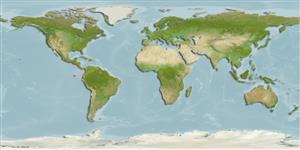
Eastern Central Pacific: Costa Rica to Colombia and the Galapagos Islands.
Tamaño / Peso / Edad
Madurez: Lm ? range ? - ? cm
Max length : 8.0 cm TL macho / no sexado; (Ref. 11482)
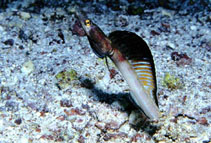
Lives in worm tubes on sand and rubble bottoms (Ref. 11482). Males are territorial and vigorously defend their worm tube homes. When courting, the male will assume the S-shape position and dart quickly back and forth from their place of shelter. When threatened, it opens its enormous mouth, which significantly increases its apparent size to the invader (Ref. 28023).
Ciclo vital y comportamiento de apareamiento
Madurez | Reproducción | Puesta | Huevos | Fecundidad | Larva
Allen, G.R. and D.R. Robertson, 1994. Fishes of the tropical eastern Pacific. University of Hawaii Press, Honolulu. 332 p. (Ref. 11482)
Situación en la Lista Roja de la UICN (Ref. 130435: Version 2025-2 (Global))
Amenaza para el ser humano
Harmless
Usos humanos
Herramientas
Informes especiales
Descargar XML
Fuentes de Internet
Estimaciones basadas en modelos
Temperatura preferida (Referencia
123201): 22.3 - 29.1, mean 26.8 °C (based on 251 cells).
Índice de diversidad filogenética (Referencia
82804): PD
50 = 0.5005 [Uniqueness, from 0.5 = low to 2.0 = high].
Bayesian length-weight: a=0.00102 (0.00046 - 0.00225), b=3.06 (2.88 - 3.24), in cm total length, based on all LWR estimates for this body shape (Ref.
93245).
Nivel trófico (Referencia
69278): 3.5 ±0.5 se; based on size and trophs of closest relatives
Vulnerabilidad pesquera (Ref.
59153): Low vulnerability (10 of 100).
🛈