ກຸ່ມປາກະດູກອ່ອນ (ເຊັ່ນ: ປາສະຫລາມ, ປາຜາໄລ) (sharks and rays) >
Lamniformes (Mackerel sharks) >
Alopiidae (Thresher sharks)
Etymology: Alopias: From alopex, Greek for fox, referring to the ancient vernacular “fox shark,” from its supposed cunning (ancients believed that when it took a bait, it swallowed the hook until it got to the cord, which it bit off and so escaped) (See ETYFish); vulpinus: Latin for fox-like (as for genus) (See ETYFish).
More on author: Bonnaterre.
ສະພາບແວດລ້ອມ: ສະພາບແວດລ້ອມ / ເຂດດິນຟ້າອາກາດ / ລະດັບຄວາມເລິກ / ຂອບເຂດການແຈກຢາຍ
ນິເວດວິທະຍາ
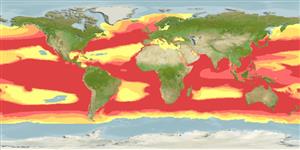
ສັດທະເລ pelagic-oceanic; ປາທີ່ມີການເຄື່ອນຍ້າຍໃນສະເພາະມາະຫາສະມຸດ (Ref. 87829); ລະດັບຄວາມເລິກ 0 - 650 m (Ref. 106604), usually 0 - 200 m (Ref. 55168). Subtropical; 74°N - 58°S, 180°W - 180°E (Ref. 54279)
Cosmopolitan in temperate and tropical seas (Ref. 6871, 58085). Population considered reduced (R) in the US Atlantic waters; lower risk/conservation dependent (LR/CD) in US Pacific waters; data deficient (DD) in the rest of Atlantic and rest of Pacific (Ref. 12451). Highly migratory species.
ຄວາມຍາວໃນການເຕີບໂຕເຕັມຄັ້ງທໍາອິດ / ຂະໜາດ / ນ້ຳໜັກ / ອາຍຸ
ການຈະເລີນເຕັມໄວ: Lm 351.0, range 226 - 400 cm
Max length : 573 cm TL ຕົວຜູ້/ບໍ່ມີເພດ; (Ref. 106604); 549.0 cm TL (female); common length : 450 cm TL ຕົວຜູ້/ບໍ່ມີເພດ; (Ref. 5217); ນ້ຳໜັກສູງສຸດທີ່ເຄຍຈັດພີມມາ: 348.0 kg (Ref. 40637); ອາຍຸສູງສຸດທີ່ເຄຍລາຍງານມາ: 25 ປີ (Ref. 81241)
ຄີ (ໜາມ)ແຂງຢູ່ຫຼັງປາ (ທັງໝົດ) : 0; ຄີ(ໜາມ) ແຂງຢູ່ຄີກົ້ນປາ
ກຸ່ມປາກະດູກແຂງ
ຄວາມຖີ່ຂອງກຸ່ມຖ່າຍທອດພັນ
ປາທີ່ມີການເຄື່ອນຍ້າຍຈາກທະເລໄປຫານ້ຳຈືດ ແລະນ້ຳຈືດຫາທະເລ
ປາທີ່ມີການເຄື່ອນຍ້າຍຈາກທະເລແລະໄປໄຂ່ຢູ່ນ້ຳຈືດ
ຄີກົ້ນຂອງປາ
ສັດທີ່ມີກະດູກສັນຫັຼງ
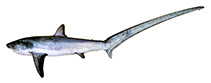
ການຖ່າຍທອດທາງກຳມະພັນຈາກພໍ່ແມ່ຫາລູກ: 0. A large thresher with relatively small eyes, curved, narrow-tipped pectoral fins, a narrow-tipped caudal fin, and a conspicuous white patch over the pectoral fin bases (Ref. 5578). Second dorsal origin well behind the rear tip of the pelvic fin (Ref. 559). Upper lobe of caudal fin very long and strap-like, about as long as or longer than length of rest of shark; lower lobe short but well developed (Ref. 13570). Brown, grey, blue-grey, or blackish on back and underside of snout, lighter on sides and abruptly white below; a white area extends from the abdomen over the pectoral-fin bases; pectoral-, pelvic-, and dorsal fins blackish, white dots sometimes present on pectoral-, pelvic-, and caudal- fin tips (Ref. 13570).
Body shape (shape guide): fusiform / normal; Cross section: circular.
Coastal over continental and insular shelves and epipelagic far from land (Ref. 30573, 43278, 58302). Oceanic although most abundant near land, pelagic at 1-366 m (Ref. 58302). Young often close inshore and in shallow bays (Ref. 5578). Feeds on schooling fishes (including mackerels, bluefishes, clupeids, needlefishes, lancetfishes and lanternfishes), squid, octopi, pelagic crustaceans, and rarely seabirds (Ref. 247). Ovoviviparous, embryos feeding on yolk sac and other ova produced by the mother (Ref. 43278, 50449). Uses its long caudal fin to bunch up and stun prey (Ref. 2850). Spatial and depth segregation by sex in northwestern Indian Ocean populations (Ref. 247). A few attacks on boats are doubtfully attributed to this species, but it is otherwise apparently harmless to humans, though the size of adults of this species command respect (Ref. 247). May cause damage to fishing gear (Ref. 6885). Valued for its meat, liver, hide, and fins; utilized fresh, dried-salted, smoked, and frozen (Ref. 9987).
Ovoviviparous, embryos feed solely on the ova produced by the mother after the yolk sac is absorbed (oophagy) (Ref. 50449), 2 to 4 young in a litter (usually 2) (Ref. 247). Size at birth 114-150 cm (Ref. 247). Distinct pairing with embrace (Ref. 205).
Compagno, L.J.V., 1984. FAO Species Catalogue. Vol. 4. Sharks of the world. An annotated and illustrated catalogue of shark species known to date. Part 1 - Hexanchiformes to Lamniformes. FAO Fish. Synop. 125(4/1):1-249. Rome, FAO. (Ref. 247)
ສະຖານະພາບບັນຊີແດງຂອງ IUCN (Ref. 130435: Version 2025-2 (Global))
ການນໍາໃຊ້ຂອງມະນຸດ
ການປະມົງ: ເປັນສີນຄ້າ; ຊະນິດປາທີ່ຖືກນຳໃຊ້ເຂົ້າໃນການຫາເພື່ອເປັນເກມກິລາ: ແມ່ນ
ເຄື່ອງມື
ບົດລາຍງານພິເສດ
ດາວໂຫລດ XML
ແຫຼ່ງອີນເຕີເນັດ
ການຄາດຄະເນໂດຍອີງໃສ່ແບບຈໍາລອງ
ອຸນຫະພູມທີ່ຕ້ອງການ (ເອກະສານອ້າງອີງ
123201): 11.6 - 28.2, mean 23.3 °C (based on 8352 cells).
ດັດຊະນີຄວາມຫຼາກຫຼາຍທາງຊີວະພາບ (ເອກະສານອ້າງອີງ
82804): PD
50 = 0.7500 [Uniqueness, from 0.5 = low to 2.0 = high].
Bayesian length-weight: a=0.00851 (0.00364 - 0.01988), b=2.86 (2.66 - 3.06), in cm total length, based on LWR estimates for this species & (Sub)family-body (Ref.
93245).
ຊັ້ນເຂດຮ້ອນ (ເອກະສານອ້າງອີງ
69278): 4.5 ±0.0 se; based on diet studies.
Generation time: 11.0 ( na - na) years. Estimated as median ln(3)/K based on 2
growth studies.
ຄວາມຢືດຢຸ່ນ (ເອກະສານອ້າງອີງ
120179): ຕຳ່, ປະຊາກອນຕຳ່ສຸດທີ່ໃຊ້ເວລາສອງເທົ່າ 4.5 - 14 ປີ (K=0.1; tm=5-7; tmax=19; Fec=2-4).
Prior r = 0.05, 95% CL = 0.03 - 0.07, Based on 1 full stock assessment.
ຄວາມສ່ຽງຕໍ່ການຫາປາ (Ref.
59153): Very high vulnerability (77 of 100).
🛈
ຄວາມສ່ຽງດ້ານສະພາບອາກາດ (Ref.
125649): High vulnerability (62 of 100).
🛈
ທາດອາຫານ (Ref.
124155): Calcium = 6.93 [1.98, 35.15] mg/100g; Iron = 0.726 [0.178, 2.143] mg/100g; Protein = 20.7 [18.3, 23.1] %; Omega3 = 0.379 [0.152, 0.923] g/100g; Selenium = 37.8 [10.7, 110.5] μg/100g; VitaminA = 4.78 [1.56, 14.81] μg/100g; Zinc = 0.28 [0.14, 0.52] mg/100g (wet weight);