分類 / 名前
共通名の | 類義語 | Catalog of Fishes(部類, 種) | ITIS | CoL | WoRMS | Cloffa
板鰓亜鋼(サメとエイ類) (sharks and rays) >
Hexanchiformes (Frill and cow sharks) >
Hexanchidae (Cow sharks)
Etymology: Notorynchus: Etymology not explained, presumably noto(s) (Gr.), back, possibly referring to posterior placement of single dorsal fin; rhynchus (L.), snout, possibly referring to broad, depressed snout (See ETYFish); cepedianus: -anus, Latin adjectival suffix that means, when attached to a name, “belonging to”: Bernard Germain Étienne de La Ville-sur-Illon, comte de [count of] La Cepède (also spelled as La Cépède, Lacépède and Lacepède, 1756-1825), author of Histoire Naturelle des Poissons (1798-1803) and Péron’s “illustrious master” (translation) in ichthyology (See ETYFish).
Eponymy: Bernard Germaine Etienne de la Ville, Comte de Lacépède (also spelled La Cepède) (1756– 1825), was a French naturalist and politician. [...] (Ref. 128868), visit book page.
環境:環境 / 気候帯 / 深さの範囲 / 分布範囲
生態学
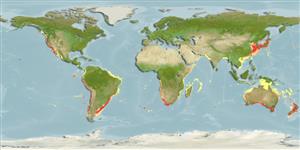
海; 汽水性の 底生の; 深さの範囲 0 - 570 m (Ref. 26346), usually ? - 80 m (Ref. 5578). Subtropical; 56°N - 55°S, 131°W - 177°E (Ref. 54680)
Circumglobal: In tropical to temperate waters; except North Atlantic and Mediterranean Sea. Southwest Atlantic: southern Brazil to northern Argentina. Southeast Atlantic: Namibia to East London, South Africa (Ref. 5578). Western Pacific: southern Japan to New Zealand. Eastern Pacific: British Columbia, Canada to Chile. Record from India maybe erroneous.
初回成熟時の長さ / サイズ / 重さ / 年齢
成熟: Lm 200.0, range 192 - 208 cm
Max length : 300 cm TL オス/雌雄の選別がない; (Ref. 5578); common length : 150 cm TL オス/雌雄の選別がない; (Ref. 6077); 最大公表体重: 107.0 kg (Ref. 9987); 最大記録サイズ: 49 年 (Ref. 27952)
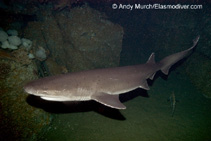
背面の脊椎 (合計) : 0; 肛門の骨: 0; 脊つい: 123 - 157. A large seven-gilled cowshark (Ref. 5578) with a wide head, short and blunt snout, and fusiform body. Dorsal fin small, origin may vary from over insertion of pelvic fins to over free rear tips of pelvic fins. Anal fin smaller than dorsal fin. Tooth count 15-16/13. Reddish-brown to silvery-grey or olive-brown with numerous small black spots on body and fins; cream below (Ref. 5578).
Body shape (shape guide): elongated.
Found on the continental shelf, often in shallow water (Ref. 247). Occurs close inshore, in bays and estuaries (Ref. 6871), with larger individuals ranging into deeper waters offshore and deep channels in bays (Ref. 247). Usually cruising steadily and slowly near the bottom (sometimes in water as shallow as a meter), but sometimes at the surface (Ref. 247). Can dash at speed when attacking prey (Ref. 247). Feeds on anything, including other sharks, rays, chimaeras, bony fish, hagfish, dolphin and porpoise meat, seals, shark egg cases, sea snails and mammalian carrion, including rats and humans (Ref. 5578). Ovoviviparous (Ref. 50449), with 82 to 95 young in a litter (Ref. 31395). Aggressive when provoked, and regarded as potentially dangerous to people in open waters (Ref. 247). It has attacked divers in captivity and may be involved in a few shark attacks off California and South Africa (Ref. 247). Often caught by anglers from the shore (Ref. 6574). Utilized for human consumption, its skin for leather, and its liver as a source of oil (Ref. 247).
ライフサイクルと交尾行動
成熟 | 繁殖 | 放精 | 卵 | 生産力 | 幼生
Ovoviviparous, embryos feeding solely on yolk (Ref. 50449), with number of young reaching 82 in a litter. Gravid females apparently drop their young in shallow bays. Size at birth between 40 (Ref. 26346) and 53 (Ref. 247) cm. Distinct pairing with embrace (Ref. 205). Gestation period 12 months. The reproductive cycle appears to be biennial (Ref. 45445).
Compagno, L.J.V., 1984. FAO Species Catalogue. Vol. 4. Sharks of the world. An annotated and illustrated catalogue of shark species known to date. Part 1 - Hexanchiformes to Lamniformes. FAO Fish. Synop. 125(4/1):1-249. Rome, FAO. (Ref. 247)
IUCNのレッドリストの状況は (Ref. 130435: Version 2025-2 (Global))
脆弱 (VU) (A2bd); Date assessed: 08 February 2020
人間の用途
水産業: 商業; ゲームフィッシュ: はい; 水族館・水槽: 公共の水族館
用具
特記事項
XMLをダウンロードして下さい
インターネットの情報源
モデルに基づく推定値
好ましい温度 (参照
123201): 7.5 - 19.2, mean 14.2 °C (based on 122 cells).
系統多様性指数 (参照
82804): PD
50 = 1.0391 [Uniqueness, from 0.5 = low to 2.0 = high].
Bayesian length-weight: a=0.00224 (0.00096 - 0.00523), b=3.15 (2.95 - 3.35), in cm total length, based on LWR estimates for this (Sub)family-body shape (Ref.
93245).
栄養段階 (参照
69278): 4.7 ±0.2 se; based on diet studies.
回復力 (参照
120179): 非常に低い, 14年以上の倍増期間の最小個体群 (rm=0.026; K=0.25; tm=16; tmax=32; Fec=82-95).
漁業の脆弱性 (Ref.
59153): High vulnerability (57 of 100).
🛈
気候脆弱性 (Ref.
125649): High vulnerability (64 of 100).
🛈
栄養素 (Ref.
124155): Calcium = 13.3 [2.9, 63.2] mg/100g; Iron = 0.671 [0.165, 1.979] mg/100g; Protein = 20.1 [17.9, 22.2] %; Omega3 = 0.275 [0.123, 0.632] g/100g; Selenium = 43.1 [11.1, 117.0] μg/100g; VitaminA = 5.25 [1.65, 16.47] μg/100g; Zinc = 0.328 [0.161, 0.626] mg/100g (wet weight);