>
Perciformes/Uranoscopoidei (Sand dwellers) >
Ammodytidae (Sand lances)
Etymology: Ammodytoides: Greek, ammos = sand + Greek, dytes = anyone that likes immersions, diving (Ref. 45335).
Eponymy: Master John Rennie of Grahamstown, South Africa, discovered three specimens of this fish “found on the beach after an onset of cold water”. We assume the use of the term ‘Master’ implies that John was a boy when he made this discovery. (Ref. 128868), visit book page.
More on author: Smith.
Entorno: milieu / zona climática / rango de profundidad / gama de distribución
Ecología
marino asociado a arrecife. Tropical
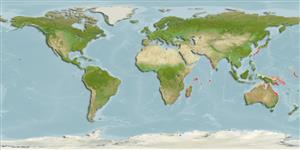
Southeast Atlantic: East London to Port Alfred, South Africa. Western Indian Ocean: Seychelles (Ref. 5465). Western Central Pacific (Ref. 10275).
Tamaño / Peso / Edad
Madurez: Lm ? range ? - ? cm
Max length : 7.3 cm TL macho / no sexado; (Ref. 5465)
Descripción breve
Claves de identificación | Morfología | Morfometría
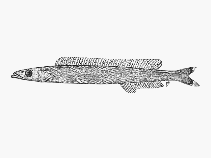
Espinas dorsales (total) : 0; Radios blandos dorsales (total) : 50 - 51; Espinas anales: 0; Radios blandos anales: 23 - 24. Mouth large; lower jaw strongly projecting; upper jaw protrusible (Ref. 10275). Body pale olive above, silvery white below; fine black dots on dorsal and anal fins (Ref. 5465).
Body shape (shape guide): elongated.
Occurs in sandy areas (Ref. 10275). Rare species (Ref. 5465).
Ciclo vital y comportamiento de apareamiento
Madurez | Reproducción | Puesta | Huevos | Fecundidad | Larva
Collette, B.B., 2001. Ammodytidae. Sandlances. p. 3518. In K.E. Carpenter and V. Niem (eds.) FAO species identification guide for fishery purposes. The living marine resources of the Western Central Pacific. Vol. 6. Bony fishes part 4 (Labridae to Latimeriidae), estuarine crocodiles. FAO, Rome. (Ref. 10275)
Situación en la Lista Roja de la UICN (Ref. 130435: Version 2025-2 (Global))
Amenaza para el ser humano
Harmless
Usos humanos
Herramientas
Informes especiales
Descargar XML
Fuentes de Internet
Estimaciones basadas en modelos
Temperatura preferida (Referencia
123201): 21.6 - 29, mean 27.1 °C (based on 1021 cells).
Índice de diversidad filogenética (Referencia
82804): PD
50 = 0.5010 [Uniqueness, from 0.5 = low to 2.0 = high].
Bayesian length-weight: a=0.00324 (0.00142 - 0.00739), b=3.07 (2.88 - 3.26), in cm total length, based on LWR estimates for this (Sub)family-body shape (Ref.
93245).
Nivel trófico (Referencia
69278): 3.1 ±0.4 se; based on size and trophs of closest relatives
Resiliencia (Referencia
120179): Alto, población duplicada en un tiempo mínimo inferior a 15 meses (Preliminary K or Fecundity.).
Vulnerabilidad pesquera (Ref.
59153): Low vulnerability (10 of 100).
🛈