>
Perciformes/Uranoscopoidei (Sand dwellers) >
Ammodytidae (Sand lances)
Etymology: Ammodytoides: Greek, ammos = sand + Greek, dytes = anyone that likes immersions, diving (Ref. 45335).
Eponymy: Master John Rennie of Grahamstown, South Africa, discovered three specimens of this fish “found on the beach after an onset of cold water”. We assume the use of the term ‘Master’ implies that John was a boy when he made this discovery. (Ref. 128868), visit book page.
More on author: Smith.
Ambiente: milieu / zona climática / intervalo de profundidade / gama de distribuição
Ecologia
marinhas associadas(os) a recifes. Tropical
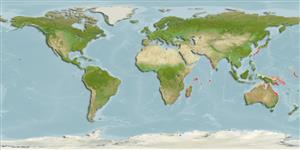
Southeast Atlantic: East London to Port Alfred, South Africa. Western Indian Ocean: Seychelles (Ref. 5465). Western Central Pacific (Ref. 10275).
Tamanho / Peso / Idade
Maturidade: Lm ? range ? - ? cm
Max length : 7.3 cm TL macho/indeterminado; (Ref. 5465)
Descrição breve
Chaves de identificação | Morfologia | Morfometria
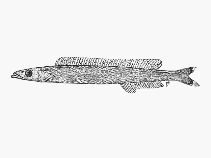
Espinhos dorsais (total) : 0; Raios dorsais moles (total) : 50 - 51; Espinhos anais: 0; Raios anais moles: 23 - 24. Mouth large; lower jaw strongly projecting; upper jaw protrusible (Ref. 10275). Body pale olive above, silvery white below; fine black dots on dorsal and anal fins (Ref. 5465).
Body shape (shape guide): elongated.
Occurs in sandy areas (Ref. 10275). Rare species (Ref. 5465).
Ciclo de vida e comportamento de acasalamento
Maturidade | Reprodução | Desova | Ovos | Fecundidade | Larvas
Collette, B.B., 2001. Ammodytidae. Sandlances. p. 3518. In K.E. Carpenter and V. Niem (eds.) FAO species identification guide for fishery purposes. The living marine resources of the Western Central Pacific. Vol. 6. Bony fishes part 4 (Labridae to Latimeriidae), estuarine crocodiles. FAO, Rome. (Ref. 10275)
Categoria na Lista Vermelha da IUCN (Ref. 130435: Version 2025-2 (Global))
Ameaça para o homem
Harmless
Utilização humana
Ferramentas
Relatórios especiais
Descarregue XML
Fontes da internet
Estimativas baseadas em modelos
Temperatura preferida (Ref.
123201): 21.6 - 29, mean 27.1 °C (based on 1021 cells).
Índice de diversidade filogenética (Ref.
82804): PD
50 = 0.5010 [Uniqueness, from 0.5 = low to 2.0 = high].
Bayesian length-weight: a=0.00324 (0.00142 - 0.00739), b=3.07 (2.88 - 3.26), in cm total length, based on LWR estimates for this (Sub)family-body shape (Ref.
93245).
Nível Trófico (Ref.
69278): 3.1 ±0.4 se; based on size and trophs of closest relatives
Resiliência (Ref.
120179): Elevada, tempo mínimo de duplicação da população menor que 15 meses (Preliminary K or Fecundity.).
Vulnerabilidade da pesca (Ref.
59153): Low vulnerability (10 of 100).
🛈