>
Cichliformes (Cichlids, convict blennies) >
Cichlidae (Cichlids) > Pseudocrenilabrinae
Etymology: Oreochromis: Latin, aurum = gold + Greek, chromis = a fish, perhaps a perch (Ref. 45335).
More on author: Boulenger.
ສະພາບແວດລ້ອມ: ສະພາບແວດລ້ອມ / ເຂດດິນຟ້າອາກາດ / ລະດັບຄວາມເລິກ / ຂອບເຂດການແຈກຢາຍ
ນິເວດວິທະຍາ
; ນ້ຳຈືດ ກ່ຽວກັບ (ຢູ່)ເທິງຊັ້ນພື້ນດິນໃນທະເລເປີດ; ລະດັບຄວາມເລິກ 4 - 49 m. Tropical; 23°C - 28°C (Ref. 3)
Africa: Lake Victoria and its affluent rivers (Ref. 5166, 34290, 118630, 118638), Victoria Nile above Murchison Falls (Ref. 5166) and Lakes Kyoga, Kwania and Salisbury (Ref. 5166), but strongly declining or disappeared in many areas (Ref. 52331), apparently replaced by Oreochromis niloticus (Ref. 34290). Introduced into several dams in Lake Victoria region (Ref. 118638).
ຂະໜາດ / ນ້ຳໜັກ / ອາຍຸ
ການຈະເລີນເຕັມໄວ: Lm ? range ? - ? cm
Max length : 30.0 cm SL ຕົວຜູ້/ບໍ່ມີເພດ; (Ref. 34290)
ຄີ (ໜາມ)ແຂງຢູ່ຫຼັງປາ (ທັງໝົດ) : 16 - 18; ຄີຫຼັງຂອງປາ (ຄີອ່ອນ) (ທັງໝົດ) : 10 - 12; ຄີ(ໜາມ) ແຂງຢູ່ຄີກົ້ນປາ
ກຸ່ມປາກະດູກແຂງ
ຄວາມຖີ່ຂອງກຸ່ມຖ່າຍທອດພັນ
ປາທີ່ມີການເຄື່ອນຍ້າຍຈາກທະເລໄປຫານ້ຳຈືດ ແລະນ້ຳຈືດຫາທະເລ
ປາທີ່ມີການເຄື່ອນຍ້າຍຈາກທະເລແລະໄປໄຂ່ຢູ່ນ້ຳຈືດ
ຄີກົ້ນຂອງປາ
ສັດທີ່ມີກະດູກສັນຫັຼງ
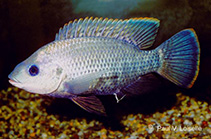
ການຖ່າຍທອດທາງກຳມະພັນຈາກພໍ່ແມ່ຫາລູກ: 3; ຄີກົ້ນຂອງປາ: 9 - 11; ສັດທີ່ມີກະດູກສັນຫຼັງ: 29 - 31. Diagnosis: Large bodied tilapiine cichlid; females and unripe males have a grey/green body and fins with 6-7 dark vertical bars on the flank; ripening males with yellowish chin, and notable bright red/orange margins to the dorsal and caudal fins; fully ripe males are black with a blue sheen on the head, bright red/orange margins to the dorsal and caudal fins and a long, branched whitish or yellow genital tassel (Ref. 118638). The breeding male of Oreochromis variabilis is distinguished from O. niloticus and O. esculentus by the intense orange to scarlet colour of the margin of the dorsal fin and the long, tasselled genital papilla, as well as by the general body colour; the orange dorsal margin is present also in grown females and non-breeding males, though narrower and less brilliant (Ref. 2). Other distinguishing characters are: the tilapia-mark is absent in young longer than 15 mm standard length, whereas in O. esculentus it is conspicuous and with a clear ring up to about 70 mm standard length and may still be detected up to 170 mm; the profile usually has a convexity immediately before the eye; there are usually two rows of scales on the cheek in contrast to usually three in O. esculentus; in half-grown and full-grown fishes there are 4-7 series of teeth in the jaws, 3-5 in O. esculentus; the ratio depth of preorbital to length of head is more than 1/5 in O. variabilis, 1/5 or less in O. esculentus; longer gill-rakers; and whereas O. esculentus does not mount beyond the estuaries, O. variabilis enters rivers from the lake (Ref. 2). Oreochromis variabilis differs from both O. malagarasi and O. upembae, its nearest relatives, in the suppression in most phases of blotches on the flanks, in the body colour of mature males, which is blue-grey to blue-black vs. yellowish in O. upembae, in the shape of the profile, which in O. malagarasi and O. upembae lacks the 'bump' before the eye, a lower modal number of soft dorsal and anal rays, and a higher modal number of vertebrae; Oreochromis upembae also differs from O. variabilis in having usually narrow vertical stripes on the caudal fin (Ref. 2).
Body shape (shape guide): fusiform / normal; Cross section: compressed.
Adults feed predominantly on bottom algae, some of the planktonic organisms that are found in their stomachs are probably those which have settled on the bottom or were washed shorewards from open waters but they do feed directly on plankton (Ref. 2). A maternal mouthbrooder, males make complex courtship structures in the substrate (Ref. 118638). Was a major component of the fisheries catch in Lake Victoria (Ref. 118638). Some pond culture attempted (Ref. 118638). IUCN conservation status is critically endangered (Ref. 118638).
ວົງຈອນຊີວິດ ແລະພຶດຕິກໍາການຫາຄູ່
ການຈະເລີນເຕັມໄວ | ການສືບພັນ | ການວາງໄຂ່ | ໄຂ່ | ຄວາມດົກຂອງໄຂ່ປາ | ຕົວອ່ອນ
Nests are built on sandy bottoms in shallow waters. Each nest consists of a central shallow saucer 13-15 cm in diameter, around which is a circle of small pits. This structure is the center of a larger pit, 30-39 cm in diameter. Breeding pair makes the T-stand. Female lays batches of eggs; picks them up and sucks at the male's genital tassel.
Trewavas, E., 1983. Tilapiine fishes of the genera Sarotherodon, Oreochromis and Danakilia. British Mus. Nat. Hist., London, UK. 583 p. (Ref. 2)
ສະຖານະພາບບັນຊີແດງຂອງ IUCN (Ref. 130435: Version 2025-2 (Global))
ໄພຂົ່ມຂູ່ຕໍ່ມະນຸດ
Harmless
ການນໍາໃຊ້ຂອງມະນຸດ
ການປະມົງ: ເປັນສີນຄ້າ; ການລ້ຽງສັດນ້ຳ: ການທົດລອງ; ຕູ້ປາ: ເປັນສີນຄ້າ
ເຄື່ອງມື
ບົດລາຍງານພິເສດ
ດາວໂຫລດ XML
ແຫຼ່ງອີນເຕີເນັດ
ການຄາດຄະເນໂດຍອີງໃສ່ແບບຈໍາລອງ
ດັດຊະນີຄວາມຫຼາກຫຼາຍທາງຊີວະພາບ (ເອກະສານອ້າງອີງ
82804): PD
50 = 0.5000 [Uniqueness, from 0.5 = low to 2.0 = high].
Bayesian length-weight: a=0.01479 (0.00656 - 0.03333), b=2.99 (2.82 - 3.16), in cm total length, based on LWR estimates for this Genus-body shape (Ref.
93245).
ຊັ້ນເຂດຮ້ອນ (ເອກະສານອ້າງອີງ
69278): 2.0 ±0.00 se; based on food items.
Generation time: 3.1 ( na - na) years. Estimated as median ln(3)/K based on 2
growth studies.
ຄວາມຢືດຢຸ່ນ (ເອກະສານອ້າງອີງ
120179): ຂະໜາດກາງ, ປະຊາກອນຕຳ່ສຸດທີ່ໃຊ້ເວລາສອງເທົ່າ 1.4 - 4.4 ປີ (Fec=500).
ຄວາມສ່ຽງຕໍ່ການຫາປາ (Ref.
59153): Low vulnerability (18 of 100).
🛈