>
Scombriformes (Mackerels) >
Scombridae (Mackerels, tunas, bonitos) > Scombrinae
Etymology: Scomberomorus: Latin, scomber = mackerel + Greek, moros = silly, stupid (Ref. 45335).
Eponymy: Ian Stafford Ross Munro (1919–1994) was an Australian ichthyologist, aquarist and marine biologist. [...] (Ref. 128868), visit book page.
Entorno: milieu / zona climática / rango de profundidad / gama de distribución
Ecología
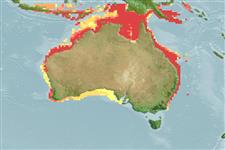
marino pelagic-neritic; oceanodromo (Ref. 51243); rango de profundidad ? - 100 m (Ref. 6390). Tropical; 6°S - 38°S, 110°E - 157°E (Ref. 168)
Western Pacific: restricted to the northern coast of Australia, from the Abrolhos Islands region of Western Australia to Coffs Harbor and Kempsey in central New South Wales; also occurring in southern Papua New Guinea from Kerema to Port Moresby.
Longitud en la primera madurez / Tamaño / Peso / Edad
Madurez: Lm ?, range 61 - ? cm
Max length : 104 cm FL macho / no sexado; (Ref. 6390); peso máximo publicado: 10.2 kg (Ref. 3132)
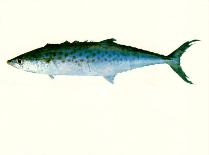
Espinas dorsales (total) : 20 - 22; Radios blandos dorsales (total) : 17 - 20; Espinas anales: 0; Radios blandos anales: 17 - 19; Vértebra: 50 - 52. Interpelvic process small and bifid. Lateral line gradually curving down toward caudal peduncle. Intestine with 2 folds and 3 limbs. Swim bladder absent. Body covered with small scales. Sides with several poorly defined rows of round spots, larger than pupil but smaller than eye diameter. The inner surface of the pectoral fin is dark blue, the cheeks and belly silvery white, the anal fin and anal finlets light silvery gray, and the dorsal fin black, bright steely blue when fresh.
Body shape (shape guide): fusiform / normal; Cross section: oval.
Found more commonly in offshore, open waters away from reefs and shoals (Ref. 30199). Form large schools which move close inshore along the coast of Queensland, commonly taken between December and April or May. Feed largely on fishes, particularly anchovies and sardines with smaller quantities of shrimps and squids. Common fork length ranges between 50 to 80 cm (Ref. 168). Sometimes confused with S. niphonius.
Ciclo vital y comportamiento de apareamiento
Madurez | Reproducción | Puesta | Huevos | Fecundidad | Larva
Collette, B.B. and C.E. Nauen, 1983. FAO Species Catalogue. Vol. 2. Scombrids of the world. An annotated and illustrated catalogue of tunas, mackerels, bonitos and related species known to date. Rome: FAO. FAO Fish. Synop. 125(2):137 p. (Ref. 168)
Situación en la Lista Roja de la UICN (Ref. 130435: Version 2025-2 (Global))
Amenaza para el ser humano
Reports of ciguatera poisoning (Ref. 6390)
Usos humanos
Pesquerías: comercial; pesca deportiva: si
Herramientas
Informes especiales
Descargar XML
Fuentes de Internet
Estimaciones basadas en modelos
Temperatura preferida (Referencia
123201): 22.5 - 28.6, mean 27.5 °C (based on 574 cells).
Índice de diversidad filogenética (Referencia
82804): PD
50 = 0.5000 [Uniqueness, from 0.5 = low to 2.0 = high].
Bayesian length-weight: a=0.00832 (0.00379 - 0.01824), b=3.03 (2.86 - 3.20), in cm total length, based on LWR estimates for this Genus-body shape (Ref.
93245).
Nivel trófico (Referencia
69278): 4.3 ±0.76 se; based on food items.
Resiliencia (Referencia
120179): Medio, población duplicada en un tiempo mínimo de 1.4-4.4 años (K=0.50; tm=1-2; tmax=7).
Vulnerabilidad pesquera (Ref.
59153): Moderate vulnerability (36 of 100).
🛈