Entorno: milieu / zona climática / rango de profundidad / gama de distribución
Ecología
; agua dulce pelágico; potamodromo (Ref. 51243). Tropical; 11°S - 28°S
Africa: Kasai, upper Sankuru, upper Lualaba (Ref. 42019) and Luapula systems (Ref. 45616, 109499) (middle and upper Congo River basin) in Democratic Republic of the Congo and Zambia. Zambezi system including upper Zambezi, Kafue, Lake Kariba, lower Zambezi, Okavango, Cunene, Buzi (Ref. 7248, 94654) and Caprivi strip (Ref. 37065). Also from coastal north-east Natal to the Lake St. Lucia catchment (Ref. 13332).
Tamaño / Peso / Edad
Madurez: Lm ? range ? - ? cm
Max length : 14.0 cm SL macho / no sexado; (Ref. 52193)
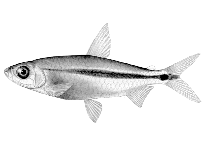
Espinas dorsales (total) : 0; Radios blandos dorsales (total) : 10 - 11; Espinas anales: 0; Radios blandos anales: 18 - 19. Diagnosis: A slimmer fish than Brycinus imberi without a spot behind the head, but with a pronounced black lateral band (normally only visible on dead material) which ends in a caudal dash extending right through the caudal fin (Ref. 13337).
Body shape (shape guide): fusiform / normal.
Inhabits shallow, sandy or marshy areas (Ref. 13337). Shoals in clear, slow-flowing or quiet, well-vegetated waters. Often found together with the dashtail and the threespot barb and the close similarity of these species suggests mimicry between them. Feeds on small aquatic and terrestrial organisms. Preyed upon by tigerfish and observed to be eaten by a small crocodile during an upriver migration (Ref. 13337). Moves upstream during rains, possibly to breed. Ovarian egg counts from a large ripe female reach up to 12,000 eggs (Ref. 13337). Used as bait for tigerfish and largemouth bream (Ref. 7248).
Ciclo vital y comportamiento de apareamiento
Madurez | Reproducción | Puesta | Huevos | Fecundidad | Larva
Skelton, P.H., 1993. A complete guide to the freshwater fishes of southern Africa. Southern Book Publishers. 388 p. (Ref. 7248)
Situación en la Lista Roja de la UICN (Ref. 130435: Version 2025-2 (Global))
Amenaza para el ser humano
Harmless
Usos humanos
Pesquerías: pesquerías de subsistencia; carnada: occasionally
Herramientas
Informes especiales
Descargar XML
Fuentes de Internet
Estimaciones basadas en modelos
Índice de diversidad filogenética (Referencia
82804): PD
50 = 0.5000 [Uniqueness, from 0.5 = low to 2.0 = high].
Bayesian length-weight: a=0.01047 (0.00582 - 0.01883), b=3.07 (2.92 - 3.22), in cm total length, based on LWR estimates for this species & (Sub)family-body (Ref.
93245).
Nivel trófico (Referencia
69278): 3.5 ±0.50 se; based on food items.
Resiliencia (Referencia
120179): Alto, población duplicada en un tiempo mínimo inferior a 15 meses (K>1).
Vulnerabilidad pesquera (Ref.
59153): Low vulnerability (10 of 100).
🛈