Ambiente: milieu / zona climatica / distribuzione batimetrica / gamma di distribuzione
Ecologia
; acqua dolce pelagico; potamodromo (Ref. 51243). Tropical; 11°S - 28°S
Africa: Kasai, upper Sankuru, upper Lualaba (Ref. 42019) and Luapula systems (Ref. 45616, 109499) (middle and upper Congo River basin) in Democratic Republic of the Congo and Zambia. Zambezi system including upper Zambezi, Kafue, Lake Kariba, lower Zambezi, Okavango, Cunene, Buzi (Ref. 7248, 94654) and Caprivi strip (Ref. 37065). Also from coastal north-east Natal to the Lake St. Lucia catchment (Ref. 13332).
Dimensione / Peso / Età
Maturità: Lm ? range ? - ? cm
Max length : 14.0 cm SL maschio/sesso non determinato; (Ref. 52193)
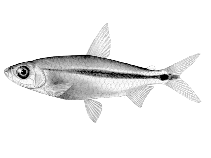
Spine dorsali (totale) : 0; Raggi dorsali molli (totale) : 10 - 11; Spine anali: 0; Raggi anali molli: 18 - 19. Diagnosis: A slimmer fish than Brycinus imberi without a spot behind the head, but with a pronounced black lateral band (normally only visible on dead material) which ends in a caudal dash extending right through the caudal fin (Ref. 13337).
Body shape (shape guide): fusiform / normal.
Inhabits shallow, sandy or marshy areas (Ref. 13337). Shoals in clear, slow-flowing or quiet, well-vegetated waters. Often found together with the dashtail and the threespot barb and the close similarity of these species suggests mimicry between them. Feeds on small aquatic and terrestrial organisms. Preyed upon by tigerfish and observed to be eaten by a small crocodile during an upriver migration (Ref. 13337). Moves upstream during rains, possibly to breed. Ovarian egg counts from a large ripe female reach up to 12,000 eggs (Ref. 13337). Used as bait for tigerfish and largemouth bream (Ref. 7248).
Ciclo vitale e comportamento di accoppiamento
Maturità | Riproduzione | Deposizione | Uova | Fecondità | Larve
Skelton, P.H., 1993. A complete guide to the freshwater fishes of southern Africa. Southern Book Publishers. 388 p. (Ref. 7248)
Stato della Lista Rossa IUCN (Ref. 130435: Version 2025-2 (Global))
Minaccia per l'uomo
Harmless
Usi umani
Pesca: pesca di sussistenza; esca: occasionally
Strumenti
Rapporti speciali
Scarica XML
Fonti Internet
Stime basate su modelli
Indice di diversità filogenetica (Fonte Biblio.
82804): PD
50 = 0.5000 [Uniqueness, from 0.5 = low to 2.0 = high].
Bayesian length-weight: a=0.01047 (0.00582 - 0.01883), b=3.07 (2.92 - 3.22), in cm total length, based on LWR estimates for this species & (Sub)family-body (Ref.
93245).
Livello trofico (Fonte Biblio.
69278): 3.5 ±0.50 se; based on food items.
Resilienza (Fonte Biblio.
120179): Alto, tempo minimo di raddoppiamento della popolazione meno di 15 mesi (K>1).
Vulnerabilità della pesca (Ref.
59153): Low vulnerability (10 of 100).
🛈