ກຸ່ມປາກະດູກອ່ອນ (ເຊັ່ນ: ປາສະຫລາມ, ປາຜາໄລ) (sharks and rays) >
Myliobatiformes (Stingrays) >
Myliobatidae (Eagle and manta rays)
Etymology: Aetomylaeus: Greek, aetos = eagle + Greek, mylio = mill, grinder (Ref. 45335).
Eponymy: Johan Nieuhoff (1618–1672) was a Dutch traveller who wrote about his journeys to India, China and Brazil. [...] (Ref. 128868), visit book page.
More on authors: Bloch & Schneider.
ສະພາບແວດລ້ອມ: ສະພາບແວດລ້ອມ / ເຂດດິນຟ້າອາກາດ / ລະດັບຄວາມເລິກ / ຂອບເຂດການແຈກຢາຍ
ນິເວດວິທະຍາ
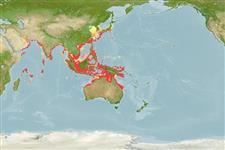
ສັດທະເລ; ນ້ຳກ່ອຍ ອາໄສຢູ່ໃກ້ໜ້າດິນໃຕ້ພື້ນທ້ອງນ້ຳ; ປາທີ່ມີການເຄື່ອນຍ້າຍຈາກທະເລໄປຫານ້ຳຈືດ ແລະນ້ຳຈືດຫາທະເລ (Ref. 51243); ລະດັບຄວາມເລິກ 1 - 100 m (Ref. 6871). Tropical; 41°N - 24°S, 51°E - 154°E
Indo-West Pacific: Persian Gulf to the Philippines, north to Korea and southern Japan, south to northern Australia. Possibly in the Red Sea and eastern and southern Africa.
e Indo-West Pacific from the Persian/Arabian Gulf westwards to Indonesia, and north to Taiwan, China and southern Japan.
ຄວາມຍາວໃນການເຕີບໂຕເຕັມຄັ້ງທໍາອິດ / ຂະໜາດ / ນ້ຳໜັກ / ອາຍຸ
ການຈະເລີນເຕັມໄວ: Lm 40.5, range 39 - 42 cm
Max length : 65.0 cm WD ຕົວຜູ້/ບໍ່ມີເພດ; (Ref. 47613)
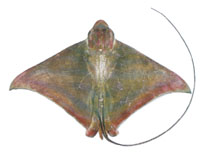
This small species of Aetomylaeus (reaching to about 72.0 cm DW) is distinguished by the following set of characters: dorsal surface is greyish brown with a series of usually 8 (sometimes 7) transverse pale bluish bands (which are sometimes faint), no dark spots or blotches; ventral surface is whitish, pectoral fins is dusky distally; tail is rather long (1.4-1.8 times DW); without stinging spine; short and narrow head; fleshy rostral lobe, relatively broad, short, with a rounded apex; teeth usually in 7 rows in each jaw, with a broad median row flanked by 3 smaller rows on each side; dorsal-fin origin level with pelvic-fin insertions; radials of pectoral-fin 84-88 (excluding concealed propterygial radials anterior of eyes); total vertebral centra (including synarcual) 83-93; males have 16-19 pelvic radials (excluding clasper); females have 20 or 21 pelvic radials (Ref. 103981).
Body shape (shape guide): other; Cross section: flattened.
Maximum depth reported taken from Ref. 9773.
ວົງຈອນຊີວິດ ແລະພຶດຕິກໍາການຫາຄູ່
ການຈະເລີນເຕັມໄວ | ການສືບພັນ | ການວາງໄຂ່ | ໄຂ່ | ຄວາມດົກຂອງໄຂ່ປາ | ຕົວອ່ອນ
Exhibit ovoviparity (aplacental viviparity), with embryos feeding initially on yolk, then receiving additional nourishment from the mother by indirect absorption of uterine fluid enriched with mucus, fat or protein through specialised structures (Ref. 50449). Gives birth to ~4 pups; born at ~17 cm WD (Ref.58048).
Last, P.R. and J.D. Stevens, 1994. Sharks and rays of Australia. CSIRO, Australia. 513 p. (Ref. 6871)
ສະຖານະພາບບັນຊີແດງຂອງ IUCN (Ref. 130435: Version 2025-2 (Global))
ໄພຂົ່ມຂູ່ຕໍ່ມະນຸດ
Harmless
ການນໍາໃຊ້ຂອງມະນຸດ
ການປະມົງ: ທີ່ເປັນການຄ້າໜ້ອຍ
ເຄື່ອງມື
ບົດລາຍງານພິເສດ
ດາວໂຫລດ XML
ແຫຼ່ງອີນເຕີເນັດ
ການຄາດຄະເນໂດຍອີງໃສ່ແບບຈໍາລອງ
ອຸນຫະພູມທີ່ຕ້ອງການ (ເອກະສານອ້າງອີງ
123201): 23.8 - 28.3, mean 27.3 °C (based on 618 cells).
ດັດຊະນີຄວາມຫຼາກຫຼາຍທາງຊີວະພາບ (ເອກະສານອ້າງອີງ
82804): PD
50 = 0.5039 [Uniqueness, from 0.5 = low to 2.0 = high].
Bayesian length-weight: a=0.00389 (0.00124 - 0.01219), b=3.08 (2.83 - 3.33), in cm total length, based on LWR estimates for this (Sub)family-body shape (Ref.
93245).
ຊັ້ນເຂດຮ້ອນ (ເອກະສານອ້າງອີງ
69278): 3.9 ±0.48 se; based on food items.
ຄວາມຢືດຢຸ່ນ (ເອກະສານອ້າງອີງ
120179): ຕຳ່ຫຼາຍ, ປະຊາກອນຕຳ່ສຸດທີ່ໃຊ້ເວລາສອງເທົ່າຫຼາຍກວ່າ 14 ປີ (Fec=4).
ຄວາມສ່ຽງຕໍ່ການຫາປາ (Ref.
59153): Very high vulnerability (83 of 100).
🛈
ທາດອາຫານ (Ref.
124155): Calcium = 46.2 [10.7, 204.4] mg/100g; Iron = 0.822 [0.206, 2.137] mg/100g; Protein = 21.5 [16.4, 26.6] %; Omega3 = 0.14 [0.04, 0.52] g/100g; Selenium = 36.8 [9.5, 98.7] μg/100g; VitaminA = 16.9 [7.5, 36.5] μg/100g; Zinc = 1.07 [0.53, 1.96] mg/100g (wet weight);