>
Cypriniformes (Carps) >
Cobitidae (Spined loaches)
Etymology: Cobitis: Greek, kobitis, -idos = a kind of sardine; also related with the voice Greek, kobios, Latin gobius = gudgeon (Ref. 45335).
Milieu: milieu / Klimaatzone / Diepte / verspreidingsgebied
Ecologie
; zoet water benthopelagisch; standvastig (Ref. 38442). Temperate; 44°N - 36°N, 9°W - 1°W
Europe: Iberian Peninsula, except in Alagon system (Tagus drainage), northern Ebro and northern Douro drainages. Also found north of the peninsula where it has been locally introduced.
Lengte bij maturiteit / Grootte / Gewicht / Leeftijd
Maturiteit: Lm 6.1, range 6 - 6.4 cm
Max length : 7.0 cm SL mannelijk / geslacht onbekend; (Ref. 59043); 13.0 cm SL (female); max. gerapporteerde leeftijd: 5 Jaren (Ref. 38442)
Korte beschrijving
Determinatiesleutels | Morfologie | Morfometrie
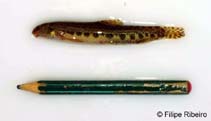
Presence of mandibular barbel 4-8 times in HL. Pectoral fin length 4.3-5.4 times in SL in males, 4.3-9.0 times in females. 6-7.5 branched dorsal rays. One lamina circularis.
Body shape (shape guide): elongated.
A short-lived species, secretive in nature (Ref. 38442). Adults inhabit middle and lower reaches, with shallow waters, sandy bottoms and submerged plants (Ref. 11240). During dry periods, they can survive in very small water bodies (Ref. 59043). Feed on invertebrates and plants. Spawn in May to July. Oviparous, with distinct pairing during breeding (Ref. 205). Eggs are small (1.7 mm) and sticky, placed within dense vegetation if available (Ref. 59043). Threatened due to pollution, habitat destruction and the introduction of other species (Ref. 26100).
During courtship, 'the male follows the female and, after both enter dense vegetation (e.g. filamentous algae), the male forms a complete ring around the female's body behind the dorsal as the female releases the eggs' (Ref. 59043).
Kottelat, M. and J. Freyhof, 2007. Handbook of European freshwater fishes. Publications Kottelat, Cornol and Freyhof, Berlin. 646 pp. (Ref. 59043)
Status op de Rode Lijst van het IUCN (Ref. 130435: Version 2025-2 (Global))
Gevaar voor de mens
Harmless
Gebruik door de mens
Visserij: van geen belang
Tools
Speciale rapporten
Download XML
Internetbronnen
Schattingen op basis van modellen
Fylogenetische diversiteitsindex (Ref.
82804): PD
50 = 0.5000 [Uniqueness, from 0.5 = low to 2.0 = high].
Bayesian length-weight: a=0.00550 (0.00292 - 0.01034), b=3.10 (2.94 - 3.26), in cm total length, based on LWR estimates for this species & Genus-body shape (Ref.
93245).
Trofisch niveau (Ref.
69278): 3.0 ±0.34 se; based on food items.
Weerstandsvermogen (Ref.
120179): Gemiddeld, minimale populatieverdubbelingstijd 1,4-4,4 jaar (tm=1; tmax=4; Fec=281-1,397).
Kwetsbaarheid van de visserij (Ref.
59153): Moderate vulnerability (37 of 100).
🛈