>
Cyprinodontiformes (Rivulines, killifishes and live bearers) >
Procatopodidae (African lampeyes) > Procatopodinae
Etymology: Procatopus: Greek, pro = in front o + Greek, kata = down + Greek pous = feet.
More on author: Ahl.
ສະພາບແວດລ້ອມ: ສະພາບແວດລ້ອມ / ເຂດດິນຟ້າອາກາດ / ລະດັບຄວາມເລິກ / ຂອບເຂດການແຈກຢາຍ
ນິເວດວິທະຍາ
; ນ້ຳຈືດ ກ່ຽວກັບ (ຢູ່)ເທິງຊັ້ນພື້ນດິນໃນທະເລເປີດ; pH range: 6.5 - 7.2; ບໍ່ມີການເຄື່ອນຍ້າຍ. Tropical; 24°C - 26°C (Ref. 2060)
Africa: Cross River in southwestern Cameroon (Ref. 31267, 57259) and smaller coastal flowing rivers, Niger and Benue Rivers in south-central and southern Nigeria (Ref. 7372, 57259).
ຂະໜາດ / ນ້ຳໜັກ / ອາຍຸ
ການຈະເລີນເຕັມໄວ: Lm ? range ? - ? cm
Max length : 5.5 cm TL ຕົວຜູ້/ບໍ່ມີເພດ; (Ref. 27139)
ຄີ (ໜາມ)ແຂງຢູ່ຫຼັງປາ (ທັງໝົດ) : 0; ຄີຫຼັງຂອງປາ (ຄີອ່ອນ) (ທັງໝົດ) : 8 - 10; ຄີ(ໜາມ) ແຂງຢູ່ຄີກົ້ນປາ
ກຸ່ມປາກະດູກແຂງ
ຄວາມຖີ່ຂອງກຸ່ມຖ່າຍທອດພັນ
ປາທີ່ມີການເຄື່ອນຍ້າຍຈາກທະເລໄປຫານ້ຳຈືດ ແລະນ້ຳຈືດຫາທະເລ
ປາທີ່ມີການເຄື່ອນຍ້າຍຈາກທະເລແລະໄປໄຂ່ຢູ່ນ້ຳຈືດ
ຄີກົ້ນຂອງປາ
ສັດທີ່ມີກະດູກສັນຫັຼງ
ການຖ່າຍທອດທາງກຳມະພັນຈາກພໍ່ແມ່ຫາລູກ: 0; ຄີກົ້ນຂອງປາ: 15 - 17. Diagnosis: Larger-sized ‘Lampeye’ species; males usually with an extension at the upper corner of the caudal fin; sometimes with extended rays in the unpaired fins; ventral fins inserted distinctly behind pectorals; dorsal fin with 8-10 rays; anal fin with 15-17 rays; scales on mid-lateral series 27-33 (Ref. 57259).
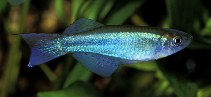
Colouration: Male colouration: variable in colouration; basic colour light grey to light olive, dorsal area darker, ventral area light to almost white; on the sides strong light blue-green to light blue reflections, not arranged in bands, but covering the entire sides; the unpaired fins may vary from colourless, through pale blue to orange or pink, sometimes provided with red spots; the margins at the unpaired fins are usually red or pink, but sometimes black; a white outer margin may be present in the lower caudal fin; the caudal fin extensions are usually white (Ref. 57259). Female colouration: pale, semi-transparent grey or olive; some pale silvery reflections may be present on the sides; the fins are all colourless (Ref. 57259). Both sexes show an orange reflective spot in the upper part of the eye iris (Ref. 57259).
Body shape (shape guide): fusiform / normal.
Found in small rivers and brooks under forest cover and in the forested savannah on soils of basal origin; usually
swimming in schools in the streaming parts of the creeks (Ref. 57259). Not a seasonal killifish. Is very difficult to maintain in aquarium (Ref. 27139).
ວົງຈອນຊີວິດ ແລະພຶດຕິກໍາການຫາຄູ່
ການຈະເລີນເຕັມໄວ | ການສືບພັນ | ການວາງໄຂ່ | ໄຂ່ | ຄວາມດົກຂອງໄຂ່ປາ | ຕົວອ່ອນ
Huber, J.H., 1996. Killi-Data 1996. Updated checklist of taxonomic names, collecting localities and bibliographic references of oviparous Cyprinodont fishes (Atherinomorpha, Pisces). Société Française d'Ichtyologie, Muséum National d'Histoire Naturelle, Paris, France, 399 p. (Ref. 27139)
ສະຖານະພາບບັນຊີແດງຂອງ IUCN (Ref. 130435: Version 2025-2 (Global))
ໄພຂົ່ມຂູ່ຕໍ່ມະນຸດ
Harmless
ການນໍາໃຊ້ຂອງມະນຸດ
ຕູ້ປາ: ເປັນສີນຄ້າ
ເຄື່ອງມື
ບົດລາຍງານພິເສດ
ດາວໂຫລດ XML
ແຫຼ່ງອີນເຕີເນັດ
ການຄາດຄະເນໂດຍອີງໃສ່ແບບຈໍາລອງ
ດັດຊະນີຄວາມຫຼາກຫຼາຍທາງຊີວະພາບ (ເອກະສານອ້າງອີງ
82804): PD
50 = 0.6250 [Uniqueness, from 0.5 = low to 2.0 = high].
Bayesian length-weight: a=0.01122 (0.00514 - 0.02450), b=3.04 (2.87 - 3.21), in cm total length, based on all LWR estimates for this body shape (Ref.
93245).
ຊັ້ນເຂດຮ້ອນ (ເອກະສານອ້າງອີງ
69278): 3.2 ±0.4 se; based on size and trophs of closest relatives
ຄວາມສ່ຽງຕໍ່ການຫາປາ (Ref.
59153): Low vulnerability (10 of 100).
🛈