>
Cypriniformes (Carps) >
Cyprinidae (Minnows or carps) > Barbinae
Etymology: Barbus: Latin, barbus = barbel (Ref. 45335).
Eponymy: Sir Charles Alfred Payton (1843–1926) was a British adventurer, writer, fisherman and diplomat who was British Consul to Morocco, where this barb is found. [...] Dr Fritz Haas (1886–1969) was a German zoologist and malacologist specialising in freshwater snails and mussels. [...] (Ref. 128868), visit book page.
Окружающая среда: среда / климатическая зона / пределы глубины / диапазон распространения
экология
; пресноводный донно-пелагический; мигрирует в реке (Ref. 138297). Temperate; 44°N - 36°N
Europe: Mediterranean slope of Spain from Llobregat to Riudecanyes drainages.
Размер / Вес / Возраст
половая зрелость: Lm ? range ? - ? cm
Max length : 30.0 cm TL самец/пол неопределен; (Ref. 31730)
Краткое описание
определительные ключи | морфология | морфометрия
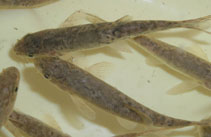
Diagnosed from other species of Barbus and Luciobarbus in Iberian Peninsula by having the following characters: body with numerous small black dots, more or less aligned in longitudinal series along scale rows; anal, part of caudal and pelvic fins red during spawning season; lower lip with a median lobe; last simple dorsal ray slender, with small or without serrae posteriorly; and lateral line with 46-50 + 3-4 scales (Ref. 59043).
Body shape (shape guide): fusiform / normal.
Adults occur in water bodies on low-lying plains, with little current; in water courses at high altitudes and in springs and associated wetlands (Ref. 26100). Most frequently found in upper, cooler stretches of streams, with current and stone bottom. They feed mainly on benthic macro-invertebrates, especially insect larvae. Spawning occurs on vegetation and under stones (Ref. 59043). Threatened by water abstraction, pollution, and habitat destruction (Ref. 26100).
Жизненный цикл и брачное поведение
половая зрелость | размножение | нерест | икра | Плодовитость | личинки
Kottelat, M. and J. Freyhof, 2007. Handbook of European freshwater fishes. Publications Kottelat, Cornol and Freyhof, Berlin. 646 pp. (Ref. 59043)
Статус Красного Списка МСОП (Ref. 130435: Version 2025-2 (Global))
Угроза для людей
Harmless
Использование человеком
объект спортивного рыболовства: да
дополнительная информация
инструменты
Специальные отчеты
Скачать в формате XML
ресурсы в Интернет
Оценки, основанные на моделях
Индекс филогенетического разнообразия (ссылка
82804): PD
50 = 0.5000 [Uniqueness, from 0.5 = low to 2.0 = high].
Bayesian length-weight: a=0.00977 (0.00630 - 0.01517), b=3.02 (2.90 - 3.14), in cm total length, based on LWR estimates for this species & Genus-body shape (Ref.
93245).
Трофический уровень (ссылка
69278): 3.4 ±0.38 se; based on food items.
Generation time: 12.9 ( na - na) years. Estimated as median ln(3)/K based on 2
growth studies.
устойчивость к внешним воздействиям (ссылка
120179): средний (среднего размера), минимальное время удвоения популяции 1.4-4.4 года (K=0.17; tm=1-4).
Уязвимость рыбной ловли (Ref.
59153): High vulnerability (62 of 100).
🛈