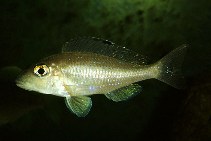
>
Cichliformes (Cichlids, convict blennies) >
Cichlidae (Cichlids) > Pseudocrenilabrinae
Etymology: Xenotilapia: Greek, xenos = strange + Bechuana, African native thiape = fish (Ref. 45335).
More on authors: Poll & Stewart.
Meio ambiente: milieu / Zona climática / intervalo de profundidade / faixa de distribuição
Ecologia
; Água doce demersal. Tropical; 3°S - 9°S
Africa: endemic to Lake Tanganyika, widely distributed in the southern part of the lake (Ref. 46829).
Tamanho / Peso / Idade
Maturidade: Lm ? range ? - ? cm
Max length : 9.6 cm TL macho/indeterminado; (Ref. 5717)
Lives in groups, sometimes large schools; biparental mouthbrooder (Ref. 6770, 46829). Lives over the sand of the intermediate habitat; forages by scooping up sandy substrate or sediment and sifting it through gills; feeds mainly on insect larvae; rarely large schools are found in mid-water feeding on zooplankton (Ref. 46829).
Ciclo de vida ou comportamento de acasalamento
Maturidade | Reprodução | Desova | Ovos | Fecundidade | Larvas
Konings, A., 1998. Tanganyika cichlids in their natural habitat. Cichlid Press. 272 p. (Ref. 46829)
Status na Lista Vermelha da UICN (Ref. 130435: Version 2025-2 (Global))
Ameaça para os humanos
Harmless
Uso pelos humanos
Aquário: Espécies comerciais
Ferramentas
Relatórios especiais
Baixar XML
Fontes da internet
Estimativas baseadas em modelos
Índice de diversidade filogenética (Ref.
82804): PD
50 = 0.5000 [Uniqueness, from 0.5 = low to 2.0 = high].
Bayesian length-weight: a=0.01445 (0.00671 - 0.03113), b=2.99 (2.82 - 3.16), in cm total length, based on LWR estimates for this (Sub)family-body shape (Ref.
93245).
Nível Trófico (Ref.
69278): 3.2 ±0.4 se; based on size and trophs of closest relatives
Resiliência (Ref.
120179): Elevada, tempo mínimo de duplicação da população menor que 15 meses (Preliminary K or Fecundity.).
Vulnerabilidade da pesca (Ref.
59153): Low vulnerability (10 of 100).
🛈