Ελασμοβράγχιοι (καρχαρίες και σαλάχια) (sharks and rays) >
Carcharhiniformes (Ground sharks) >
Carcharhinidae (Requiem sharks)
Etymology: Rhizoprionodon: rhiza (Gr.), root; prion (Gr.) saw; odon (Gr.), tooth, referring to teeth with serrated (saw-like) bases, or roots [replacement name for Rhizoprion Ogilby 1915, preoccupied by Rhizoprion Jourdan 1861 in mammals] (See ETYFish); terraenovae: terra (L.), earth or land; novus (L.), new, i.e., Newfoundland, Canada, where Richardson erroneously thought it occurred (See ETYFish).
More on author: Richardson.
Περιβάλλον: περιβάλλον / κλιματική ζώνη / εύρος βάθους / εύρος διανομής
Οικολογία
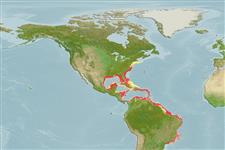
Θαλασσινό(ά); Υφάλμυρο βενθικό(ς); εύρος βάθους 0 - 280 m (Ref. 26938), usually 0 - 10 m (Ref. 55195). Subtropical; 43°N - 25°S, 100°W - 32°W (Ref. 55195)
Western Atlantic: New Brunswick, Canada to the Gulf of Mexico. Southwest Atlantic: coasts of Brazil.
Μήκος κατά την πρώτη ωρίμανση / Μέγεθος / Βάρος / Ηλικία
Γεννητική Ωρίμανση: Lm 87.5, range 85 - 90 cm
Max length : 110 cm TL αρσενικό/απροσδιόριστο; (Ref. 37512); 110.0 cm TL (female); common length : 70.0 cm TL αρσενικό/απροσδιόριστο; (Ref. 37512); μεγ. δημοσιευμένο βάρος: 7.3 kg (Ref. 40637); μεγ. αναφερόμενη ηλικία: 10 έτη (Ref. 6140)
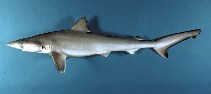
Small, generally gray, streamlined shark, with long pointed snout. Posterior margin of anal fin straight or slightly concave. Second dorsal fin origin well behind anal fin origin (Ref. 26938).
Body shape (shape guide): fusiform / normal.
Reaches at least 103 cm TL (Ref. 244). Abundant in the continental shelves, from the intertidal to deeper waters. Often occurs close to the surf zone off sandy beaches, and also enclosed bays, sounds, and harbors, in estuaries and river mouths. Feeds on small bony fishes, shrimps, crabs, segmented worms and mollusks (gastropod feet). Viviparous, with 1 to 7 young in a litter (Ref. 27549). Size at birth about 29 to 37 cm. Utilized for human consumption. Minimum depth from Ref. 055195.
Distinct pairing with embrace (Ref. 205). Viviparous, placental (Ref. 50449). 1 to 7 young per litter. Larger females carry more young. Size at birth 29-37 cm. Gestation period is 10 to 11 months in the northern Gulf of Mexico. Sex ratio of near term fetuses is 1:1 (Ref. 244).
Compagno, L.J.V., 1984. FAO Species Catalogue. Vol. 4. Sharks of the world. An annotated and illustrated catalogue of shark species known to date. Part 2 - Carcharhiniformes. FAO Fish. Synop. 125(4/2):251-655. Rome: FAO. (Ref. 244)
Κατάσταση Κόκκινου Καταλόγου IUCN (Ref. 130435: Version 2025-2 (Global))
Απειλή για τον άνθρωπο
Harmless
Ανθρώπινες χρήσεις
αλιεία: παραδοσιακή αλιεία; αλιεία αναψυχής: ναί
Εργαλεία
Ειδικές εκθέσεις
Λήψη XML
Διαδικτυακές πηγές
Εκτιμήσεις βάσει μοντέλων
Προτιμώμενη θερμοκρασία (Αναφ.
123201): 23.4 - 28, mean 27 °C (based on 1016 cells).
Δείκτης φυλογενετικής ποικιλότητας (Αναφ.
82804): PD
50 = 0.5078 [Uniqueness, from 0.5 = low to 2.0 = high].
Bayesian length-weight: a=0.00417 (0.00266 - 0.00652), b=3.00 (2.87 - 3.13), in cm total length, based on LWR estimates for this species & Genus-body shape (Ref.
93245).
Τροφικό Επίπεδο (Αναφ.
69278): 4.4 ±0.5 se; based on diet studies.
Ελαστικότητα (Αναφ.
120179): Πολύ χαμηλό, ελάχιστος χρόνος για διπλασιασμό πληθυσμού > 14 έτη (K=0.19-0.45(?); tmax=10; tm=4; Fec 1-7).
Ευπάθεια στην αλιεία (Ref.
59153): Moderate to high vulnerability (50 of 100).
🛈
Ευπάθεια στο κλίμα (Ref.
125649): Very high vulnerability (85 of 100).
🛈
Θρεπτικά συστατικά (Ref.
124155): Calcium = 23.3 [2.5, 120.6] mg/100g; Iron = 0.89 [0.24, 2.75] mg/100g; Protein = 22.6 [19.7, 24.8] %; Omega3 = 0.372 [0.150, 0.861] g/100g; Selenium = 25.1 [6.4, 70.6] μg/100g; VitaminA = 8.35 [2.78, 24.50] μg/100g; Zinc = 0.452 [0.218, 0.855] mg/100g (wet weight); based on
nutrient studies.