分類 / 名前
共通名の | 類義語 | Catalog of Fishes(部類, 種) | ITIS | CoL | WoRMS | Cloffa
板鰓亜鋼(サメとエイ類) (sharks and rays) >
Carcharhiniformes (Ground sharks) >
Carcharhinidae (Requiem sharks)
Etymology: Carcharhinus: karcharos (Gr.), sharp or jagged; rhinus, an ancient name for sharks, from rhine (Gr.), rasp, both words alluding to a shark's jagged, rasp-like skin (See ETYFish); amblyrhynchos: amblys (Gr.), blunt; rhynchos (Gr.), snout, referring to its long, broadly rounded snout (See ETYFish).
More on author: Bleeker.
環境:環境 / 気候帯 / 深さの範囲 / 分布範囲
生態学
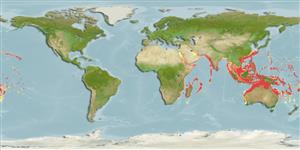
海 関連する礁; 海洋回遊性 (Ref. 51243); 深さの範囲 0 - 1000 m (Ref. 55178), usually 0 - 280 m (Ref. 6871). Tropical; 29°N - 35°S, 33°E - 151°W (Ref. 55178)
Indo-West Pacific to Central Pacific: Madagascar and the Mauritius-Seychelles area to Tuamoto Archipelago; north to southern China; south to northern Australia.
初回成熟時の長さ / サイズ / 重さ / 年齢
成熟: Lm 128.0, range 96 - 142 cm
Max length : 255 cm TL オス/雌雄の選別がない; (Ref. 2334); 172.0 cm TL (female); 最大公表体重: 33.7 kg (Ref. 4699); 最大記録サイズ: 25 年 (Ref. 37816)
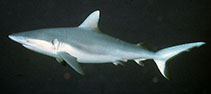
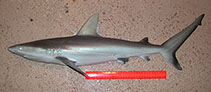
背面の脊椎 (合計) : 0; 肛門の骨: 0. Dark grey or bronze-grey above, white below; caudal fin with a conspicuous wide black posterior margin; undersides of pectoral and pelvic fins with black tips and posterior margins, but fins otherwise not conspicuously black or white-tipped except for white-tipped first dorsal in some individuals (Ref. 9997).
Body shape (shape guide): fusiform / normal.
Occurs on continental and insular shelves and oceanic waters adjacent to them (Ref. 244). Common on coral reefs, often in deeper areas near drop-offs to the open sea, in atoll passes, and in shallow lagoons adjacent to areas of strong currents (Ref. 244). Coastal-pelagic near the bottom, near drop-offs at 1-275 m (Ref. 58302). Forms daytime schools or aggregations in favored areas (Ref. 244). Although active during the day, it is more active nocturnally (Ref. 244). Viviparous, with 1-6 pups (Ref. 37816). Feeds on reef fishes, squids, octopi, crabs, lobsters and shrimps (Ref. 244, 5578). Tends to be aggressive under baited conditions (Ref. 6871) and readily enters into a frenzy feeding pattern, at which time it may become quite dangerous. Repeatedly incriminated in human attacks. Utilized for human consumption, fishmeal, and other shark products. Minimum depth from Ref. 6871. Maximum length of female taken from Ref. 5213.
ライフサイクルと交尾行動
成熟 | 繁殖 | 放精 | 卵 | 生産力 | 幼生
Viviparous, placental (Ref. 50449). 1-6 pups in a litter (Ref. 244). Gestation period about 12 months (Ref. 244). Size at birth 50 to 60 cm (Ref. 26346, 37816) or 75 cm (Ref. 244). Distinct pairing with embrace (Ref. 205).
Compagno, L.J.V., 1984. FAO Species Catalogue. Vol. 4. Sharks of the world. An annotated and illustrated catalogue of shark species known to date. Part 2 - Carcharhiniformes. FAO Fish. Synop. 125(4/2):251-655. Rome: FAO. (Ref. 244)
IUCNのレッドリストの状況は (Ref. 130435: Version 2025-2 (Global))
絶滅危惧 (EN) (A2bcd); Date assessed: 03 July 2020
人間に対する脅威
Traumatogenic (Ref. 4716)
人間の用途
水産業: 少数商業の; ゲームフィッシュ: はい
用具
特記事項
XMLをダウンロードして下さい
インターネットの情報源
モデルに基づく推定値
好ましい温度 (参照
123201): 17.5 - 29, mean 27.5 °C (based on 4022 cells).
系統多様性指数 (参照
82804): PD
50 = 0.5000 [Uniqueness, from 0.5 = low to 2.0 = high].
Bayesian length-weight: a=0.00537 (0.00322 - 0.00894), b=3.12 (2.98 - 3.26), in cm total length, based on LWR estimates for this species & Genus-body shape (Ref.
93245).
栄養段階 (参照
69278): 4.1 ±0.5 se; based on diet studies.
回復力 (参照
120179): 非常に低い, 14年以上の倍増期間の最小個体群 (tm=7; tmax=25; K=0.05-0.86; Fec=1-6).
漁業の脆弱性 (Ref.
59153): Very high vulnerability (85 of 100).
🛈
栄養素 (Ref.
124155): Calcium = 5.22 [1.08, 26.72] mg/100g; Iron = 0.37 [0.09, 1.07] mg/100g; Protein = 22 [19, 24] %; Omega3 = 0.123 [0.051, 0.293] g/100g; Selenium = 56.3 [15.3, 156.2] μg/100g; VitaminA = 40.1 [15.4, 109.4] μg/100g; Zinc = 0.496 [0.237, 0.971] mg/100g (wet weight);