(كوسه ها و سپرماهيان) (sharks and rays) >
Carcharhiniformes (Ground sharks) >
Scyliorhinidae (Cat sharks) > Scyliorhininae
Etymology: Scyliorhinus: skylion, Greek for dogfish or small shark; rhinus, from rhine (Gr.), rasp, alluding to a shark’s jagged, rasp-like skin (See ETYFish); stellaris: Latin for starry or of the stars, referring to many large and small black and white spots on body (See ETYFish).
More on author: Linnaeus.
محیط زیست: محیط زیست / منطقه آب و هوایی / تغييرات عمق / محدوده توزیع
بوم شناسي
دريايي وابسته به آب سنگ; تغييرات عمق 1 - 400 m (Ref. 27000), usually 20 - 63 m (Ref. 244). Subtropical; 63°N - 12°N, 19°W - 37°E
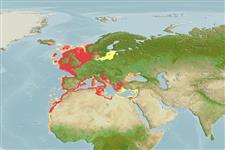
Northeast Atlantic: southern Scandinavia to Mediterranean, Morocco, Mauritania to Senegal (Ref. 125614). Records further south in the Atlantic, to Gulf of Guinea and Congo River mouth may be misidentifications of Scyliorhinus cervigoni (Ref. 127434).
طول در اولین بلوغ / اندازه / وزن / سن
بلوغ: Lm 78.0, range 77 - 79 cm
Max length : 170 cm TL جنس نر / بدون خواص جنسي; (Ref. 26999); common length : 125 cm TL جنس نر / بدون خواص جنسي; (Ref. 244); بيشينه سن گزارش شده: 19 سال ها (Ref. 72467)
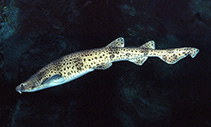
خارهاي باله پشتي (کل) : 0; خارهاي باله مخرجي: 0. A large, fairly stocky, catshark with large and small black spots and sometimes white spots covering dorsal surface, saddle markings obsolete, small anterior nasal flaps that do not reach the mouth, no nasoral grooves, labial furrows on lower jaw only, second dorsal fin much smaller than first (Ref. 244)
Body shape (shape guide): elongated; Cross section: compressed.
A common inshore and offshore shark found on the continental shelf over rough, even rocky or coralline ground, and algal-covered bottoms. Found at depths of 1 or 2 m to at least 125 m. Feed on bottom-living invertebrates such as mollusks and crustaceans and on demersal fishes (e.g. sharks, S. canicula). Oviparous (Ref. 50449). Utilized fresh and dried salted for human consumption, and processed into fishmeal. May attain 170 cm (Ref. 27000).
Oviparous, with a single egg per oviduct (Ref. 244). Embryos feed solely on yolk (Ref. 50449). Size at hatching about 16 cm (Ref. 244).
Compagno, L.J.V., 1984. FAO Species Catalogue. Vol. 4. Sharks of the world. An annotated and illustrated catalogue of shark species known to date. Part 2 - Carcharhiniformes. FAO Fish. Synop. 125(4/2):251-655. Rome: FAO. (Ref. 244)
وضعيت در فهرست قرمز IUCN (Ref. 130435: Version 2025-2 (Global))
خطر برای انسان ها
Harmless
استفاده انسانی
ماهي گيري – شيلات: ارزش تحاري اندك; آكواريوم: آکواریوم عمومی
ابزارها
گزارش های ويژه
بارگيری XML
منابع اينترنتي
تخمینها بر اساس مدلها
دمای ترجیحی (مرجع
123201): 7.8 - 19.5, mean 10.9 °C (based on 836 cells).
شاخص تنوع فیلوژنتیکی (مرجع
82804): PD
50 = 0.5000 [Uniqueness, from 0.5 = low to 2.0 = high].
Bayesian length-weight: a=0.00195 (0.00155 - 0.00246), b=3.17 (3.10 - 3.24), in cm total length, based on LWR estimates for this species (Ref.
93245).
سطح تروفیک (مرجع
69278): 4.0 ±0.3 se; based on diet studies.
جهندگی (مرجع
120179): پايين ، كم, كمينه زمان لازم براي دو برابر شدن جمعيت 5/4 – 14 سال (Fec assumed to be <100).
آسیبپذیری ماهیگیری (Ref.
59153): Very high vulnerability (90 of 100).
🛈
آسیبپذیری اقلیمی (Ref.
125649): Moderate vulnerability (38 of 100).
🛈
مواد مغذی (Ref.
124155): Calcium = 4.81 [1.06, 25.16] mg/100g; Iron = 0.325 [0.083, 0.956] mg/100g; Protein = 19.4 [16.3, 22.5] %; Omega3 = 0.117 [0.048, 0.276] g/100g; Selenium = 21.6 [6.3, 65.2] μg/100g; VitaminA = 20.9 [6.7, 69.0] μg/100g; Zinc = 0.437 [0.202, 0.902] mg/100g (wet weight);