>
Aulopiformes (Grinners) >
Synodontidae (Lizardfishes) > Synodontinae
Etymology: Synodus: Greek, syn, symphysis = grown together + Greek, odous = teeth (Ref. 45335); jaculum: jaculum (neuter noun in apposition) from the Latin word for javelin, in reference to the peculiar behavior of this species of launching itself off the bottom and swimming in midwater for prolonged periods.
Ambiente: milieu / zona climatica / distribuzione batimetrica / gamma di distribuzione
Ecologia
marino associati a barriera corallina; distribuzione batimetrica 2 - 100 m (Ref. 11228). Tropical; 33°N - 32°S
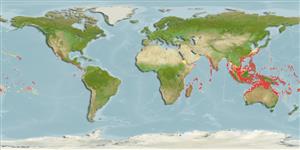
Indo-Pacific: East Africa to the Line, Marquesan, and Society islands, north to the Izu Islands (Japan), south to New South Wales (Australia); Palau to Kosrae in Micronesia.
Dimensione / Peso / Età
Maturità: Lm ? range ? - ? cm
Max length : 20.0 cm TL maschio/sesso non determinato; (Ref. 2334); common length : 10.0 cm TL maschio/sesso non determinato; (Ref. 3520)
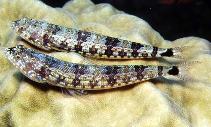
Spine dorsali (totale) : 0; Raggi dorsali molli (totale) : 11 - 13; Spine anali: 0; Raggi anali molli: 8 - 10. Body brownish above, with dark brown saddle blotches; fins transparent, with faint brown spots on dorsal and caudal rays (Ref. 11228). Prominent black blotch on its caudal peduncle (Ref. 1602).
Body shape (shape guide): elongated; Cross section: circular.
Inhabits coral reefs. Commonly found on sand or rubble near coral heads. Feeds on shrimps and small fishes (Ref. 89972). Frequently caught with S. variegatus and S. englemani, using artisanal gear and trawls. Sold fresh and dried salted in markets. Solitary,in pairs or in small groups (Ref 90102).
Ciclo vitale e comportamento di accoppiamento
Maturità | Riproduzione | Deposizione | Uova | Fecondità | Larve
Cressey, R.F. and R.S. Waples, 1984. Synodontidae. In W. Fischer and G. Bianchi (eds.) FAO species identification sheets for fishery purposes. Western Indian Ocean (Fishing Area 51). Volume 4. FAO, Rome. (Ref. 3520)
Stato della Lista Rossa IUCN (Ref. 130435: Version 2025-2 (Global))
Minaccia per l'uomo
Harmless
Usi umani
Pesca: scarso interesse commerciale
Strumenti
Rapporti speciali
Scarica XML
Fonti Internet
Stime basate su modelli
Temperatura preferita (Fonte Biblio.
123201): 24.5 - 29, mean 27.9 °C (based on 1488 cells).
Indice di diversità filogenetica (Fonte Biblio.
82804): PD
50 = 0.5000 [Uniqueness, from 0.5 = low to 2.0 = high].
Bayesian length-weight: a=0.00468 (0.00225 - 0.00972), b=3.15 (2.98 - 3.32), in cm total length, based on LWR estimates for this Genus-body shape (Ref.
93245).
Livello trofico (Fonte Biblio.
69278): 4.0 ±0.7 se; based on size and trophs of closest relatives
Resilienza (Fonte Biblio.
120179): Alto, tempo minimo di raddoppiamento della popolazione meno di 15 mesi (Preliminary K or Fecundity.).
Vulnerabilità della pesca (Ref.
59153): Low vulnerability (10 of 100).
🛈
Nutrienti (Ref.
124155): Calcium = 72.4 [26.5, 161.1] mg/100g; Iron = 0.612 [0.207, 1.325] mg/100g; Protein = 15.9 [12.9, 18.3] %; Omega3 = 0.072 [0.025, 0.182] g/100g; Selenium = 34.5 [13.4, 82.8] μg/100g; VitaminA = 115 [29, 384] μg/100g; Zinc = 1.04 [0.59, 1.60] mg/100g (wet weight);