>
Cypriniformes (Carps) >
Cyprinidae (Minnows or carps) > Labeoninae
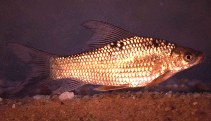
Etymology: Labeo: Latin, labeo = one who has large lips (Ref. 45335); altivelis: From the Latin altus meaning high and velum meaning veil, name refers to the dorsal fin (Ref. 26190).
More on author: Peters.
Ambiente: milieu / zona climatica / distribuzione batimetrica / gamma di distribuzione
Ecologia
; acqua dolce benthopelagico; potamodromo (Ref. 138143). Tropical; 13°S - 22°S
Africa: lower and middle reaches of the Zambezi River system, including the Shire and Lake Malawi (Ref. 26190). Also in Lake Mweru and the Luapula (upper Congo River basin) (Ref. 26190). Range thought to extend to some East Coast rivers (Rufiji system) (Ref. 1440).
Lunghezza alla prima maturità / Dimensione / Peso / Età
Maturità: Lm 27.0 range ? - ? cm
Max length : 49.0 cm TL maschio/sesso non determinato; (Ref. 5309); peso massimo pubblicato: 3.6 kg (Ref. 52193); Età massima riportata: 9 anni (Ref. 7248)
Spine dorsali (totale) : 0; Raggi dorsali molli (totale) : 14 - 16; Spine anali: 0; Raggi anali molli: 8.
Body shape (shape guide): elongated.
Adults prefer large rivers but is also found in large lakes and dams (Ref. 52193). They graze on algae and `aufwuchs' from rocks (Ref. 7248, 52193). From October to December in Lake Moëro, the adults gather and migrate to the spawning grounds; they go up the Luapula River up to the foot of Johnston Falls where they undergo one massive spawning between January and March. This massive spawning of short duration is known as kapata in the Luapula-Moëro system and in the tributaries of the Luapula. This species is intensely fished and caviar is produce from eggs collected during migration from Lake Moëro to Luapula River (Ref. 26190).
Ciclo vitale e comportamento di accoppiamento
Maturità | Riproduzione | Deposizione | Uova | Fecondità | Larve
Tshibwabwa, S.M., 1997. Systématique des espèces africaines du genre Labeo (Teleostei, Cyprinidae) dans les régions ichtyogéographiques de Basse-Guinée et du Congo. I. Presses Universitaires de Namur, Namur, Belgique. 302 p. (Ref. 26190)
Stato della Lista Rossa IUCN (Ref. 130435: Version 2025-2 (Global))
Minaccia per l'uomo
Harmless
Usi umani
Pesca: pesca di sussistenza; Pesce da pesca sportiva: si
Strumenti
Rapporti speciali
Scarica XML
Fonti Internet
Stime basate su modelli
Indice di diversità filogenetica (Fonte Biblio.
82804): PD
50 = 0.5000 [Uniqueness, from 0.5 = low to 2.0 = high].
Bayesian length-weight: a=0.01000 (0.00534 - 0.01873), b=3.05 (2.89 - 3.21), in cm total length, based on LWR estimates for this species & Genus-body shape (Ref.
93245).
Livello trofico (Fonte Biblio.
69278): 2.0 ±0.00 se; based on food items.
Resilienza (Fonte Biblio.
120179): Medio, tempo minimo di raddoppiamento della popolazione 1.4 - 4.4 anni (tmax=9).
Vulnerabilità della pesca (Ref.
59153): Moderate vulnerability (39 of 100).
🛈