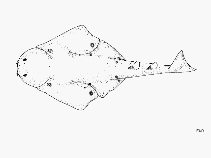
Elasmobranquios (tiburones y rayas) (sharks and rays) >
Squatiniformes (Angel sharks) >
Squatinidae (Angel sharks)
Etymology: Squatina: Latin for skate, which angel sharks superficially resemble, presumably tautonymous with Squalus squatina Linnaeus 1758 (no species mentioned) (See ETYFish); tergocellatoides: -oides, Greek suffix meaning like, resembling, having the form of: described as “closely allied” to S. tergocellata but with a different color pattern, much longer tail, more numerous snout tubercles, and no medial series of dorsal tubercles (See ETYFish).
Entorno: milieu / zona climática / rango de profundidad / gama de distribución
Ecología
marino demersal. Subtropical; 28°N - 22°N, 118°E - 122°E (Ref. 54912)
Northwest Pacific: Taiwan Straits.
Tamaño / Peso / Edad
Madurez: Lm ? range ? - ? cm
Max length : 63.0 cm TL macho / no sexado; (Ref. 247)
Known only from two specimens. Ovoviviparous (Ref. 50449). Other details of habitat and biology unknown.
Ciclo vital y comportamiento de apareamiento
Madurez | Reproducción | Puesta | Huevos | Fecundidad | Larva
Ovoviviparous, embryos feed solely on yolk (Ref. 50449).
Compagno, L.J.V., 1984. FAO Species Catalogue. Vol. 4. Sharks of the world. An annotated and illustrated catalogue of shark species known to date. Part 1 - Hexanchiformes to Lamniformes. FAO Fish. Synop. 125(4/1):1-249. Rome, FAO. (Ref. 247)
Situación en la Lista Roja de la UICN (Ref. 130435: Version 2025-2 (Global))
Amenaza para el ser humano
Traumatogenic
Usos humanos
Pesquerías: sin interés
Herramientas
Informes especiales
Descargar XML
Fuentes de Internet
Estimaciones basadas en modelos
Índice de diversidad filogenética (Referencia
82804): PD
50 = 0.5000 [Uniqueness, from 0.5 = low to 2.0 = high].
Bayesian length-weight: a=0.00661 (0.00287 - 0.01523), b=3.07 (2.88 - 3.26), in cm total length, based on LWR estimates for this Genus-body shape (Ref.
93245).
Nivel trófico (Referencia
69278): 3.9 ±0.5 se; based on size and trophs of closest relatives
Resiliencia (Referencia
120179): Bajo, población duplicada en un tiempo mínimo de 4.5-14 años (Fec assumed to be <100).
Vulnerabilidad pesquera (Ref.
59153): Moderate to high vulnerability (45 of 100).
🛈