Environnement : milieu / zone climatique / profondeur / gamme de distribution
Écologie
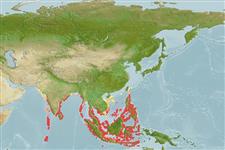
marin; saumâtre récifal; profondeur 1 - 20 m (Ref. 90102). Tropical; 27°N - 11°S, 63°E - 128°E (Ref. 5222)
Indo-West Pacific: Pakistan, India including Laccadive (Lakshadweep) Islands, Sri Lanka, and through the larger islands of the East Indies and the Gulf of Thailand.
Taille / Poids / Âge
Maturité: Lm ? range ? - ? cm
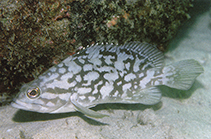
Max length : 45.0 cm TL mâle / non sexé; (Ref. 48635)
Épines dorsales (Total) : 11; Rayons mous dorsaux (Total) : 15 - 17; Épines anales: 3; Rayons mous anaux: 8.
Body shape (shape guide): fusiform / normal; Cross section: compressed.
Inhabits areas with muddy or silty-sand bottoms. Commonly trawled (Ref. 48635). Nothing has been published on its biology. A 16.3 cm SL fish was found to have ripe ova. Solitary, also found in turbid harbours and estuaries (Ref 90102).
Cycle de vie et comportement reproducteur
Maturité | Reproduction | Frai | Œufs | Fécondité | Larves
Heemstra, P.C. and J.E. Randall, 1993. FAO Species Catalogue. Vol. 16. Groupers of the world (family Serranidae, subfamily Epinephelinae). An annotated and illustrated catalogue of the grouper, rockcod, hind, coral grouper and lyretail species known to date. Rome: FAO. FAO Fish. Synop. 125(16):382 p. (Ref. 5222)
Statut dans la liste rouge de l'IUCN (Ref. 130435: Version 2025-2 (Global))
Menace pour l'homme
Harmless
Utilisations par l'homme
Pêcheries: intérêt commercial mineur
Outils
Articles particuliers
Télécharger en XML
Sources Internet
Estimations basées sur des modèles
Température préférée (Réf.
123201): 28.1 - 29.3, mean 28.8 °C (based on 1018 cells).
Indice de diversité phylogénétique (Réf.
82804): PD
50 = 0.5000 [Uniqueness, from 0.5 = low to 2.0 = high].
Bayesian length-weight: a=0.01148 (0.00555 - 0.02374), b=3.04 (2.87 - 3.21), in cm total length, based on LWR estimates for this Genus-body shape (Ref.
93245).
Niveau trophique (Réf.
69278): 3.8 ±0.6 se; based on size and trophs of closest relatives
Résilience (Réf.
120179): Milieu, temps minimum de doublement de population : 1,4 à 4,4 années (Preliminary K or Fecundity.).
Vulnérabilité de la pêche (Ref.
59153): Low to moderate vulnerability (35 of 100).
🛈