Élasmobranches (requins et raies) (sharks and rays) >
Pristiophoriformes (Saw sharks) >
Pristiophoridae (Saw sharks)
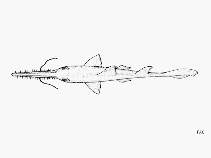
Etymology: Pristiophorus: pristio-, presumably derived from prio (Gr.), to saw, but treated here as a noun (a saw); phorus, from phoreus (Gr.), bearer or carrier, referring to saw-like snout (note also that pristis is Greek for sawfish) (See ETYFish); schroederi: Patronym not identified but almost certainly in honor of American ichthyologist William C. Schroeder (1895-1977), Woods Hole Oceanographic Institution (Falmouth, Massachusetts, USA), a world expert on chondrichthyan fishes (See ETYFish).
Eponymy: William Charles Schroeder (1894–1977) was an American oceanographer and ichthyologist. [...] (Ref. 128868), visit book page.
Environnement : milieu / zone climatique / profondeur / gamme de distribution
Écologie
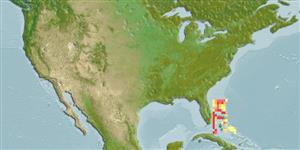
marin bathydémersal; profondeur 400 - 1000 m (Ref. 55584). Deep-water; 30°N - 23°N, 80°W - 74°W (Ref. 54712)
Western Central Atlantic: Bahamas region between Cuba, Florida, and the Bahamas.
Taille / Poids / Âge
Maturité: Lm ? range ? - ? cm
Max length : 80.0 cm TL mâle / non sexé; (Ref. 247)
Found on the continental and insular slopes. Ovoviviparous (Ref. 50449).
Cycle de vie et comportement reproducteur
Maturité | Reproduction | Frai | Œufs | Fécondité | Larves
Ovoviviparous, embryos feed solely on yolk (Ref. 50449).
Compagno, L.J.V., 1984. FAO Species Catalogue. Vol. 4. Sharks of the world. An annotated and illustrated catalogue of shark species known to date. Part 1 - Hexanchiformes to Lamniformes. FAO Fish. Synop. 125(4/1):1-249. Rome, FAO. (Ref. 247)
Statut dans la liste rouge de l'IUCN (Ref. 130435: Version 2025-2 (Global))
Menace pour l'homme
Harmless
Utilisations par l'homme
Pêcheries: sans intérêt
Outils
Articles particuliers
Télécharger en XML
Sources Internet
Estimations basées sur des modèles
Température préférée (Réf.
123201): 10 - 13.9, mean 12.6 °C (based on 12 cells).
Indice de diversité phylogénétique (Réf.
82804): PD
50 = 0.5098 [Uniqueness, from 0.5 = low to 2.0 = high].
Bayesian length-weight: a=0.00389 (0.00180 - 0.00842), b=3.12 (2.94 - 3.30), in cm total length, based on all LWR estimates for this body shape (Ref.
93245).
Niveau trophique (Réf.
69278): 3.9 ±0.6 se; based on size and trophs of closest relatives
Résilience (Réf.
120179): Faible, temps minimum de doublement de population : 4,5 à 14 années (Fec assumed to be <100).
Vulnérabilité de la pêche (Ref.
59153): Moderate to high vulnerability (52 of 100).
🛈