Elasmobranchii (Haie und Rochen) (sharks and rays) >
Squaliformes (Sleeper and dogfish sharks) >
Squalidae (Dogfish sharks)
Etymology: Cirrhigaleus: Latin, cirrus = curl fringe + Greek, galeos = a shark (Ref. 45335).
Taxonomic Remarks
Genus B. Mundy, pers. comm.
Umwelt: Milieu / Klimazone / Tiefenbereich / Verbreitungsgebiet
Ökologie
seewasser bathydemersal; tiefenbereich 200 - 650 m (Ref. 55584). Deep-water; 35°N - 35°S, 171°W - 51°E (Ref. 55304)
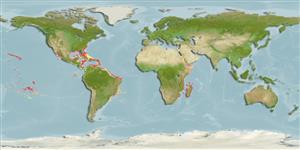
Western Atlantic: North Carolina to the Florida Keys (Ref. 3814) and the northern Gulf of Mexico. Western Indian Ocean: southern Mozambique to South Africa; also Reunion, Comoros, and the Aldabra islands (Ref. 33390). Eastern Central Pacific: Hawaiian Islands.
Länge bei der ersten Reifung / Größe / Gewicht / Alter
Geschlechtsreife: Lm 110.0 range ? - ? cm
Max length : 120 cm TL Männchen/unbestimmt; (Ref. 247); 115.0 cm TL (female)
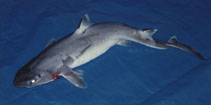
Rückenflossenstacheln (insgesamt) : 2; Afterflossenstacheln: 0. A heavy-bodied dogfish with a blunt, rounded snout, large denticles and noticeably rough skin; body without spots; 1st dorsal fin spine behind pectoral fins (Ref. 5578). Dark grey or brown above, lighter below; white edges on fins (Ref. 5578); juveniles brown (Ref. 6577).
Body shape (shape guide): elongated.
Found on the upper continental and insular slopes (Ref. 247). Adults feed on bony fishes and squids (Ref. 5213). Ovoviviparous (Ref. 205), with 21 to 22 young in a litter (Ref. 247).
Ovoviviparous, with 21 to 22 young in a litter.
Compagno, L.J.V., 1984. FAO Species Catalogue. Vol. 4. Sharks of the world. An annotated and illustrated catalogue of shark species known to date. Part 1 - Hexanchiformes to Lamniformes. FAO Fish. Synop. 125(4/1):1-249. Rome, FAO. (Ref. 247)
IUCN Rote Liste Status (Ref. 130435: Version 2025-2 (Global))
Bedrohung für Menschen
Harmless
Nutzung durch Menschen
Fischereien: nicht kommerziell
Tools
Zusatzinformationen
Download XML
Internet Quellen
Schätzungen auf der Grundlage von Modellen
Bevorzugte Temperatur (Ref.
123201): 9.7 - 18.4, mean 13.4 °C (based on 113 cells).
Phylogenetischer Diversitätsindex (Ref.
82804): PD
50 = 0.6250 [Uniqueness, from 0.5 = low to 2.0 = high].
Bayesian length-weight: a=0.00355 (0.00169 - 0.00744), b=3.09 (2.91 - 3.27), in cm total length, based on LWR estimates for this (Sub)family-body shape (Ref.
93245).
Trophische Ebene (Ref.
69278): 4.5 ±0.62 se; based on food items.
Widerstandsfähigkeit (Ref.
120179): niedrig, Verdopplung der Population dauert 4,5 - 14 Jahre. (Fec=21-22).
Anfälligkeit der Fischerei (Ref.
59153): High to very high vulnerability (72 of 100).
🛈