>
Notacanthiformes (Halosaurs and deep-sea spiny eels) >
Notacanthidae (Deep-sea spiny eels)
Etymology: Polyacanthonotus: Greek, poly = a lot of + Greek, akantha = thorn + Greek,noton = back (Ref. 45335); challengeri: Named after the H.M.S. Challenger (Ref. 6885).
Eponymy: ‘HMS Challenger’ was a deep-sea research vessel, famous for the Challenger Expedition (1872–1876) which contributed hugely to oceanography and led to the discovery of over 4,000 previously unknown species. (Ref. 128868), visit book page.
More on author: Vaillant.
Περιβάλλον: περιβάλλον / κλιματική ζώνη / εύρος βάθους / εύρος διανομής
Οικολογία
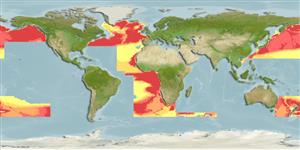
Θαλασσινό(ά) βαθυπελαγικό(ς); εύρος βάθους 777 - 4560 m (Ref. 50610), usually 2000 - 3000 m (Ref. 6728). Deep-water; - 50°S
North Pacific: Japan, Bering Sea and British Columbia, Canada (Ref. 6885), also south to Oregon, USA (Ref. 35578). South Pacific: known form one specimen collected near New Zealand. Southeast Atlantic: South Africa. Southern Ocean: known from one specimen collected near the Kerguelen Islands. Mainly antitropical (Ref. 5165) but reported from Azores, Canary Islands and Morocco (Ref. 6728).
Μέγεθος / Βάρος / Ηλικία
Γεννητική Ωρίμανση: Lm ? range ? - ? cm
Max length : 60.0 cm TL αρσενικό/απροσδιόριστο; (Ref. )
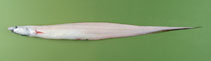
Ραχιαίες άκανθες (συνολικά) : 32 - 35; Μαλακές ραχιαίες ακτίνες (συνολικά) : 0; Σπόνδυλοι: 242 - 244. Caudal fin very small; anal fin with 161-162 rays altogether, 26-35 of which are spines, long, low, confluent with caudal; pectorals with a fleshy base (Ref. 6885). Cream to faintly pink, possibly with light brown markings; black on posterior margins of anal and caudal fins; black on posterior edge of gill cover, lining of mouth and gill chamber, and parts of peritoneum (Ref. 6885).
Body shape (shape guide): eel-like.
Feeds on benthic invertebrates, especially amphipods, polychaetes and mysids (Ref. 6728).
Κύκλος ζωής και συμπεριφορά ζευγαρώματος
Γεννητική Ωρίμανση | Αναπαραγωγή | Γεννοβολία | Αβγά | Γονιμότητα | Προνύμφες
Gon, O., 1990. Notacanthidae. p. 100-101. In O. Gon and P.C. Heemstra (eds.) Fishes of the Southern Ocean. J.L.B. Smith Institute of Ichthyology, Grahamstown, South Africa. (Ref. 5165)
Κατάσταση Κόκκινου Καταλόγου IUCN (Ref. 130435: Version 2025-2 (Global))
Απειλή για τον άνθρωπο
Harmless
Ανθρώπινες χρήσεις
Εργαλεία
Ειδικές εκθέσεις
Λήψη XML
Διαδικτυακές πηγές
Εκτιμήσεις βάσει μοντέλων
Προτιμώμενη θερμοκρασία (Αναφ.
123201): 1.5 - 3.4, mean 2.4 °C (based on 2854 cells).
Δείκτης φυλογενετικής ποικιλότητας (Αναφ.
82804): PD
50 = 0.5626 [Uniqueness, from 0.5 = low to 2.0 = high].
Bayesian length-weight: a=0.00102 (0.00046 - 0.00225), b=3.06 (2.88 - 3.24), in cm total length, based on all LWR estimates for this body shape (Ref.
93245).
Τροφικό Επίπεδο (Αναφ.
69278): 3.2 ±0.42 se; based on food items.
Ελαστικότητα (Αναφ.
120179): Χαμηλό, ελάχιστος χρόνος για διπλασιασμό πληθυσμού 4,5 - 14 έτη (Assuming tmax>10).
Ευπάθεια στην αλιεία (Ref.
59153): Moderate vulnerability (44 of 100).
🛈