Classificazione / Nomi
Nomi Comuni | Sinonimi | Catalog of Fishes(Genere, Specie) | ITIS | CoL | WoRMS | Cloffa
>
Galaxiiformes (Southern smelts) >
Galaxiidae (Galaxiids) > Galaxiinae
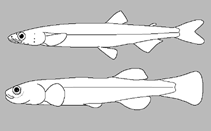
Etymology: Galaxias: Greek, galaxias, ou = a kind of fish (Ref. 45335); lanceolatus: Name from Latin 'lanceolatus', meaning lance-like, referring to the comparatively elongate body
shape of this species with relatively evenly arched dorsal and ventral profiles, except when close to spawning.
Ambiente: milieu / zona climatica / distribuzione batimetrica / gamma di distribuzione
Ecologia
; acqua dolce benthopelagico; non migratori; distribuzione batimetrica 0 - 1 m (Ref. 98815). Subtropical
Oceania: Australia.
Dimensione / Peso / Età
Maturità: Lm ? range ? - ? cm
Max length : 8.4 cm FL maschio/sesso non determinato; (Ref. 98815); peso massimo pubblicato: 6.00 g (Ref. 98815)
Breve descrizione
Chiavi di identificazione | Morfologia | Morfometria
Raggi dorsali molli (totale) : 9 - 11; Raggi anali molli: 10 - 12; Vertebre: 53 - 55. This species is distinguished from its congeners in the Galaxias olidus complex by the following characters: trunk with the dorsal and ventral profiles evenly arched from snout to dorsal fin; the dorsal and anal fin lengths, and fin base lengths, about equal; snout and upper lip are slightly anteriorly expanded and fleshy; dorsal midline usually broadly flattened anteriorly; dorsal profile of head distinctly flat anterior to nape; mouth cleft is moderately oblique; nostrils are short, not visible from ventral view; caudal peduncle flanges are high and long, usually extending to near anal fin base, and also extending along outer rays onto caudal fin; caudal fin length usually just shorter than the caudal peduncle length; pyloric caecae usually absent; anal fin origin usually under 0.66 distance posteriorly along dorsal fin base; no black bars along lateral line (Ref. 8815).
Cross section: oval.
Facultative air-breathing in the genus (Ref. 126274); A freshwater fish that is unable to undertake diadromous migrations. It is recorded from a cool, small (0.5-1.5 m), shallow (0.1-0.5 m), clear and slow-flowing, partly shaded freshwater creek in a forested catchment. The substrate consisted mainly of cobbles, with some gravel, bedrock and sand, and the instream cover was provided mostly by rock, also by small amounts of undercut banks, timber debris and vegetation overhang. Recorded at densities of 0.01-0.9 fish/m2 and collected with the native species Broadfinned Galaxias, Shortfinned Eel, Central Highlands Spiny Crayfish, Gippsland Spiny Crayfish and Common Freshwater Shrimp. An individual was recorded with a short, thin, white worm (probably nematode), coiled and pointed at both ends, from amongst fat deposits around the stomach in the body cavity (Ref. 98815).
Ciclo vitale e comportamento di accoppiamento
Maturità | Riproduzione | Deposizione | Uova | Fecondità | Larve
Raadik, T.A., 2014. Fifteen from one: a revision of the Galaxias olidus Günther, 1866 complex (Teleostei, Galaxiidae) in south-eastern Australia recognises three previously described taxa and describes 12 new species. Zootaxa 3898(1):001-198. (Ref. 98815)
Stato della Lista Rossa IUCN (Ref. 130435: Version 2025-2 (Global))
Minaccia per l'uomo
Harmless
Usi umani
Strumenti
Rapporti speciali
Scarica XML
Fonti Internet
Stime basate su modelli
Indice di diversità filogenetica (Fonte Biblio.
82804): PD
50 = 0.5000 [Uniqueness, from 0.5 = low to 2.0 = high].
Bayesian length-weight: a=0.00490 (0.00206 - 0.01165), b=3.12 (2.91 - 3.33), in cm total length, based on LWR estimates for this (Sub)family-body shape (Ref.
93245).
Livello trofico (Fonte Biblio.
69278): 3.2 ±0.4 se; based on size and trophs of closest relatives
Resilienza (Fonte Biblio.
120179): Alto, tempo minimo di raddoppiamento della popolazione meno di 15 mesi (Preliminary K or Fecundity.).
Vulnerabilità della pesca (Ref.
59153): Low vulnerability (10 of 100).
🛈