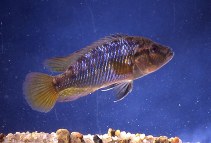
>
Cichliformes (Cichlids, convict blennies) >
Cichlidae (Cichlids) > Pseudocrenilabrinae
Etymology: Pseudocrenilabrus: Greek, pseudes = false + Latin, crenulatus = cut + Latin, labrum = lip (Ref. 45335).
More on author: Weber.
محیط زیست: محیط زیست / منطقه آب و هوایی / تغييرات عمق / محدوده توزیع
بوم شناسي
; آب شيرين موجوداتی که در محدوده وسیعی از آبهای آزاد از نزدیک بستر و یا روی کف بستر، در قسمت های میان آبی تا سطح آب و در برخی گونه ها با قابلیت پرواز، زندگی و تغذیه می کنند.; pH range: 7.0 - ? ; dH range: 12 - ?. Tropical; 22°C - 25°C (Ref. 2059); 5°S - 35°S
Africa: from the Orange River system and southern KwaZulu-Natal northwards throughout southern Africa, extending to southern Congo basin tributaries (Ref. 7248, 52193) and lagoons and rivers associated with Lake Malawi, but not the lake itself (Ref. 55954). Also in Lake Rukwa (Ref. 27292). Three subspecies are recognized: Pseudocrenilabrus philander dispersus, Pseudocrenilabrus philander luebberti and Pseudocrenilabrus philander philander.
اندازه / وزن / سن
بلوغ: Lm ? range ? - ? cm
Max length : 13.0 cm TL جنس نر / بدون خواص جنسي; (Ref. 52193); بيشينه سن گزارش شده: 5 سال ها (Ref. 7248)
خارهاي باله پشتي (کل) : 13 - 16; شعاع نرم باله پشتي (کل) : 9 - 11; خارهاي باله مخرجي: 3; شعاع نرم باله مخرجي: 7 - 9.
Body shape (shape guide): fusiform / normal; Cross section: oval.
Found in various habitats, from flowing waters to lakes and isolated sinkholes, e.g., Lake Otjikoto, Namibia (see Ref. 27829); usually prefers vegetated zones. It feeds on insects, shrimps and even small fish (Ref. 52193). Breeds from early spring to late summer; males establish and defend a territory, construct a simple cleared nest and attract ripe females; eggs are laid in the nest, fertilized and collected by the female; the female withdraws to a quiet nursery area to brood the eggs, larvae and juveniles until they are able to fend for themselves (Ref. 7248, 52193). Ovophilic, agamous maternal mouthbrooder; no pair-bonding takes place (Ref. 52307).
چرخه زندگی و رفتار جفتگیری
بلوغ | تولید مثل | تخم ریزی | تخم ها | باروری | توزاد ( لارو)
Female lays batches of eggs on a substratum which the male begins to inseminate. Female collects the eggs almost immediately after laying a batch and incubates eggs in her mouth for 12-14 days at 26°C, releasing the young after which. Parent guards the young for 5-7 days, keeping them into her mouth when approached by predators or divers.
Skelton, P.H., 1991. Pseudocrenilabrus. p. 394-398. In J. Daget, J.-P. Gosse, G.G. Teugels and D.F.E. Thys van den Audenaerde (eds.) Check-list of the freshwater fishes of Africa (CLOFFA). ISNB, Brussels; MRAC, Tervuren; and ORSTOM, Paris. Vol. 4. (Ref. 5682)
وضعيت در فهرست قرمز IUCN (Ref. 130435: Version 2025-2 (Global))
خطر برای انسان ها
Harmless
استفاده انسانی
ماهي گيري – شيلات: ارزش تحاري اندك
ابزارها
گزارش های ويژه
بارگيری XML
منابع اينترنتي
تخمینها بر اساس مدلها
شاخص تنوع فیلوژنتیکی (مرجع
82804): PD
50 = 0.5625 [Uniqueness, from 0.5 = low to 2.0 = high].
Bayesian length-weight: a=0.01259 (0.00749 - 0.02115), b=2.97 (2.83 - 3.11), in cm total length, based on LWR estimates for this species & (Sub)family-body (Ref.
93245).
سطح تروفیک (مرجع
69278): 3.7 ±0.60 se; based on food items.
جهندگی (مرجع
120179): متوسط, كمينه زمان لازم براي دو برابر شدن جمعيت 4/1 – 4/4 سال (tmax=4.5).
آسیبپذیری ماهیگیری (Ref.
59153): Low vulnerability (10 of 100).
🛈
مواد مغذی (Ref.
124155): Calcium = 198 [107, 396] mg/100g; Iron = 1.7 [0.9, 3.4] mg/100g; Protein = 18.5 [17.0, 19.9] %; Omega3 = 0.575 [0.206, 1.673] g/100g; Selenium = 63.7 [24.5, 175.2] μg/100g; VitaminA = 65.3 [15.0, 213.0] μg/100g; Zinc = 2.35 [1.54, 3.63] mg/100g (wet weight);