Holocephali (chimaeras) (chimaeras) >
Chimaeriformes (Chimaeras) >
Chimaeridae (Shortnose chimaeras or ratfishes)
Etymology: Chimaera: Named for the mythological creature composed of parts of multiple animals, referring to their odd mix of characteristics (See ETYFish); carophila: Named for Carol and Phil Kemper (caro + phil), supporters of chimaeroid research (and the senior author’s parents) (See ETYFish).
Lingkungan: lingkungan / zona iklim / kisaran kedalaman / jangkauan distribusi
Ekologi
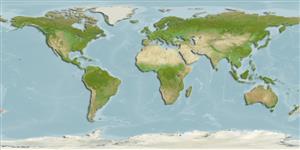
laut batidemersal; kisaran kedalaman 846 - 1350 m (Ref. 107024), usually ? - 1000 m (Ref. 107024). Deep-water; 32°S - 49°S, 166°E - 171°W (Ref. 107024)
Southwest Pacific: deep water slopes and plateaus surrounding New Zealand (Challenger Plateau, Chatham Slope and Rise, Hikurangi Trench, Campbell Plateau,
Bounty Plateau).
Ukuran / Berat / umur
Kematangan: Lm ? range ? - ? cm
Max length : 104 cm TL jantan/; (Ref. 107024); 97.5 cm TL (female); Berat maksimum terpublikasi: 4.8 kg (Ref. 122636)
deskripsi pendek
Kunci identifiaksi (pengenalan) | Morfologi | Morfometrik
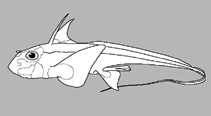
This species is distinguished by the following characters: a short, blunt snout and an anal fin separate from the ventral caudal margin by a notch; medium-bodied with a gently rounded snout; large eye; oral and preopercular lateral line canals usually share a short common branch off of the infraorbital canal; relatively short first dorsal fin and spine; second dorsal fin even along height, long caudal dorsal and ventral margins, short, trifurcate pelvic claspers, divided distally for approximately one-third of their length; body colour uniform pale-brown, mouth and ventral snout darker with brownish-purple fins and highly deciduous skin. Distinguished from its closest congeners, Chimaera fulva, C. macrospina, and C. obscura, by a combination of morphological characters (longer caudal dorsal margin, shorter pelvic claspers, shorter dorsal fin spine, shorter first dorsal fin, and longer caudal ventral margin) and coloration (Ref. 107024).
Body shape (shape guide): elongated.
The depth range of occurrence of this species seems to follow the 1000 m depth contour around New Zealand, but may be an artifact of sampling. Size range for juvenile females 27.7-75.9 cm TL (18.2-37.6 body length) and males 41.0-83.5 cm TL (16.7-52.2 cm BDL); for adult females 85.5-103.5 cm TL (51.9-59.9 cm BDL) and males 74.0-97.5 cm TL (48.7-57.0 cm BDL) (Ref. 107024).
Siklus hidup dan perilaku kawin
Kematangan | Reproduksi, perkembang biakan | Pemijahan | telur-telur | Fekunditas | Larva
Kemper, J.M., D.A. Ebert, G.J.P. Naylor and D.A. Didier, 2015. Chimaera carophila (Chondrichthyes: Chimaeriformes: Chimaeridae), a new species of chimaera from New Zealand. Bull Mar Sci. 91(1):63-81. (Ref. 107024)
Status IUCN Red List (Ref. 130435: Version 2025-2 (Global))
ancaman kepada manusia
Harmless
penggunaan manusia
Alat, peralatan
laporan khas
muat turun XML
Sumber internet
Estimasi berdasarkan model
Indeks keanekaragaman filogenetik (Acuan
82804): PD
50 = 0.5000 [Uniqueness, from 0.5 = low to 2.0 = high].
Bayesian length-weight: a=0.00339 (0.00139 - 0.00824), b=3.07 (2.86 - 3.28), in cm total length, based on LWR estimates for this (Sub)family-body shape (Ref.
93245).
Tingkat Trofik (Acuan
69278): 3.7 ±0.6 se; based on size and trophs of closest relatives
Daya lenting (Acuan
120179): sangat rendah, Waktu penggandaan populasi minimum lebih dari 14 tahun (Preliminary K or Fecundity.).
Kerentanan Penangkapan Ikan (Ref.
59153): High vulnerability (62 of 100).
🛈