التصنيف / الأسماء
الأسماء الشائعة | مرادفات | Catalog of Fishes(جنس, الانواع) | ITIS | CoL | WoRMS | Cloffa
>
Siluriformes (Catfishes) >
Heteropneustidae (Airsac catfishes)
Etymology: Heteropneustes: Greek, heteros = other + Greek, pneo = to breath (Ref. 45335); nani: Named for Professor Dr Nani Gopal Das.
Eponymy: Dr Nani Gopal Das (d: 1944) is a fisheries and aquaculture scientist. [...] (Ref. 128868), visit book page.
البيئة: الوسط / المنطقة المناخية / نطاق العمق / نطاق التوزيع
البيئة
; المياه العذبة قاعية التغذية و المعيشة; نطاق العمق 1 - 2 m (Ref. 94657). Tropical
Asia: Bangladesh.
الحجم / وزن / العمر
النضج: Lm ? range ? - ? cm
Max length : 10.9 cm SL ذكر/ مختلط الجنس; (Ref. 94657)
وصف مختصر
مفاتيح التعريف | الوصف الخارجي | قياسات المظهر الخارجي
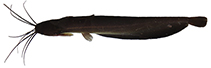
This species is distinguished from its congeners by the following: smallest in size; head length greater than the depth of body; small terminal mouth bearing nearly equal jaws and fleshy lips; united anal-caudal fin; pectoral spines completely separated from rays with 9-10 antrorse serrae along inner edge and 13-15 in outer edge; body colour blackish with two indistinct lateral bands on flank, with the ventral surface lighter (Ref. 94657).
Body shape (shape guide): elongated; Cross section: compressed.
Facultative air-breathing (Ref. 126274); This species is found in ponds, ditches, canals, flooded rice fields, swamps, marshes, waterlogged areas and rivers. Its air-breathing apparatus enables it to survive in low water depth, even in turbid and oxygen deficit conditions. During the winter season the fish can live in semi-liquid mud and when the mud dries up they burrow to the bottom of fissures and crevices formed by the cracking mud. Recorded physicochemical parameters during the study period are the following: water temperature 18-28°C; pH 6.5-7.5; dissolved oxygen 4.5-5.0 mg/l; water transparency 45-60 cm at 1.0-1.8 m depth. This fish is able to deliver a stinging protein (known as poison) emanated from the venom glands around the pectoral spine, and is reported to be neurotoxic and hemolytic (i.e. destruction of red blood cells) in humans, causing local numbness, inflammation and severe painful physical conditions on the affected limb (warm water bath, application of lukewarm turmeric paste, ejection of blood, and traditional herbal medicine are commonly used for healing). Still, its flesh is of good table quality and nutritional value. rich in iron and low fat, and a valuable source of protein (Ref. 94657).
دورة الحياة وسلوك التزاوج
النضج | التكاثر | وضع البيض | بيض | الخصوبة | اليرقات
Hossain, M.S., S. Sarker, S.M. Sharifuzzaman and S.R. Chowdhury, 2013. New species of stinging catfish Heteropneustes nani (Siluriformes: Heteropneustidae) from Noakhali, Bangladesh. Vert. Zool. 63(3):259-267. (Ref. 94657)
حالة القائمة الحمراء للاتحاد الدولي لحفظ الطبيعة والموارد الطبيعية (Ref. 130435: Version 2025-2 (Global))
خطر للأنسان
Traumatogenic
استخدامات بشرية
مصائد: تجاري
أدوات
تقارير خاصة
تنزيل XML
مصادر علي الأنترنت
تقديرات تستند إلى النماذج
مؤشر التنوع الشُعبي الوراثي (مرجع
82804): PD
50 = 0.5312 [Uniqueness, from 0.5 = low to 2.0 = high].
Bayesian length-weight: a=0.00437 (0.00193 - 0.00988), b=3.09 (2.88 - 3.30), in cm total length, based on LWR estimates for this (Sub)family-body shape (Ref.
93245).
مستوى غذائي (مرجع
69278): 3.3 ±0.5 se; based on size and trophs of closest relatives
المرونه (مرجع
120179): عالي, الحد الزمني الأدني لتضاعف عدد أفراد المجتمع أقل من 15 شهر (Preliminary K or Fecundity.).
ضعف الصيد (Ref.
59153): Low vulnerability (10 of 100).
🛈