Élasmobranches (requins et raies) (sharks and rays) >
Squaliformes (Sleeper and dogfish sharks) >
Squalidae (Dogfish sharks)
Etymology: Cirrhigaleus: Latin, cirrus = curl fringe + Greek, galeos = a shark (Ref. 45335).
More on author: Tanaka.
Environnement : milieu / zone climatique / profondeur / gamme de distribution
Écologie
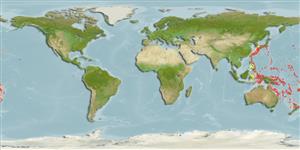
marin bathydémersal; profondeur 140 - 650 m (Ref. 26346). Deep-water; 36°N - 40°S, 120°E - 173°W (Ref. 54331)
Western Pacific: southeastern Honshu in Japan, New South Wales in Australia, New Zealand, and Torres Island in Vanuatu.
Longueur à la première maturité / Taille / Poids / Âge
Maturité: Lm ?, range 92 - ? cm
Max length : 126 cm TL mâle / non sexé; (Ref. 6871)
Description synthétique
Clés d'identification | Morphologie | Morphométrie
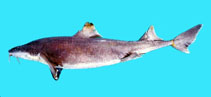
Épines dorsales (Total) : 2; Épines anales: 0. Recognized by its tremendous, mandarin-like nasal barbels (Ref. 247).
Body shape (shape guide): elongated.
Found on the uppermost continental and insular slopes, and probably the outer continental-insular shelves (Ref. 31367). Probably feeds on bottom fishes and some invertebrates (Ref. 247). Ovoviviparous (Ref. 205), with 10 pups in a litter (Ref. 247). Although not utilized commercially, the liver is relatively high in squalene oil (Ref. 6871).
Cycle de vie et comportement reproducteur
Maturité | Reproduction | Frai | Œufs | Fécondité | Larves
Ovoviviparous with 10 young in a litter (5 per uterus).
Compagno, L.J.V., 1984. FAO Species Catalogue. Vol. 4. Sharks of the world. An annotated and illustrated catalogue of shark species known to date. Part 1 - Hexanchiformes to Lamniformes. FAO Fish. Synop. 125(4/1):1-249. Rome, FAO. (Ref. 247)
Statut dans la liste rouge de l'IUCN (Ref. 130435: Version 2025-2 (Global))
Menace pour l'homme
Harmless
Utilisations par l'homme
Pêcheries: sans intérêt
Outils
Articles particuliers
Télécharger en XML
Sources Internet
Estimations basées sur des modèles
Température préférée (Réf.
123201): 11.2 - 18.7, mean 13.8 °C (based on 39 cells).
Indice de diversité phylogénétique (Réf.
82804): PD
50 = 0.6250 [Uniqueness, from 0.5 = low to 2.0 = high].
Bayesian length-weight: a=0.00355 (0.00169 - 0.00744), b=3.09 (2.91 - 3.27), in cm total length, based on LWR estimates for this (Sub)family-body shape (Ref.
93245).
Niveau trophique (Réf.
69278): 4.0 ±0.61 se; based on food items.
Résilience (Réf.
120179): Faible, temps minimum de doublement de population : 4,5 à 14 années (Fec=10).
Vulnérabilité de la pêche (Ref.
59153): Very high vulnerability (76 of 100).
🛈