Classificazione / Nomi
Nomi Comuni | Sinonimi | Catalog of Fishes(Genere, Specie) | ITIS | CoL | WoRMS | Cloffa
>
Cichliformes (Cichlids, convict blennies) >
Cichlidae (Cichlids) > Pseudocrenilabrinae
Etymology: Danakilia: Ethiopia desert; for Thysvander Audenaerde (1968) it is a fish from northeast Africa; dinicolai: Named in memory of Ernesto Di Nicola, a member of the 2001 expedition to Lake Abaeded who died in a car accident while returning from the lake (Ref. 85754).
Eponymy: Ernesto Di Nicola (1969–2001) was an Italian musician and teacher. [...] (Ref. 128868), visit book page.
Ambiente: milieu / zona climatica / distribuzione batimetrica / gamma di distribuzione
Ecologia
; acqua dolce benthopelagico. Tropical
Africa: Lake Abaeded, Danakil Depression, in Eritrea (Ref. 85754).
Dimensione / Peso / Età
Maturità: Lm ? range ? - ? cm
Max length : 9.6 cm SL maschio/sesso non determinato; (Ref. 85754)
Breve descrizione
Chiavi di identificazione | Morfologia | Morfometria
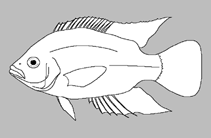
Spine dorsali (totale) : 13 - 14; Raggi dorsali molli (totale) : 9 - 11; Spine anali: 3; Raggi anali molli: 7 - 8; Vertebre: 25 - 26. Diagnosis: Danakilia dinicolai differs from its congener, D. franchettii, in the possession of longer pectoral fins, 31.1-38.7% of standard length vs. 21.7-30.6%; outer row teeth in both oral jaws composed of stout tricuspids, considerably more robust and fewer in number than those of D. franchettii; lower pharyngeal bone relatively massive, longer than wide, length 30-32% of head length, vs. small, only slightly longer than wide, length 25-27% of head length in D. franchettii, with 40-48 teeth in posterior row, vs. 26-36 in D. franchettii (Ref. 85754).
Body shape (shape guide): fusiform / normal.
Found in Lake Abaeded, a small oval depression in a volcanic crater; lake surface is about 30 m below sea level; sand from dunes along the eastern and southern rim is frequently blown into the lake; the lake is fed by many hot springs at surface level and underwater (Ref. 85754). The lakeshore is almost completely encircled by reeds, Phragmites australis, and stands of tamarisk, Tamarix aphylla, but is free of vegetation in the proximity of hot springs (Ref. 85754). Diet primarily consisting of algae grazed from the surface of plants and rocks; however, it is likely that this species is an opportunistic feeder, as individuals were caught on lines baited with grasshoppers (Ref. 85754). Large males guard pits over sand (Ref. 85754).
Ciclo vitale e comportamento di accoppiamento
Maturità | Riproduzione | Deposizione | Uova | Fecondità | Larve
Stiassny, M.L.J., G. De Marchi and A. Lamboj, 2010. A new species of Danakilia (Teleostei, Cichlidae) from Lake Abaeded in the Danakil Depression of Eritrea (East Africa). Zootaxa 2690:43-52. (Ref. 85754)
Stato della Lista Rossa IUCN (Ref. 130435: Version 2025-2 (Global))
Minaccia per l'uomo
Harmless
Usi umani
Strumenti
Rapporti speciali
Scarica XML
Fonti Internet
Stime basate su modelli
Indice di diversità filogenetica (Fonte Biblio.
82804): PD
50 = 0.7500 [Uniqueness, from 0.5 = low to 2.0 = high].
Bayesian length-weight: a=0.01905 (0.00846 - 0.04293), b=3.01 (2.82 - 3.20), in cm total length, based on LWR estimates for this (Sub)family-body shape (Ref.
93245).
Livello trofico (Fonte Biblio.
69278): 3.3 ±0.4 se; based on size and trophs of closest relatives
Resilienza (Fonte Biblio.
120179): Alto, tempo minimo di raddoppiamento della popolazione meno di 15 mesi (Preliminary K or Fecundity.).
Vulnerabilità della pesca (Ref.
59153): Low vulnerability (10 of 100).
🛈