>
Lophiiformes (Anglerfishes) >
Brachionichthyidae (Handfishes)
Etymology: Brachiopsilus: Name from Latin 'brachium' (arm) and Greek 'psilos' (bare or smooth), referring to the smooth surfaces of their body and arm-like pectoral fins; dossenus: Epithet based on the Latin dossenus (humpback or hunchback) in reference to the pronounced fleshy hump on its back between the snout and second dorsal fin (Ref. 82446).
More on authors: Last & Gledhill.
Ambiente: milieu / zona climatica / distribuzione batimetrica / gamma di distribuzione
Ecologia
marino demersale; distribuzione batimetrica 20 - 226 m (Ref. 82446). Temperate; 38°S - 43°S, 148°E - 149°E
Eastern Indian Ocean: Australia.
Dimensione / Peso / Età
Maturità: Lm ? range ? - ? cm
Max length : 6.5 cm SL maschio/sesso non determinato; (Ref. 82446)
Breve descrizione
Chiavi di identificazione | Morfologia | Morfometria
Raggi dorsali molli (totale) : 19; Raggi anali molli: 10. Member of the genus Brachiopsilus with a combination of the following characters: esca
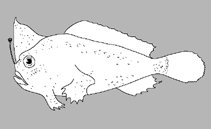
small, 23–30% of illicium length; illicium smooth, thin, not exceedingly fleshy, length 13–16% SL, 3.1–3.6 times in head length, 2.1–2.3 times in length of second dorsal-fin spine; apex of esca situated above anterior half of eye when illicium adpressed; esca slightly wider than illicial stem, covered with dense, short, filaments; head slightly compressed; eye large (horizontal diameter 7–9% SL); mouth narrow; lips fleshy with prominent vertical folds; body and fins entirely naked (except for scales associated with pores of the acoustico-lateralis system and minute, deeply embedded scale and spinule fragments); long first dorsal-fin base (length 29–30% SL); second dorsal-fin rays 17, fin base 77–79% SL; length of second dorsal-fin spine 1.1–1.2 times length of longest ray of second dorsal fin; 10 anal-fin rays, length of anal-fin base 40–44% SL; 9 pectoral-fin rays; caudal peduncle short, length about 2% SL; caudal fin elongate, its length much longer than fin rays of pectoral fin, length 4.1–5.2 times caudal peduncle depth; body colour off white with yellowish patches on sides, uniformly white in preservative (Ref. 82446).
Body shape (shape guide): elongated.
Ciclo vitale e comportamento di accoppiamento
Maturità | Riproduzione | Deposizione | Uova | Fecondità | Larve
Last, P. and D.C. Gledhill, 2009. A revision of the Australian handfishes (Lophiiformes: Brachionichthyidae), with descriptions of three new genera and nine new species. Zootaxa 2252:1-77. (Ref. 82446)
Stato della Lista Rossa IUCN (Ref. 130435: Version 2025-2 (Global))
Minaccia per l'uomo
Harmless
Usi umani
Strumenti
Rapporti speciali
Scarica XML
Fonti Internet
Stime basate su modelli
Indice di diversità filogenetica (Fonte Biblio.
82804): PD
50 = 0.6251 [Uniqueness, from 0.5 = low to 2.0 = high].
Bayesian length-weight: a=0.00437 (0.00164 - 0.01162), b=3.12 (2.89 - 3.35), in cm total length, based on LWR estimates for this (Sub)family-body shape (Ref.
93245).
Livello trofico (Fonte Biblio.
69278): 3.6 ±0.5 se; based on size and trophs of closest relatives
Vulnerabilità della pesca (Ref.
59153): Low vulnerability (10 of 100).
🛈