การจำแนกประเภท / ชื่อ
ชื่อสามัญ | ชื่อพ้อง | Catalog of Fishes(สกุล, ชนิด) | ITIS | CoL | WoRMS | Cloffa
>
Ophidiiformes (Cusk eels) >
Dinematichthyidae (Viviparous brotula)
Etymology: Dinematichthys: Greek, di = two + Greek, nema = filament + Greek, ichthys = fish (Ref. 45335); trilobatus: Named for its inner pseudoclasper with 3 lobes (Latin trilobatus for three-lobed); an adjective.
More on authors: Møller & Schwarzhans.
สิ่งแวดล้อม : สิ่งแวดล้อม / เขตภูมิอากาศ / ระดับความลึก / ระยะการกระจายสินค้า
นิเวศวิทยา
เกี่ยวกับทะเล,น้ำเค็ม เกี่ยวกับหินโสโครก; ระดับความลึก 0 - 50 m (Ref. 90102). Tropical
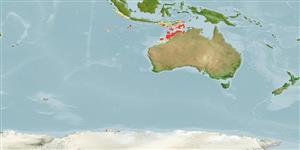
Endemic to the Christmas and Cocos Keeling Is.
ขนาด / น้ำหนัก / อายุ
วัยเจริญพันธุ์: Lm ? range ? - ? cm
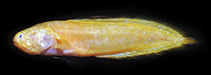
Max length : 4.6 cm SL เพศผู้/กระเทย; (Ref. 81230); 5.8 cm SL (female)
คำอธิบายสั้นๆ
เครื่องมือที่ใช้ในการแยกชนิดสัตว์,สิ่งมีชีวิตออกจากกัน | สัณฐานวิทยา | ความยาวต่างๆ
ก้านครีบอ่อนที่หาง (รวม) : 80 - 87; ก้านครีบอ่อนที่ก้น: 60 - 67; สัตว์มีกระดูกสันหลัง: 42 - 43.
Body shape (shape guide): elongated; Cross section: compressed.
Solitary inhabitant of rock and coral crevices in 0-50 m, cryptic (Ref 90102).
วงจรชีวิตและพฤติกรรมการผสมพันธุ์
วัยเจริญพันธุ์ | การสืบพันธุ์ | การวางไข่ | เซลสืบพันธ์ของเพศเมีย(ไข่) | ความดกของไข่ | ตัวอ่อน
Møller, P.R. and W. Schwarzhans, 2008. Review of the Dinematichthyini (Teleostei, Bythitidae) of the Indo-west Pacific, Part IV. Dinematichthys and two new genera with descriptions of nine new species. The Beagle 24:87-146. (Ref. 81230)
สถานะบัญชีแดงของ IUCN (Ref. 130435: Version 2025-2 (Global))
ภัยคุกคามต่อมนุษย์
Harmless
การใช้ของมนุษย์
การประมง: ไม่มีผลประโยชน์
เครื่องมือ
รายงานพิเศษ
ดาวน์โหลด XML
แหล่งที่มาจากอินเตอร์เน็ต
การประมาณค่าตามแบบจำลอง
อุณหภูมิที่ต้องการ (อ้างอิง
123201): 27 - 28.6, mean 27.9 °C (based on 22 cells).
ดัชนีความหลากหลายทางวิวัฒนาการ (อ้างอิง
82804): PD
50 = 0.7500 [Uniqueness, from 0.5 = low to 2.0 = high].
Bayesian length-weight: a=0.00389 (0.00180 - 0.00842), b=3.12 (2.94 - 3.30), in cm total length, based on all LWR estimates for this body shape (Ref.
93245).
ระดับชั้นอาหาร (อ้างอิง
69278): 3.3 ±0.5 se; based on size and trophs of closest relatives
ความเสี่ยงต่อการตกปลา (Ref.
59153): Low vulnerability (10 of 100).
🛈